
Sattu Rose Cooler
A creamy Indian sattu drink with rose water, cardamom, and date syrup - nourishing, aromatic, and ready in 8 minutes
A systems based approach to wellness and beauty
Vegan recipe - 100% plant-based. No meat, poultry, fish or sea life, no eggs, and no dairy or honey.
Caution - Allergen & Dietary Alerts
Please read before making, especially if preparing for others.
- Legumes (sattu / roasted gram flour): sattu is made from roasted Bengal gram, a legume closely related to chickpeas. Why: individuals with chickpea or legume allergies should avoid this recipe. This ingredient cannot be omitted.
- Tree nuts (almond milk): the base recipe uses unsweetened almond milk. Why: almond milk is tree nut-derived, a major allergen. Swap to oat milk for a tree nut-free version.
- Tree nuts (pistachio garnish): optional chopped pistachios are suggested as garnish. Why: tree nut allergen - omit the garnish entirely if needed.
- Gluten-free as written: sattu, plant milk, rose water, cardamom, date syrup, and lime contain no gluten. Why: always check individual sattu product packaging for "may contain" gluten warnings if serving someone with celiac disease.
- Jaggery option: if using jaggery instead of date syrup, check that it is produced without animal-derived processing agents. Date syrup or maple syrup are guaranteed vegan alternatives.
- Vegan and Dairy-Free and Egg-Free as written - no animal products of any kind.
- Soy-free as written - no soy-containing ingredients. If using oat milk, check the label for soy cross-contamination.
Tree nut-free option: use oat milk instead of almond milk and skip the pistachio garnish. Always check individual product labels, as ingredients and "may contain" warnings vary by brand.
Author, Editorial Note & Disclosure
The author brings over two decades of professional experience across biotechnology and pharmaceutical organizations, together with a long-standing passion for mindful nutrition, holistic wellness, and preventive health.
This recipe is intended for informational and educational purposes only. Nutritional estimates, where provided, are approximate and may vary based on specific ingredients, brands, and preparation methods used.
Jump To
About This Recipe
Sattu is one of India's most practical and enduring traditional foods. Made from roasted Bengal gram - also called roasted chana or roasted chickpea flour - it has been used across Bihar, Uttar Pradesh, Jharkhand, and much of northern and eastern India for generations. Unlike regular raw chickpea flour (besan), sattu is roasted before grinding, which gives it a nutty, earthy flavor and allows it to dissolve directly into cold liquids without any cooking. That quality made it invaluable: a portable, shelf-stable, high-protein food that could nourish farmers and laborers through long hot days with nothing more than water and a few spices.
The sattu drink - sometimes called sattu sharbat or sattu ka ghol - comes in both savory and sweet forms. The sweet version, meetha sattu, is typically made with jaggery or sugar, water, and aromatics. This Hanuvier recipe takes inspiration from that sweet sattu sharbat tradition and gives it a softer, more aromatic character: a whisper of rose water, a careful pinch of cardamom, chilled almond milk for creaminess, and date syrup for a gentle, unrefined sweetness. The result is a cardamom drink that is nutty, lightly floral, refreshing, and genuinely satisfying - not a sugary cooler, but something that feels nourishing from the first sip.
Rose water and cardamom are both powerful. Use the amounts listed here. Too much of either will tip the flavor away from the sattu's roasted nuttiness and into something perfumed and one-dimensional. The balance is the point. For added plant-based protein and a soft vanilla tinge, stir in half a serving of Hanuvier's Plant Protein & Collagen Booster before blending - though sattu itself already makes this one of the more protein-rich drinks in the Hanuvier recipe collection.
At a Glance
Prep Time: 8 minutes
Cook Time: 0 minutes (no cooking required)
Total Time: 8 minutes
Servings: 1 large drink or 2 small servings
Difficulty: Easy
Dietary Tags: Vegan, Dairy-Free, Egg-Free, Soy-Free, Naturally Gluten-Free. Caution: contains legumes (sattu / roasted gram flour) and tree nuts (almond milk). Tree nut-free option available - see Allergen Alerts above.
Ingredients
Drink Base
- 3 tbsp sattu (roasted gram flour / roasted Bengal gram flour / roasted chickpea flour - not raw besan)
- 3/4 cup chilled unsweetened almond milk or oat milk
- 1/4 cup cold water
- 1 tbsp date syrup, or 1 tbsp finely grated jaggery (ensure vegan-certified if using jaggery)
- 1/4 tsp rose water - do not increase without tasting first
- 1/8 tsp ground cardamom - do not increase without tasting first
- 1/8 tsp fine sea salt
- 1/2 tsp fresh lime juice (optional - for a brighter, less dessert-like flavor)
- 1/4 cup ice cubes
Optional Hanuvier Vanilla Variation
- 1/2 serving Hanuvier Vegan Protein Powder, Vanilla flavour
- 2-4 tbsp additional almond milk or cold water (add only if needed to keep the drink smooth and pourable)
Optional Garnish
- 1 tiny pinch ground cardamom
- 1 small pinch crushed food-grade dried rose petals
- 1 thin lime wheel
- 2 tsp finely chopped unsalted pistachios (optional - omit for tree nut-free)
Instructions
- Check your sattu label before starting. The packaging should say roasted gram flour, roasted Bengal gram flour, roasted chana flour, or roasted chickpea flour. Do not use raw besan - it is unroasted chickpea flour and is typically cooked before eating. Raw besan in a cold drink will taste raw and starchy.
- Add 3 tbsp sattu to a medium mixing bowl or blender jar. Add 1/4 cup cold water first - not the full quantity of milk. Whisk for 30-45 seconds until the sattu forms a smooth, lump-free paste. Starting with a small amount of cold water before adding the milk prevents lumps and makes the final drink much smoother.
- Slowly pour in 3/4 cup chilled almond milk or oat milk while whisking continuously. If using a blender, add the milk and blend briefly for 10 seconds.
- Add 1 tbsp date syrup (or finely grated jaggery), 1/4 tsp rose water, 1/8 tsp ground cardamom, and 1/8 tsp fine sea salt. Add the optional 1/2 tsp fresh lime juice only if you prefer a brighter, less dessert-like drink - leave it out for a softer, more aromatic result.
- If using Hanuvier Vegan Protein Powder, add 1/2 serving now. Both sattu and protein powder add body to the drink, so add 2 tbsp extra almond milk or water if the drink becomes too thick. Add up to 4 tbsp total only if needed.
- For the smoothest texture, blend on high for 20-25 seconds. If whisking by hand, whisk vigorously for 60 seconds until the drink looks smooth and lightly creamy. If any small lumps remain, strain through a fine-mesh strainer or blend for another 10 seconds.
- Add 1/4 cup ice cubes and stir for 10 seconds, or blend for 5 seconds if you want a colder, slightly frothier drink.
- Taste before serving. Adjust carefully: add 1 tsp date syrup if you want more sweetness; add 1 tbsp almond milk if too thick; add only 1-2 drops more rose water if you want a stronger floral aroma - not another 1/4 tsp.
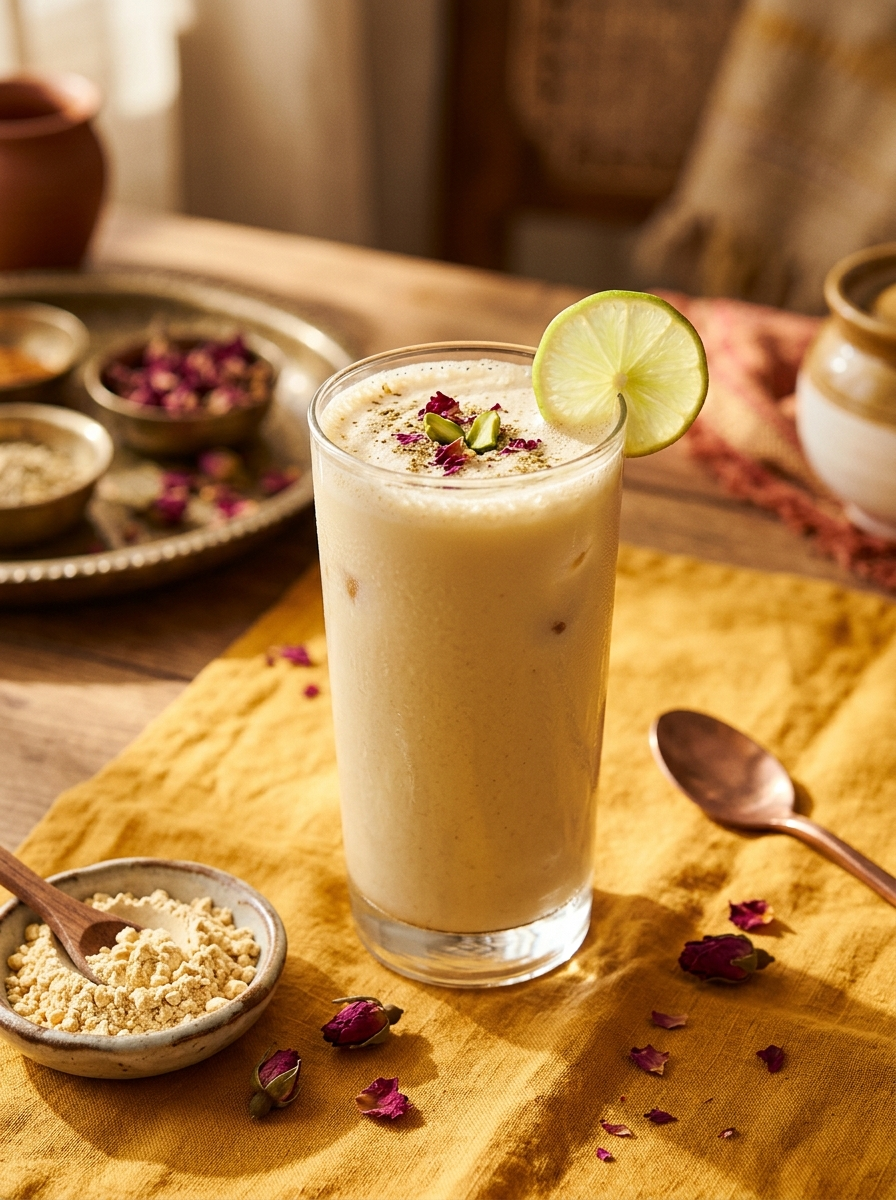
- Pour into one large glass or two small glasses. Garnish with a tiny pinch of cardamom, a few food-grade dried rose petals, a lime wheel, and optional chopped pistachios. Serve immediately while cold.
Chef's Tips
- Always use roasted sattu, never raw besan. This is the most important distinction in the whole recipe. Raw chickpea flour (besan) needs cooking and tastes starchy and bitter when mixed directly into cold liquid. Sattu is roasted first, which removes that raw flavor and makes it safe to dissolve directly into drinks. Look for it at Indian grocery stores or online, labelled as sattu, roasted gram flour, or roasted chana flour.
- Make the paste first. Starting with a small amount of cold water before adding the milk is the technique that prevents lumps. If you add the milk first, the dry sattu sits on top and clumps rather than blending smoothly. Two minutes spent on this step makes a noticeable difference to texture.
- Rose water and cardamom are measured in drops and pinches. Both are powerful aromatics. The amounts listed here create a balanced drink where the sattu's nuttiness stays in the foreground. Increase either one cautiously and taste as you go.
- Shake before drinking if storing. Sattu naturally settles to the bottom of the glass within a few minutes. If the drink sits, stir it well before drinking. If storing in the fridge for up to 12 hours, shake the jar well and add 1-2 tbsp cold water or almond milk to loosen it before serving.
- Serve in a clear glass. The warm pale gold color of this sattu drink, with the rose petals and cardamom on top, is part of its appeal. A clear glass lets you see it.
Nutritional Information
Approximate values per large drink (full recipe as 1 serving), made with almond milk and date syrup, without Hanuvier Vegan Protein Powder. Values will vary depending on sattu brand, plant milk type, sweetener used, and serving size.
- Calories: approximately 220-280 kcal
- Protein: approximately 9-12 g (higher if Hanuvier Vegan Protein Powder is added)
- Carbohydrates: approximately 30-38 g
- Fat: approximately 4-6 g
- Fiber: approximately 6-8 g
- Key Nutrients Present: Plant-based protein, fiber, iron, magnesium, potassium, folate.
Nutrition values are approximate and may vary depending on ingredient brands, preparation method, and serving size.
Wellness Connection
Sattu's long history as a summer drink across northern and eastern India was built on a practical reality: it is genuinely nourishing. Three tablespoons of sattu contribute meaningful plant-based protein and dietary fiber in a form that requires no cooking, no refrigeration before preparation, and almost no time. The roasting process that distinguishes sattu from raw besan also gives it a lower glycemic impact than many other grain-based or flour-based drinks, making it a more sustaining choice than sugar-heavy coolers. Its sattu benefits have been recognized in traditional food cultures long before the language of nutrition science existed.
At Hanuvier, the goal is always to look at what a meal or drink contributes as a whole system rather than fixating on any single nutrient. This sattu drink recipe earns its place in a wellness routine not because of one claim, but because it combines plant protein, dietary fiber, gentle hydration-supporting liquid, and a sensory experience that makes the drink feel special and worth returning to. Traditional ingredient wisdom and modern plant-based nutrition, meeting in a glass.
Frequently Asked Questions
What is sattu?
Sattu is roasted gram flour - most commonly made from roasted Bengal gram (also called roasted chana or roasted chickpea), ground into a fine powder. It is a traditional staple food across Bihar, Uttar Pradesh, Jharkhand, and other parts of northern and eastern India, used in both savory and sweet preparations. The key difference between sattu and regular raw chickpea flour (besan) is that sattu is roasted before grinding, which gives it a nutty, toasted flavor and allows it to be mixed directly into cold drinks without cooking.
What does sattu taste like?
Sattu has a mild, earthy, nutty flavor - similar to roasted chickpeas but subtler and smoother when dissolved in liquid. On its own it is not sweet. In this recipe the date syrup and rose water carry the sweetness and floral aroma, while the sattu provides body, creaminess, and that distinctive roasted nuttiness that makes the drink feel genuinely satisfying rather than thin and sweet.
What is the difference between sattu and besan?
Sattu is roasted gram flour. Besan is raw (unroasted) chickpea flour. Besan is used for cooking - batter, fritters, curry thickeners - and typically needs heat to taste good. Sattu is roasted first, which removes the raw flavor and makes it safe and pleasant to eat directly mixed into cold water or milk without any cooking. Do not substitute besan in this recipe.
Where can I buy sattu?
Sattu is widely available at Indian grocery stores across the United States and the United Kingdom, usually in the flour or grain aisle. It is also available online - search for "sattu flour", "roasted gram flour", or "roasted chana flour." Common brands include Organic India, Nathmulls, and various regional Indian brands. Always confirm the label says "roasted" - not raw chickpea flour.
Can I make this sattu drink recipe without a blender?
Yes. Whisk the sattu with cold water first to form a smooth paste, then whisk in the milk and remaining ingredients vigorously for 60 seconds. If any small lumps remain, pour the drink through a fine-mesh strainer before serving. A blender gives a slightly frothier result, but a well-whisked drink is just as smooth and satisfying.
What is Hanuvier's systems-based approach to wellness and beauty?
The body functions as an interconnected system, with nutrients participating in multiple biological processes and often working alongside one another. Hanuvier uses this systems perspective to develop thoughtfully formulated products that support wellness, beauty, or both through a holistic approach rather than a single-ingredient focus.
Related Recipes & Articles
More plant-based drinks and recipes from the Hanuvier Wellness Hub
From the Hanuvier Wellness Hub
Make it a daily habit
Five collagen boosters and 20g of organic plant protein, every dose on the label.*
See what's inside HanuvierFree U.S. shipping · 60-day money-back guarantee · 10% off your first order
