
Japanese Miso Vegetable Soup
A Gentle Umami Broth for Modern Wellness
A systems based approach to wellness and beauty
Vegan recipe - 100% plant-based. No meat, poultry, fish or sea life, no eggs, and no dairy or honey. Nothing that once was a living animal.
Caution - Allergen & Dietary Alerts
Please read before making, especially if cooking for others.
- Contains soy: Miso paste and tofu are soy-based. Why: soy is a major allergen and there is no soy-free version of this recipe as written.
- Made with a vegan dashi (no fish): The broth uses kombu and dried shiitake, not bonito. Why: traditional dashi often contains fish, so this plant-based broth keeps the soup free of fish and sea life.
- Contains sesame (optional finishing): Optional toasted sesame seeds and sesame oil. Why: sesame is a recognised major allergen; omit to keep it sesame-free.
- Not automatically gluten-free: Some miso contains barley or wheat. Why: choose a certified gluten-free miso (and tamari) for gluten sensitivity or celiac disease.
- Vegan, dairy-free, and egg-free as written.
Always check individual product labels, as ingredients and "may contain" warnings vary by brand.
Author, Editorial Note & Disclosure
The author brings over two decades of professional experience across biotechnology and pharmaceutical organizations, together with a long-standing passion for mindful nutrition, holistic wellness, and preventive health.
This recipe is intended for informational and educational purposes only. Nutritional estimates, where provided, are approximate and may vary based on specific ingredients, brands, and preparation methods used.
Jump To
About This Recipe
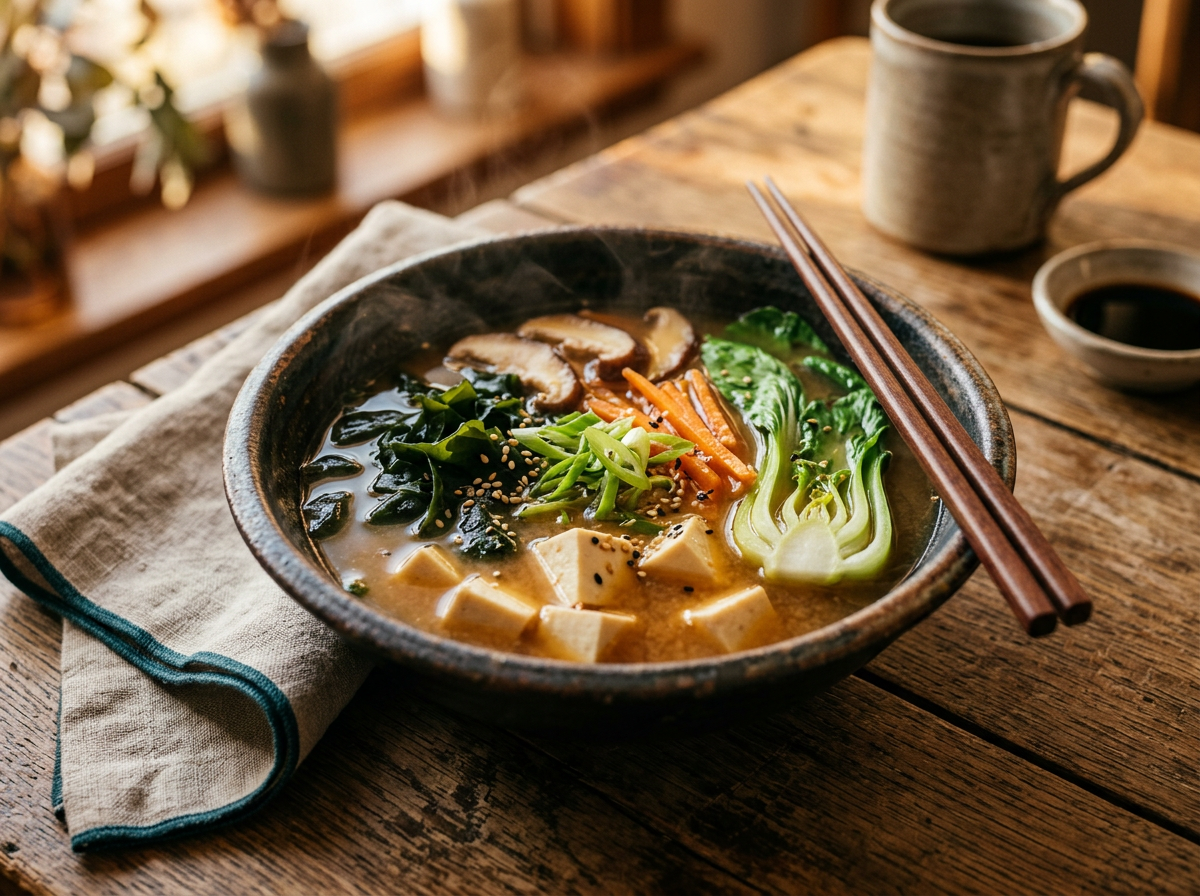
Miso soup is one of the most enduring dishes in Japanese home cooking - simple, quiet, and deeply comforting. A warm broth seasoned with miso, a fermented soybean paste, and filled with silken tofu, sea vegetables, and seasonal produce, it has nourished generations of families across Japan. This recipe honors that tradition while making it beautifully accessible for a modern wellness kitchen.
The soul of this soup lies in the vegan dashi - a gentle broth built from kombu and dried shiitake mushrooms, steeped slowly to coax out a deep, clean umami without any fish. From there, layers of texture and nourishment come together: soft tofu for plant-based protein, tender wakame for mineral richness, colorful carrot and bok choy for plant diversity, and a finishing miso paste dissolved with care to preserve its delicate aroma.
In 2013, UNESCO inscribed washoku - traditional dietary culture of the Japanese - on its Representative List of Intangible Cultural Heritage, recognizing the values that make this soup so enduring: respect for ingredients, seasonal variation, and a deep commitment to balance at the table. This recipe carries that spirit into your kitchen.
If you're looking to complement this warming bowl with additional plant-based nourishment, Hanuvier's Plant Protein & Collagen Booster pairs naturally with gentle, broth-based meals - supporting your daily protein goals and collagen-supporting nutrient intake in a single, clean serving.
At a Glance
Prep Time: 30 minutes (includes kombu soaking)
Cook Time: 20 minutes
Total Time: 50 minutes
Servings: 4
Difficulty: Easy
Dietary Tags: Vegan, Gluten-Free Option, Nut-Free, Oil-Free (contains soy; sesame if finished with it)
Ingredients
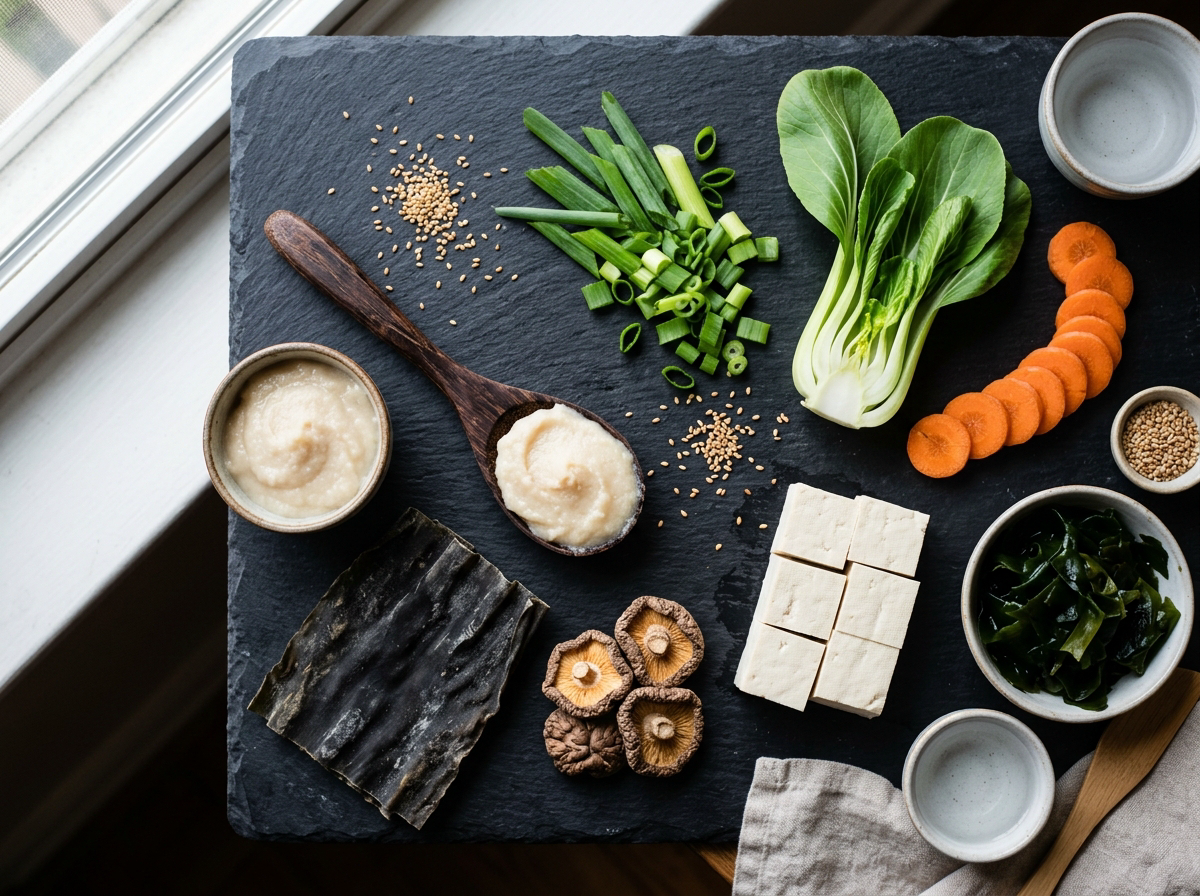
Vegan Dashi Broth
- 5 cups cold water
- 1 piece kombu, approximately 4 x 4 inches (about 10 g / 0.35 oz)
- 4 dried shiitake mushrooms (approximately 14 g / 0.5 oz)
Soup
- 3 tbsp white miso or yellow miso paste (approximately 54 g; use 4 tbsp for a stronger flavour)
- 7 oz (200 g) firm tofu, drained and diced into 1/2-inch cubes (approximately 1 heaping cup)
- 1 tbsp dried wakame seaweed (approximately 3 g)
- 1/2 cup thinly sliced carrot (approximately 55 g / 2 oz)
- 1 cup thinly sliced baby bok choy or baby spinach (approximately 45 g / 1.5 oz)
- 1/2 cup thinly sliced fresh mushrooms (approximately 45 g / 1.5 oz; optional but recommended)
- 2 scallions / green onions, thinly sliced (approximately 1/4 cup)
Optional Finishing
- 1/2 tsp toasted sesame seeds per bowl
- 1/4 tsp toasted sesame oil per bowl
- 1 tsp finely sliced scallion per bowl
Instructions
- Steep the dashi. Pour 5 cups cold water into a medium saucepan. Add the kombu and dried shiitake mushrooms. Soak for 30 minutes at room temperature - this slow steeping draws out a clean, gentle umami without needing fish stock.
- Warm the broth. Place the saucepan over medium heat and warm slowly for 8-10 minutes until small bubbles appear around the edges. Do not bring to a rolling boil with kombu present - it can turn the broth bitter. Remove the kombu with tongs and discard or reserve. Leave the shiitake mushrooms in.
- Soften the wakame. Place 1 tbsp dried wakame in a small bowl with 1/2 cup warm water. Soak for 5 minutes. The seaweed will expand and soften. Drain well and chop into bite-size pieces if needed. Set aside.
- Prepare the tofu. Drain the firm tofu and pat gently with a clean cloth to remove surface moisture. Cut into 1/2-inch cubes (approximately 1 heaping cup). Set aside on a plate.
- Prepare the vegetables. Peel and thinly slice the carrot into rounds or half-moons to measure 1/2 cup. Wash and slice the baby bok choy or spinach to measure 1 cup. Wipe fresh mushrooms clean and thinly slice to measure 1/2 cup. Thinly slice the scallions and set aside for garnish.
- Simmer the vegetables. Return the dashi broth with the shiitake mushrooms to medium heat. Add the sliced carrot and fresh mushrooms. Simmer gently for 5 minutes until the carrot is tender but not mushy. Remove the rehydrated shiitake mushrooms, thinly slice them (discarding tough stems), and return to the pot.
- Add tofu, wakame, and greens. Add the tofu cubes, softened wakame, and sliced bok choy or spinach to the saucepan. Simmer gently for 2 minutes. The tofu should warm through and the greens soften while staying bright. Reduce heat to the lowest setting - the soup should be hot but not boiling.
- Dissolve the miso. Place 3 tbsp miso paste in a small bowl. Ladle 1/2 cup hot broth into the bowl and whisk for 20-30 seconds until completely smooth. This step prevents clumps. Turn off the heat, pour the miso mixture back into the soup, and stir gently for 10-15 seconds. Never boil the soup after adding miso - it protects the delicate live cultures and aroma.
- Taste and adjust. Taste the broth. If too mild, dissolve 1 additional tsp miso in 2 tbsp hot broth and stir in. If too salty, add 1/4 cup hot water and stir gently. Miso is naturally salty - no additional salt should be needed.
- Serve immediately. Ladle into 4 warm bowls. Top with sliced scallions. Add 1/2 tsp toasted sesame seeds and 1/4 tsp sesame oil per bowl if using. Enjoy while warm.
Chef's Tips
- Never boil after adding miso. Once miso is dissolved into the soup, keep it off the boil. Boiling destroys the subtle aroma and degrades the fermentation compounds that give miso its depth.
- Miso variety matters. White (shiro) miso is mild and slightly sweet - ideal for a gentler soup. Yellow miso offers more depth. Red miso is the boldest. Start with white or yellow for this recipe and explore from there.
- Make ahead wisely. Prepare the dashi broth and vegetables up to a day ahead. Add miso only just before serving to preserve freshness and flavour.
- Tofu options. Firm tofu holds its shape best. Silken tofu works beautifully if you prefer a more delicate, soft texture - add it gently and avoid stirring aggressively.
- Serving style. In Japanese tradition, miso soup is served in small bowls rather than large Western soup bowls. It is enjoyed at the start of a meal, alongside steamed rice and a small side dish - or simply sipped on its own as a restorative warm drink.
Nutritional Information
Approximate values per serving (based on 4 servings). Actual values vary depending on ingredient brands, tofu type, miso quantity, and vegetable choices.
Calories: ~80-100 kcal
Protein: ~7-9 g (from tofu)
Carbohydrates: ~8-10 g
Fat: ~2-3 g
Fibre: ~2-3 g
Sodium: ~600-800 mg (varies significantly with miso brand and quantity)
Key Nutrients Present: Plant protein, fiber, iron, calcium, iodine and minerals (from sea vegetables), plus vitamin A and vitamin K from the greens.
Key nutritional features: Miso contributes rich umami flavour through fermentation. Tofu provides plant-based protein and a soft, satisfying texture. Kombu and wakame add sea vegetable minerals in culinary amounts. Mushrooms, carrot, and greens support plant diversity and micronutrient variety. The broth-based format keeps the recipe light yet deeply comforting.
Sodium note: Miso is naturally salty. No additional salt is needed. Those monitoring sodium intake should use a smaller quantity of miso or choose a lower-sodium variety. Always consult a qualified healthcare professional for personalised dietary guidance.
Nutrition values are approximate and may vary depending on ingredient brands, preparation method, and serving size.
Wellness Connection
At Hanuvier, we see wellness not as a destination but as the outcome of consistent, connected daily choices. This miso soup embodies that philosophy beautifully. It is not built around one "hero" ingredient - its nourishment comes from the interaction of fermentation, plant protein, sea vegetables, broth, and mindful preparation working together as a system.
This is what a systems-based approach to food looks like in practice: a warm, simple bowl that supports hydration, delivers plant-based protein, draws on centuries of fermentation tradition, and brings genuine comfort to the table - all in under an hour. Knowledge -> Mindset -> Wellness -> Beauty.
Frequently Asked Questions
Can I use red miso instead of white or yellow miso?
Yes. Red miso (aka miso) has a bolder, saltier, more robust flavour. If substituting, start with 2 tbsp rather than 3 and taste before adding more - it is significantly more intense. White or yellow miso produces a gentler, more approachable soup for those new to miso cooking.
Is this recipe gluten-free?
Most traditional miso is made from soybeans and rice, which is naturally gluten-free. However, some miso varieties include barley or wheat. Always check the label if gluten is a concern and choose a certified gluten-free miso. Tamari (gluten-free soy sauce) can also be used to adjust flavour without wheat.
Can I make the dashi broth in advance?
Yes - and this is a great time-saver. Prepare the vegan dashi with kombu and shiitake mushrooms up to 2 days ahead and store in the refrigerator. When ready to serve, warm the broth, add the vegetables and tofu, and dissolve the miso just before ladling into bowls.
How do I store leftovers?
Miso soup is best enjoyed fresh. If storing, keep in an airtight container in the refrigerator for up to 2 days. Reheat gently over low heat until warm - do not boil. For the best flavour when making ahead, prepare the broth and vegetables, then stir in fresh miso at serving time rather than storing miso-seasoned soup.
What vegetables can I substitute?
This recipe is wonderfully flexible. Thinly sliced daikon radish, zucchini, snow peas, napa cabbage, or enoki mushrooms all work well. Use whatever is seasonal and available. The key is to add firmer vegetables first (carrot, daikon) and delicate greens last, so each ingredient reaches its ideal texture.
What is Hanuvier's systems-based approach to wellness and beauty?
The body functions as an interconnected system, with nutrients participating in multiple biological processes and often working alongside one another. Hanuvier uses this systems perspective to develop thoughtfully formulated products that support wellness, beauty, or both through a holistic approach rather than a single-ingredient focus.
Related Recipes & Articles
- Golden Turmeric Almond Milk - A warming, anti-inflammatory golden milk to pair with this soup
- Greek Fasolada - Traditional White Bean Soup - Another wholesome, plant-based broth recipe from our kitchen
- Looking Your Best Is a Strategy, Not an Accident - The Hanuvier philosophy on daily wellness habits
- Protein, Wellness, and Healthy Aging: The Science Behind Pea & Rice Protein - Why plant protein matters beyond the gym
Make it a daily habit
Five collagen boosters and 20g of organic plant protein, every dose on the label.*
See what's inside HanuvierFree U.S. shipping · 60-day money-back guarantee · 10% off your first order
