
Pea Protein vs. Whey: The Science of Plant-Based Protein for Wellness and Healthy Aging
How pea and rice protein complement each other - and why their organic sourcing matters - for those seeking a balanced, plant-forward approach to nutrition.
A systems based approach to wellness and beauty
By Vikas Tiwari, Founder, Hanuvier
About the author. Vikas Tiwari is the founder of Hanuvier and the author behind the Hanuvier Wellness Hub. His education spans science, law, and business: Chemistry, Physics, and Math as an undergraduate, followed by a degree in Law, a master's in Industrial Relations, and an MBA from the University of Maryland at College Park. He spent nearly two decades in executive roles across leading biotech organizations and global institutions, including The World Bank, Amgen, Myovant Sciences, and Sage Therapeutics, and advised major pharma companies such as Novartis, Novo Nordisk, and Boehringer Ingelheim through consulting engagements with Cognizant.
His philosophy. Nothing in the body works alone. The body is a coming together of many systems working in harmony - and wellness itself works the same way. Physical, emotional, and spiritual wellbeing are each systems in their own right, deeply interconnected and feeding off one another. That understanding is at the heart of Hanuvier: A Systems Based Approach to Wellness and Beauty, caring for the whole person, because no dimension of wellness stands alone.
Beyond his work. A vegetarian and vegan for 45 years, Vikas brings a lifelong passion for nutrition science, mindful living, and meditation. He believes knowledge is the first step on every wellness journey.
Editorial note & disclosure. This article is based on an objective review of publicly available scientific literature and educational resources referenced throughout. It is intended for informational and educational purposes only and should not be construed as medical advice.
Jump To:
- Introduction
- Understanding Protein Quality
- Why Pea and Rice Protein Are Often Combined
- Pea and Rice Protein for Muscle Support
- Beauty, Healthy Aging, and Protein
- Digestibility and Tolerability
- Plant-Based Diets and Protein Adequacy
- Organic Protein Sources
- Comparison of Common Protein Sources
- A Framework for Thinking About Protein
- Bringing It All Together
- Frequently Asked Questions
- Related Articles
- References
Introduction
Protein is foundational to nearly everything the body does. Muscle maintenance, tissue repair, immune function, enzyme production, hormone synthesis - all depend on an adequate, consistent supply of dietary protein. Yet for many people today, the question is no longer simply "how much protein?" but "which protein, from what source, and does sourcing matter?"
The marketplace now offers whey, casein, egg, soy, collagen, pea, rice, hemp, and an expanding range of blended protein products. While animal proteins have traditionally been considered the gold standard for amino acid completeness and digestibility, carefully formulated plant protein combinations are earning a well-documented place in that conversation.1,15
Among plant-based options, pea and rice protein have attracted particular attention. Their amino acid profiles are genuinely complementary - each covers what the other lacks - and together they fit naturally within vegan protein powder, vegetarian, dairy-free, and plant-forward diets. This article explores what the science says about pea and rice protein, why the combination matters, and how organic sourcing fits into a broader, systems-based view of wellness and healthy aging.

Understanding Protein Quality
Not all proteins are created equal, and nutrition science has developed several tools for evaluating quality objectively. The two most widely used measures are the PDCAAS (Protein Digestibility Corrected Amino Acid Score) and the more recent DIAAS (Digestible Indispensable Amino Acid Score). Both assess how effectively a protein delivers the essential amino acids the body needs, adjusted for digestibility.
Essential amino acid content and digestibility are the core variables. A protein that contains all essential amino acids but is poorly absorbed provides less practical value than one that is both well-balanced and highly digestible - which is why pea protein digestibility is a key factor in evaluating pea protein benefits.7,15
Research indicates that combining complementary plant proteins - rather than relying on a single plant source - can meaningfully improve overall protein quality and amino acid balance.1,15 This is the scientific rationale behind the pea and rice protein combination that has become a formulation standard in plant-based protein powder products.
Why Pea and Rice Protein Are Often Combined
Pea protein is notably rich in lysine - an essential amino acid captured well in pea protein amino acids analysis - but is relatively lower in sulfur-containing amino acids like methionine and cysteine. Rice protein, by contrast, is a good source of methionine and cysteine, and rice protein benefits include filling precisely that gap.6
Combined as a pea and rice protein blend, they fill each other's gaps. The result is a more balanced essential amino acid profile than either protein offers individually - and one that more closely approaches the completeness associated with many traditionally recognized high-quality proteins.1,6,8 This is what makes pea and rice protein powder a particularly well-designed formulation choice.
Research published in Nutrients has confirmed that properly formulated pea and rice blends can achieve protein quality scores that compare favorably with many traditional protein sources, including some animal-derived options.1,15 For anyone navigating plant-based nutrition without wanting to compromise on amino acid completeness, this complementarity is significant - and is part of what makes a complete plant protein from combined sources a practical reality.
This is also part of the thinking behind formulations like Hanuvier's Plant Protein & Collagen Booster, which brings together organic pea protein and rice protein with collagen-supporting nutrients - recognizing that protein quality and collagen-associated biological processes are part of the same nutritional picture, not separate conversations.
Pea and Rice Protein for Muscle Support
Pea Protein
Clinical research has shown that pea protein supplementation combined with resistance training may support increases in muscle thickness, strength, and exercise performance. In pea protein vs whey comparisons, pea protein has shown comparable outcomes in certain populations and settings.2,3 These findings are meaningful because whey has historically been the benchmark against which other proteins are compared - making pea protein vs whey protein research one of the most-searched topics in plant-based nutrition.
Rice Protein
Research on plant protein vs whey has also examined rice protein directly. Studies comparing rice protein with whey have reported similar improvements in lean body mass, muscle growth, strength, and recovery outcomes when total protein intake was adequate.4,5 Rice protein benefits for muscle support are therefore well-documented, and rice protein vs whey research confirms it as a viable alternative.
Together, pea and rice proteins offer a plant-forward approach to the nutritional support associated with exercise, recovery, and muscle maintenance - without requiring dairy, egg, or animal-derived proteins. The best plant protein powder for muscle support is increasingly recognized as one that combines complementary plant sources rather than relying on a single ingredient.

Beauty, Healthy Aging, and Protein
Protein plays an important role in maintaining skin, hair, nails, muscles, and the connective tissues that give these structures their integrity and resilience over time. With healthy aging increasingly recognized as a function of lifestyle, nutrition, and biological maintenance rather than a passive process, protein intake deserves attention as part of that picture.
Collagen Peptides
Collagen peptides are the most extensively studied protein source for skin-related outcomes specifically. Several clinical studies have reported associations between oral collagen supplementation and skin hydration and elasticity in certain populations.16
Whey, Casein, and Egg Protein
These complete proteins provide all essential amino acids required for normal protein synthesis and tissue maintenance, including structural tissues associated with healthy skin, hair, and nails.9,15
Soy Protein
Soy is a complete plant protein supported by substantial scientific literature on nutritional adequacy. In pea protein vs soy protein comparisons, both are well-researched options for those on plant-based diets, with different amino acid strengths.10,17
Pea and Rice Protein
Pea and rice proteins contribute complementary amino acids that support overall protein intake and normal tissue maintenance.1,6,8 While current research has focused primarily on muscle support and protein quality outcomes, adequate protein intake is broadly recognized as important for healthy aging and the maintenance of structural tissues throughout the body.9,15
Current evidence does not support the conclusion that any single protein source is uniquely responsible for beauty or healthy-aging outcomes. Rather, adequate overall protein intake - alongside balanced nutrition, hydration, sleep, sun protection, and lifestyle habits - contributes to long-term skin, tissue, and wellness outcomes.9,15,16
Digestibility and Tolerability
Digestive tolerance varies among individuals, and protein source can play a meaningful role in how comfortably a supplement fits into daily life. Some consumers prefer dairy-derived proteins; others choose plant-based sources due to dietary preferences, intolerances, or lifestyle considerations.
Pea protein digestibility is generally well-documented in scientific literature, and both pea and rice proteins are considered suitable for a wide range of dietary patterns.6,9 Their compatibility with vegan protein powder, vegetarian, lactose-free, gluten-free, and dairy-free diets makes them among the more broadly accessible protein options available today.
Plant-Based Diets and Protein Adequacy
Major nutrition organizations - including the Academy of Nutrition and Dietetics and the American Dietetic Association - have concluded that appropriately planned vegetarian and vegan diets can provide adequate protein and support health across all stages of life.10,11 For those following a protein for plant based diet approach, this is meaningful scientific backing.
The key qualifier in that conclusion is "appropriately planned." Combining complementary plant proteins - such as pea and rice - is one practical, well-supported strategy for optimizing amino acid intake within a plant-based dietary pattern, without the complexity of meticulously pairing whole foods at every meal. A pea and rice protein powder simplifies this considerably.
Organic Protein Sources
An increasing number of consumers consider not just what is in a supplement, but how and where its ingredients were grown. For organic pea protein and rice protein, the "organic" designation addresses pesticide exposure and agricultural practices - questions that matter to many health-conscious consumers independently of pure nutritional content. This is why the organic protein powder category has grown significantly alongside conventional options.
Research has reported that organic crops generally contain lower pesticide residues compared with conventionally grown crops.13 However, it is important to note that organic certification does not automatically confer nutritional superiority - the amino acid and digestibility profiles of organic and conventional pea or rice protein are not meaningfully different.12,13
For consumers who value lower pesticide exposure and environmentally conscious agricultural practices, organic plant protein sourcing may be an important part of their personal decision-making. The USDA National Organic Program provides the regulatory framework that governs what "certified organic" means for U.S. consumers.14
Comparison of Common Protein Sources
No single protein source is universally superior for every individual. The following overview summarizes how common options are broadly characterized in the scientific literature - including how plant protein vs whey and pea protein vs whey protein compare:
| Protein Source | Key Characteristics |
|---|---|
| Whey Protein | Highly digestible dairy protein; widely studied in sports nutrition; common comparison point for pea protein vs whey research |
| Casein Protein | Dairy protein with slower digestion and sustained amino acid release |
| Egg Protein | Complete protein with extensive nutritional research backing |
| Soy Protein | Complete plant protein; pea protein vs soy protein comparisons show different amino acid strengths for each |
| Collagen Peptides | Studied for associations with skin hydration, elasticity, and connective tissue support |
| Hemp Protein | Plant protein containing fiber and naturally occurring healthy fats |
| Pea Protein | Rich in lysine; pea protein benefits well-documented for muscle support; pea protein amino acids profile strong in essential amino acids |
| Rice Protein | Provides sulfur-containing amino acids; rice protein benefits include complementing pea protein; rice protein vs whey research shows comparable muscle support |
| Pea + Rice Blend | Complete plant protein with complementary amino acid profiles; best plant protein powder choice for those seeking vegan protein powder without compromise |
A Framework for Thinking About Protein
One of the most common traps in the wellness space is single-ingredient thinking: the idea that if one nutrient or protein source is identified as valuable, more of that single thing will produce proportionally better outcomes. Protein science tells a more nuanced story.
A systems-based approach recognizes that protein quality, digestibility, amino acid complementarity, sourcing, dietary context, lifestyle, and individual goals all contribute to the full picture. Choosing between an organic protein powder, a plant-based protein powder, or a vegan protein powder is not a binary decision - it is a strategic one, informed by knowledge and personal context.
The Hanuvier Action Framework offers a useful structure for applying this kind of thinking:
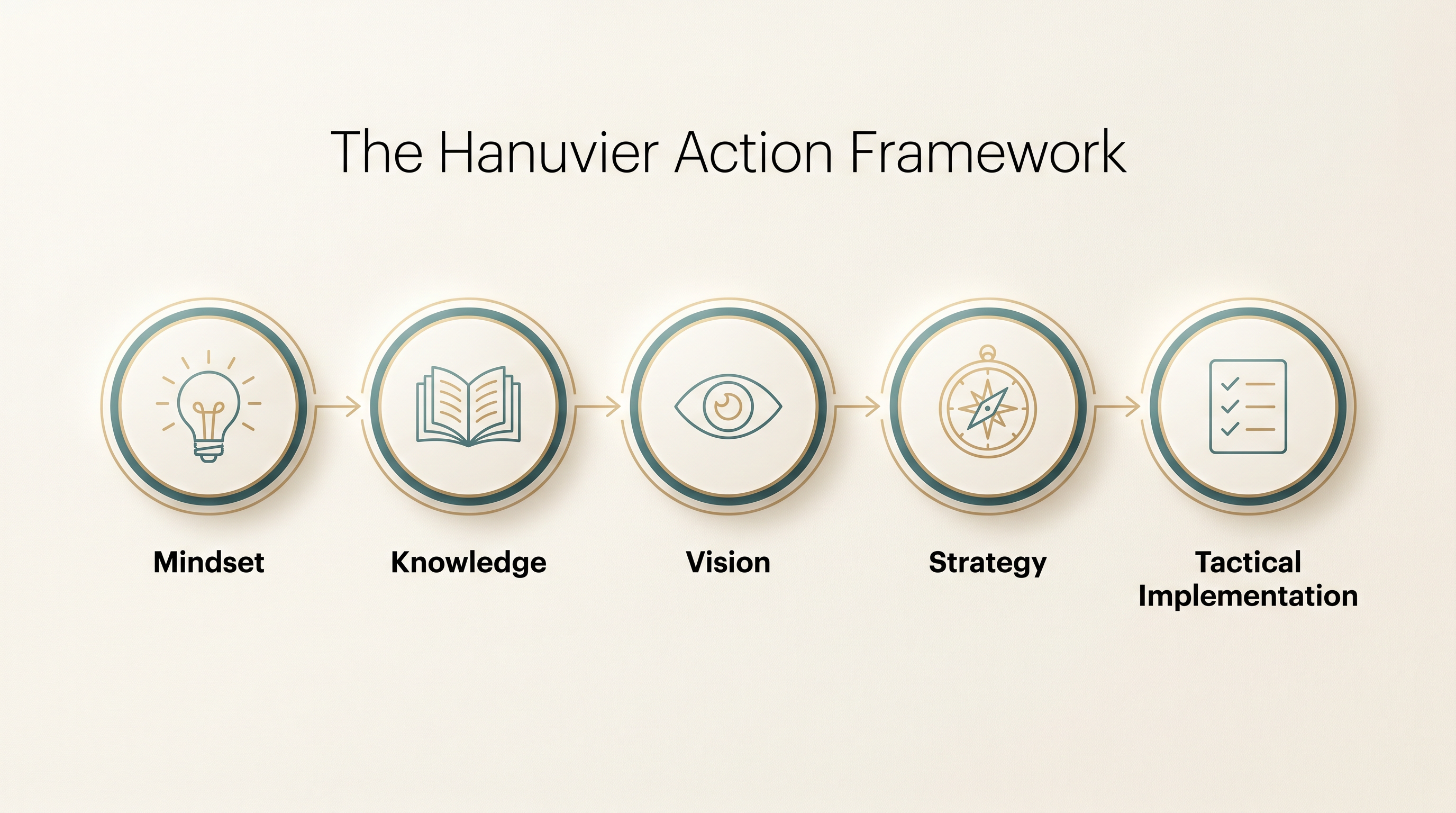
Understanding what pea and rice protein do - and why their combination creates a complete plant protein more nutritionally balanced than either alone - is the Knowledge step that informs a deliberate, personalized Strategy for meeting protein needs. That strategy then becomes the Tactical Implementation - the daily choices that accumulate into wellness outcomes over time.
And when those outcomes are sustained, the Hanuvier Progression Framework describes what follows:
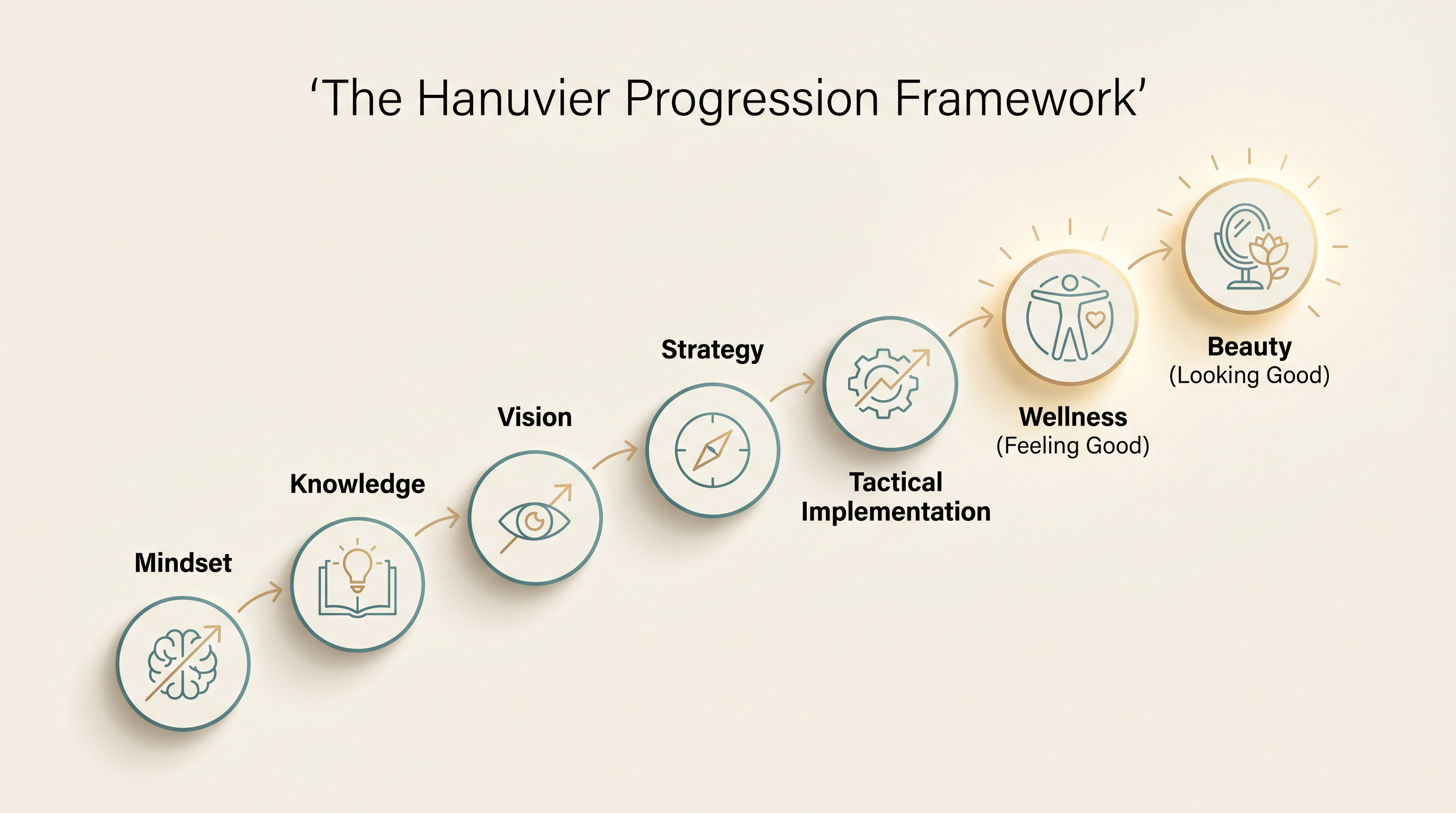
Wellness comes first. Beauty - the visible expression of that wellness - follows. A thoughtfully chosen protein strategy, whether organic plant protein, vegan protein powder, or a pea and rice protein powder, is one of the foundational building blocks in that progression.
Bringing It All Together
Modern nutrition science offers a clear, evidence-grounded picture of plant-based protein: there are multiple pathways to adequate, high-quality protein intake, and pea and rice protein - particularly in combination - represent a well-researched, versatile, and accessible option for a wide range of consumers.
Pea protein brings lysine. Rice protein brings methionine and cysteine. Together, they cover the essential amino acid spectrum more completely than either does alone. Research suggests their combined protein quality can approach that of many traditionally recognized high-quality sources - including in pea protein vs whey protein comparisons - supporting muscle maintenance, tissue repair, and the broader nutritional foundation that healthy aging requires.1,6,8
For those who also value how their ingredients are sourced, organic pea protein and organic plant protein address pesticide-exposure considerations - without changing the fundamental nutritional case for the combination. It is one additional dimension of a thoughtful, informed choice when selecting an organic protein powder.
The most appropriate protein source - whether a vegan protein powder, an organic protein powder, a plant-based protein powder, or a pea and rice protein powder specifically - is ultimately the one that aligns with an individual's nutritional needs, dietary values, health goals, digestive tolerance, and ability to use it consistently as part of a balanced approach to eating and living.9,15 Knowledge, strategy, and consistency - not any single ingredient - are what move the needle.
For those exploring a formulation that brings organic pea protein, rice protein, and collagen-supporting nutrients together in one product, Hanuvier's Plant Protein & Collagen Booster is worth exploring.
Frequently Asked Questions
Pea protein vs whey - which is better?
Research suggests that in pea protein vs whey comparisons, properly formulated pea and rice protein blends may support muscle growth, strength, and recovery outcomes comparable to whey protein when total protein intake is adequate.2,3,4,5 The most suitable protein source depends on individual dietary preferences, health goals, and tolerability. For those seeking a vegan protein powder, pea and rice protein is a well-supported choice.
Why are pea and rice proteins often combined in plant-based protein powder?
Pea protein is rich in lysine - a strength highlighted in pea protein amino acids analysis - but lower in sulfur-containing amino acids (methionine, cysteine). Rice protein benefits include providing the complement. Combined as pea and rice protein, the two create a complete plant protein with a more balanced essential amino acid profile than either offers individually.1,6,8
Does organic protein powder offer nutritional advantages?
Organic certification for organic pea protein or organic plant protein addresses pesticide residue and agricultural practices - research has reported that organic crops generally contain lower pesticide residues than conventionally grown crops.13 However, organic certification does not make the protein nutritionally superior in terms of amino acid content or digestibility.
Is plant protein adequate for healthy aging?
Major nutrition organizations have concluded that appropriately planned plant-based diets can provide adequate protein to support health across all life stages.10,11 Adequate total protein intake - from an organic protein powder, plant-based protein powder, or whole food sources - is the key factor in supporting tissue maintenance and healthy aging outcomes.
How does pea protein vs soy protein compare?
Both pea protein and soy protein are well-researched plant proteins. Soy is a complete plant protein on its own, while pea protein benefits from being combined with rice protein to achieve a complete amino acid profile. In pea protein vs soy protein comparisons, pea protein is often preferred by those with soy sensitivities or who want a soy-free vegan protein powder option.
Are pea and rice proteins easy to digest?
Pea protein digestibility is generally well-documented, and both pea and rice proteins are considered suitable for a wide range of dietary patterns, including vegan, vegetarian, lactose-free, gluten-free, and dairy-free diets.6,9 Individual digestive tolerance can vary, so personal experience is also a useful guide.
What is Hanuvier's systems-based approach to wellness and beauty?
The body functions as an interconnected system, with nutrients participating in multiple biological processes and often working alongside one another. Hanuvier uses this systems perspective to develop thoughtfully formulated products - including organic plant protein combined with collagen-supporting nutrients - that support wellness, beauty, or both through a holistic approach rather than a single-ingredient focus.
Related Articles
- Wellness and Beauty: Can One Truly Exist Without the Other?
- Looking Your Best Is a Strategy, Not an Accident!
- Vegan Collagen Boosters: A Smarter, Plant-Based Way to Support Your Body's Collagen
- Hyaluronic Acid, Biotin, Zinc, L-Lysine & Hydroxyproline: The Science Behind Five Key Nutrients
References
- 1.Mariotti F, Gardner CD. Dietary Protein and Amino Acids in Vegetarian Diets - A Review. Nutrients. 2019;11(11):2661.
- 2.Babault N, et al. Pea proteins oral supplementation promotes muscle thickness gains during resistance training. J Int Soc Sports Nutr. 2015;12:3.
- 3.Banaszek A, et al. The Effects of Whey vs. Pea Protein on Physical Adaptations Following 8-Weeks of High-Intensity Functional Training. Sports (Basel). 2019;7(1):12.
- 4.Joy JM, et al. The effects of 8 weeks of whey or rice protein supplementation on body composition. Nutrition Journal. 2013;12:86.
- 5.Moon JM, et al. Rice protein concentrate supplementation increases lean body mass after a resistance training program. J Int Soc Sports Nutr. 2020;17:41.
- 6.Gorissen SHM, et al. Protein content and amino acid composition of commercially available plant-based protein isolates. Amino Acids. 2018;50(12):1685-1695.
- 7.Rutherfurd SM, et al. Protein Digestibility-Corrected Amino Acid Scores and Digestible Indispensable Amino Acid Scores. Journal of Nutrition. 2015;145(2):372-379.
- 8.van Vliet S, et al. The Skeletal Muscle Anabolic Response to Plant- versus Animal-Based Protein Consumption. Journal of Nutrition. 2015;145(9):1981-1991.
- 9.Moughan PJ, Wolfe RR. Dietary Protein for Human Health. Nutrients. 2023;15(3):604.
- 10.Melina V, et al. Position of the Academy of Nutrition and Dietetics: Vegetarian Diets. J Acad Nutr Diet. 2016;116(12):1970-1980.
- 11.Craig WJ, Mangels AR. Position of the American Dietetic Association: Vegetarian Diets. J Am Diet Assoc. 2009;109(7):1266-1282.
- 12.Smith-Spangler C, et al. Are Organic Foods Safer or Healthier Than Conventional Alternatives? Ann Intern Med. 2012;157(5):348-366.
- 13.Baranski M, et al. Higher antioxidant and lower cadmium concentrations and lower incidence of pesticide residues in organically grown crops. Br J Nutr. 2014;112(5):794-811.
- 14.USDA Agricultural Marketing Service - National Organic Program.
- 15.FAO. Dietary Protein Quality Evaluation in Human Nutrition - Report of an FAO Expert Consultation. 2013.
- 16.Asserin J, et al. The effect of oral collagen peptide supplementation on skin moisture and the dermal collagen network. J Cosmet Dermatol. 2015;14(4):291-301.
- 17.Messina M, et al. It is time for soy foods and soybean-derived ingredients to shed their Scarlet Letter. Reprod Toxicol. 2021;100:60-67.
Built on the nutrients in this article
Five collagen boosters and 20g of organic plant protein, every dose on the label.*
See what's inside HanuvierFree U.S. shipping · 60-day money-back guarantee · 10% off your first order
