
L-Lysine Benefits: What This Essential Amino Acid Does for Collagen, Skin, and Wellness
How an essential amino acid takes part in your body's own collagen synthesis, skin support, and whole-body wellness - and how to get enough of it from plant-based foods.
A systems based approach to wellness and beauty
By Vikas Tiwari, Founder, Hanuvier
About the author. Vikas Tiwari is the founder of Hanuvier and the author behind the Hanuvier Wellness Hub. His education spans science, law, and business: Chemistry, Physics, and Math as an undergraduate, followed by a degree in Law, a master's in Industrial Relations, and an MBA from the University of Maryland at College Park. He spent nearly two decades in executive roles across leading biotech organizations and global institutions, including The World Bank, Amgen, Myovant Sciences, and Sage Therapeutics, and advised major pharma companies such as Novartis, Novo Nordisk, and Boehringer Ingelheim through consulting engagements with Cognizant.
His philosophy. Nothing in the body works alone. The body is a coming together of many systems working in harmony - and wellness itself works the same way. Physical, emotional, and spiritual wellbeing are each systems in their own right, deeply interconnected and feeding off one another. That understanding is at the heart of Hanuvier: A Systems Based Approach to Wellness and Beauty, caring for the whole person, because no dimension of wellness stands alone.
Beyond his work. A vegetarian and vegan for 45 years, Vikas brings a lifelong passion for nutrition science, mindful living, and meditation. He believes knowledge is the first step on every wellness journey.
Editorial note & disclosure. This article is based on an objective review of publicly available scientific literature and educational resources referenced throughout. It is intended for informational and educational purposes only and should not be construed as medical advice.
Jump To - What's in This Article
- Introduction
- What Is L-Lysine?
- Why L-Lysine Is Called an "Essential" Amino Acid
- L-Lysine Benefits: The Roles It Plays in the Body
- L-Lysine and Collagen
- L-Lysine and Healthy-Looking Skin
- Foods High in L-Lysine
- Why Plant-Based Eaters Pay Close Attention to Lysine
- Lysine and Aging: Why Needs Can Change Over Time
- From Knowledge to Action: A Practical Framework
- The Hanuvier Framework: Where Lysine Fits
- Bringing It All Together
- Frequently Asked Questions
- Related Articles
- References
Introduction
Your body is built from proteins, and proteins are built from amino acids. Among the twenty amino acids that make you, well, you, a small handful carry an outsized responsibility - and lysine is one of them. It helps knit together the collagen your own body makes, participates in how your body handles calcium, and is required for building nearly every protein you make. Yet your body cannot produce a single molecule of it on its own.
That one fact - that lysine must come from the food you eat - is why understanding it matters. In this article we will look at what lysine actually is, the well-documented roles it plays in the body, the everyday and plant-based foods that are richest in it, and how it fits into a broader, systems-based view of wellness and natural beauty. The goal is not to sell you on a miracle molecule. It is to help you move from ingredient thinking to systems thinking.
What Is L-Lysine?
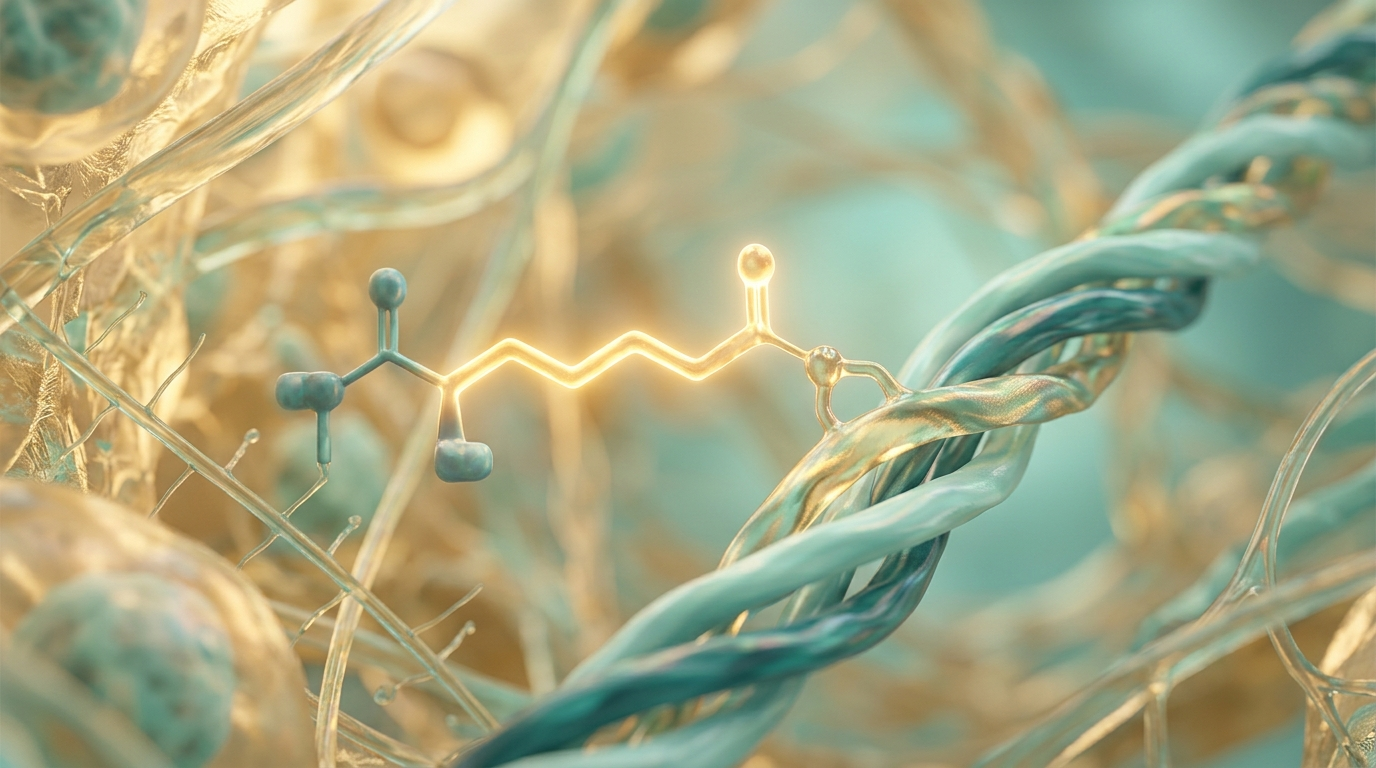
Lysine - most often sold and studied as L-lysine, its biologically active form - is an essential amino acid. Amino acids are the small molecular building blocks that link together in chains to form proteins.1 If proteins are words, amino acids are the letters, and lysine is one of the letters your body uses constantly.
Structurally, lysine is a "basic" amino acid, meaning it carries a positively charged side chain. That small chemical detail turns out to be important: those reactive side chains are exactly the spots where the body forms the cross-links that give body-made structural proteins like collagen their strength.2 We will come back to that.
Why L-Lysine Is Called an "Essential" Amino Acid
Of the twenty amino acids used to build human proteins, nine are classified as essential. The word does not mean they are more important than the others - it means your body cannot synthesize them. They are essential to obtain from your diet. Lysine is one of these nine.1
Because lysine is required for protein synthesis, a steady dietary supply is involved in the ongoing renewal of tissue throughout the body - from muscle to skin to the connective tissue that holds everything in place.3 When people ask "what is lysine good for," the honest scientific answer starts here: it is a raw material your body needs and cannot make, so what you eat sets the ceiling on what your body has to work with.
L-Lysine Benefits: The Roles It Plays in the Body
When we talk about L-lysine benefits, it helps to think in terms of biological roles rather than promises. Research and standard biochemistry describe lysine as participating in several processes:
- Protein building. Lysine is required for the synthesis of proteins throughout the body.1
- Collagen structure. Lysine residues are the anchor points for the cross-links that stabilize the collagen your body builds, along with other structural proteins.2
- Calcium handling. Research suggests lysine is involved in how the body absorbs and conserves calcium.4
- Carnitine production. Lysine contributes to the body's synthesis of carnitine, a molecule involved in turning fat into usable energy.3
Notice the language. Lysine participates in, is involved in, and is required for these processes. It is a contributor within larger systems, not a standalone fix - which is exactly how the body actually works.
L-Lysine and Collagen
The collagen that matters here is the collagen your own body makes. Collagen is the most abundant protein in the human body and the scaffolding of skin, tendons, and connective tissue, and your body is building and renewing it continuously. Lysine plays a quietly essential part in that internal process: certain lysine residues within the collagen molecule are chemically modified (hydroxylated) and then used to form cross-links - the molecular "stitches" that lock collagen fibrils into strong, stable networks.2 When the body is short on these building blocks and the nutrient cofactors involved, it simply has less to build with.
This points to a distinction at the heart of the Hanuvier philosophy. The aim is not to give you collagen to swallow - it is to supply the raw materials and cofactors your body uses to build its own. That is why a systems-based approach matters: the body's collagen synthesis draws on several nutrients at once, including amino acids like lysine, which is the thinking behind Hanuvier's Plant Protein & Collagen Booster.
L-Lysine and Healthy-Looking Skin
Because lysine is tied so closely to collagen, it is frequently discussed in the context of skin. The most accurate way to frame it is this: skin is largely collagen - again, the collagen the body makes for itself - and that collagen depends on lysine as a building block, so a well-nourished protein supply has been associated with supporting the structures behind healthy-looking, resilient skin.2,3 Beauty, in the Hanuvier view, is not something applied from the outside - it is wellness made visible from within.
Foods High in L-Lysine
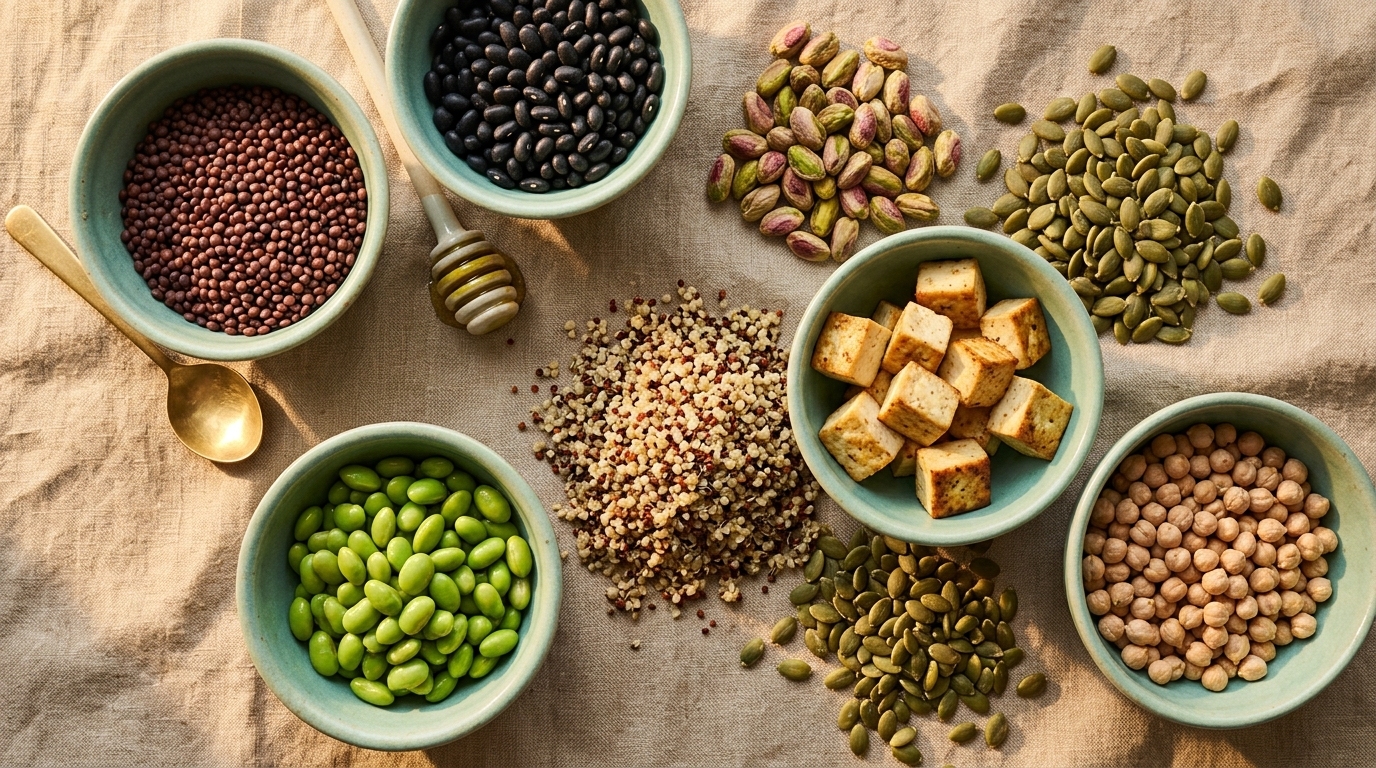
Since your body cannot make lysine, food is the whole game. Lysine is found across many foods, and some of the richest plant-based sources of lysine are surprisingly everyday ingredients:5
- Legumes - lentils, chickpeas, black beans, kidney beans, and peas are among the best plant sources.
- Soy foods - tofu, tempeh, edamame, and soy milk.
- Seitan and other concentrated plant proteins.
- Pistachios and pumpkin seeds.
- Quinoa - notable among grains for containing meaningful lysine.
For those who include them, dairy, eggs, fish, and meat are also lysine-rich. But the plant list above is the reason a thoughtfully built vegetarian or vegan diet can absolutely meet lysine needs.
Why Plant-Based Eaters Pay Close Attention to Lysine
Here is a detail worth knowing. Lysine is the amino acid most likely to be "limiting" in cereal grains - meaning wheat, rice, and corn tend to be lower in lysine relative to the body's needs.5 A diet built heavily on grains, without much else, can run short. The elegant solution is one that traditional cuisines discovered long ago: combine grains with legumes. Rice and beans, hummus and pita, lentils and rice - these pairings complement each other's amino acid profiles and together supply generous lysine.
This is systems thinking on a plate. It is also why a concentrated, balanced plant protein can be useful for people who want a reliable protein base without having to engineer the amino acid balance of every single meal.
Lysine and Aging: Why Needs Can Change Over Time
Lysine is essential at every stage of life, but the way our bodies handle it does not stay constant as the years pass. Several shifts tend to happen together with age. Appetites often become smaller, so total food - and therefore total protein - can quietly decline. Research also indicates that older adults may use dietary protein less efficiently, a phenomenon sometimes described as "anabolic resistance," which is part of why protein needs are often discussed as being higher, not lower, in later life.3 At the same time, the body's own collagen-building activity naturally slows with age.
Put those together and the logic is straightforward. Because lysine is a required building block for both everyday protein synthesis and the body's internal collagen production, keeping an adequate, steady supply is worth extra attention as we get older - precisely when diet alone may deliver less of it. The first move is always food-first: more legumes, soy foods, quinoa, and seeds. But where appetite, dietary restrictions, or higher needs leave a gap, this is the point where a thoughtfully formulated supplement can help.
This is exactly the need Hanuvier set out to serve. Rather than giving you collagen to swallow, the goal is to give your body the raw materials it uses to make its own. Hanuvier's Plant Protein & Collagen Booster brings together plant protein and nutrients that take part in the body's natural collagen-building processes, so that a steady base of these building blocks does not have to depend on a perfect diet every single day. Some people may also prefer an all-in-one formulation simply because it makes a daily routine easier to keep.
From Knowledge to Action: A Practical Framework
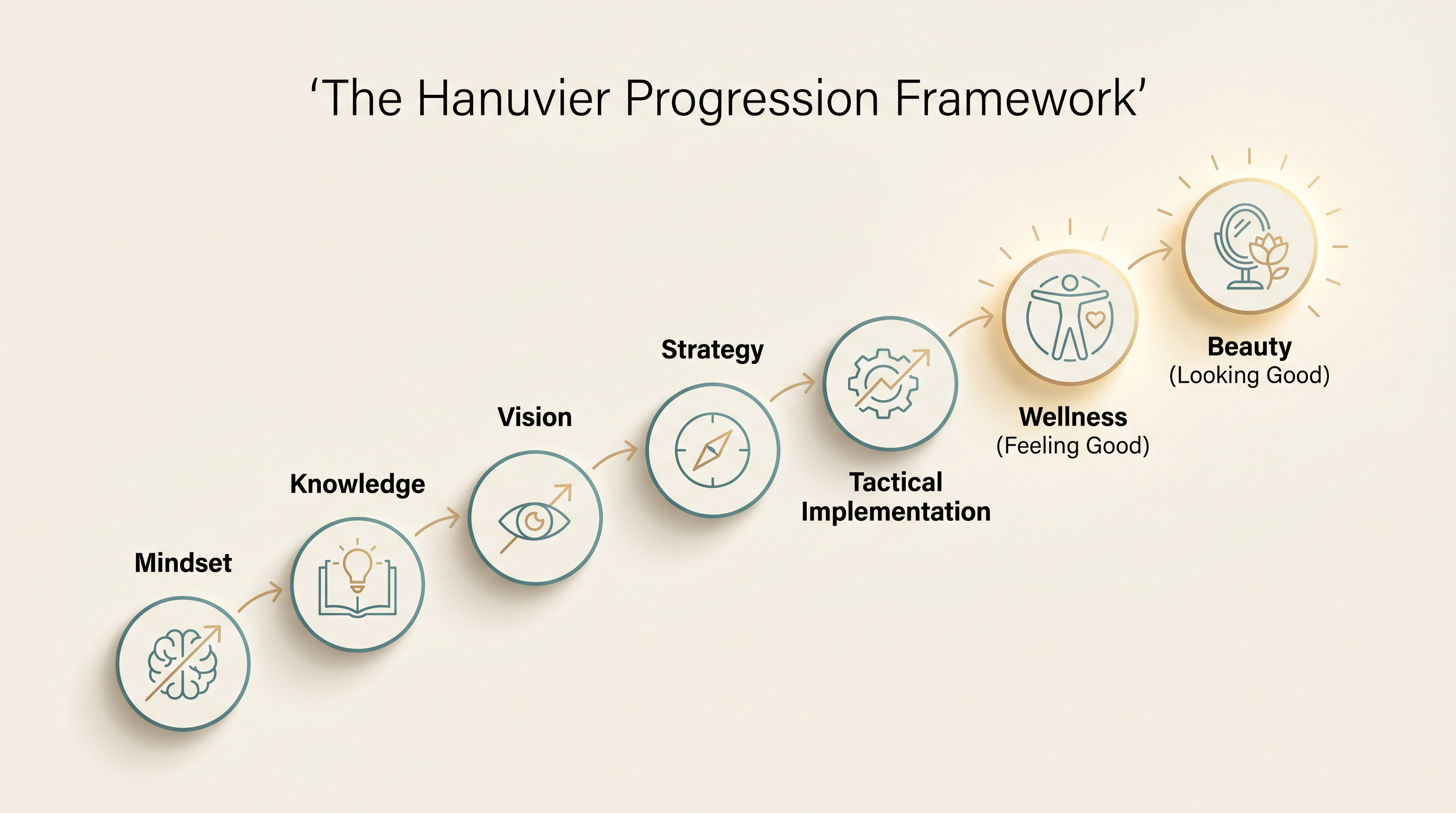
Knowing that lysine is essential is only useful if it changes what you do. Hanuvier frames that path as a simple progression - from the mindset to care for your body, to the knowledge that informs your choices, to a vision and strategy, and finally to the small daily actions that make it real.

The Hanuvier Framework: Where Lysine Fits
Lysine is a perfect small illustration of the Hanuvier philosophy. It does not act alone - it works within the body's protein and collagen systems, alongside other nutrients, as part of a larger whole. Wellness comes first; beauty is its visible expression.
Bringing It All Together
Lysine is a small molecule with a large lesson attached. It reminds us that the body is a system of dependencies: a nutrient it cannot make, feeding processes it cannot skip, producing structures we recognize as strength, resilience, and healthy-looking skin. None of it happens through one heroic ingredient. It happens through steady supply, thoughtful combinations, and daily choices.
That is the whole Hanuvier idea in miniature. Knowledge creates awareness, awareness shapes strategy, and strategy becomes the ordinary actions - a bowl of lentils and rice, a balanced source of plant protein - that support wellness over time. Understand the letter, and you begin to understand the language your body is always speaking.
Frequently Asked Questions
What is L-lysine good for?
L-lysine is an essential amino acid that is required for building proteins throughout the body. It participates in collagen cross-linking, is involved in the body's handling of calcium, and contributes to the production of carnitine. Because the body cannot make lysine, it must be obtained from food.1,3
Why is lysine called an essential amino acid?
"Essential" means the human body cannot synthesize it, so it must come from the diet. Lysine is one of the nine essential amino acids.1
What foods are high in lysine?
Rich plant-based sources include legumes (lentils, chickpeas, beans, peas), soy foods (tofu, tempeh, edamame), seitan, pistachios, pumpkin seeds, and quinoa. Dairy, eggs, fish, and meat are also high in lysine for those who eat them.5
How does lysine relate to collagen?
Specific lysine residues are chemically modified and then used to form the cross-links that give the collagen your body makes its strength and stability. Lysine is therefore a building block involved in the structure of your body's own collagen.2
Can vegetarians and vegans get enough lysine?
Yes. Lysine can be lower in cereal grains, but legumes and soy foods are rich in it. Combining grains with legumes across the day - such as rice with beans - supplies complementary amino acids and generous lysine.5
Is lysine the same as L-lysine?
In everyday nutrition, yes. "L-lysine" refers to the naturally occurring, biologically active form of the amino acid that the body uses to build proteins, which is what is present in foods and most supplements.1
Do lysine needs change as you age?
The requirement for lysine is lifelong, but several things shift with age: appetites and total food intake can decline, the body may use dietary protein less efficiently, and natural collagen-building activity slows. Because lysine is required for both protein synthesis and the body's own collagen production, maintaining an adequate, steady intake becomes especially worth attention in later years. A food-first approach comes first, and a thoughtfully formulated supplement can help where diet leaves a gap.3
What is Hanuvier's systems-based approach to wellness and beauty?
The body functions as an interconnected system, with nutrients participating in multiple biological processes and often working alongside one another. Hanuvier uses this systems perspective to develop thoughtfully formulated products that support wellness, beauty, or both through a holistic approach rather than a single-ingredient focus.
Related Articles
- Amino Acids: The Tiny Building Blocks Behind Strength, Wellness and Beauty
- Hyaluronic Acid, Biotin, Zinc, L-Lysine & Hydroxyproline: The Science Behind Five Key Nutrients
- The Truth and Another Truth, Part 2: What Your Body Actually Needs to Make Collagen
- Collagen vs. Collagen Boosters: Understanding Your Body's Collagen Production Systems
- Protein, Wellness, and Healthy Aging: The Science Behind Pea & Rice Protein
References
- 1. National Institutes of Health, MedlinePlus. Amino acids. MedlinePlus Medical Encyclopedia. https://medlineplus.gov/ency/article/002222.htm
- 2. Yamauchi M, Sricholpech M. Lysine post-translational modifications of collagen. Essays in Biochemistry. 2012;52:113-133. https://doi.org/10.1042/bse0520113
- 3. Flodin NW. The metabolic roles, pharmacology, and toxicology of lysine. Journal of the American College of Nutrition. 1997;16(1):7-21. https://doi.org/10.1080/07315724.1997.10718644
- 4. Civitelli R, Villareal DT, Agnusdei D, et al. Dietary L-lysine and calcium metabolism in humans. Nutrition. 1992;8(6):400-405. https://pubmed.ncbi.nlm.nih.gov/1486246/
- 5. U.S. Department of Agriculture, Agricultural Research Service. FoodData Central: amino acid (lysine) content of foods. https://fdc.nal.usda.gov/
Built on the nutrients in this article
Five collagen boosters and 20g of organic plant protein, every dose on the label.*
See what's inside HanuvierFree U.S. shipping · 60-day money-back guarantee · 10% off your first order
