
Amino Acids: The Tiny Building Blocks Behind Strength, Wellness and Beauty
What Are Amino Acids - and Why Is It Worth Understanding Them?
A systems based approach to wellness and beauty
By Vikas Tiwari, Founder, Hanuvier
About the author. Vikas Tiwari is the founder of Hanuvier and the author behind the Hanuvier Wellness Hub. His education spans science, law, and business: Chemistry, Physics, and Math as an undergraduate, followed by a degree in Law, a master's in Industrial Relations, and an MBA from the University of Maryland at College Park. He spent nearly two decades in executive roles across leading biotech organizations and global institutions, including The World Bank, Amgen, Myovant Sciences, and Sage Therapeutics, and advised major pharma companies such as Novartis, Novo Nordisk, and Boehringer Ingelheim through consulting engagements with Cognizant.
His philosophy. Nothing in the body works alone. The body is a coming together of many systems working in harmony - and wellness itself works the same way. Physical, emotional, and spiritual wellbeing are each systems in their own right, deeply interconnected and feeding off one another. That understanding is at the heart of Hanuvier: A Systems Based Approach to Wellness and Beauty, caring for the whole person, because no dimension of wellness stands alone.
Beyond his work. A vegetarian and vegan for 45 years, Vikas brings a lifelong passion for nutrition science, mindful living, and meditation. He believes knowledge is the first step on every wellness journey.
Editorial note & disclosure. This article is based on an objective review of publicly available scientific literature and educational resources referenced throughout. It is intended for informational and educational purposes only and should not be construed as medical advice.
What's in This Article
- Introduction
- Why Amino Acids Matter
- What Are Amino Acids?
- Essential vs. Non-Essential Amino Acids
- Where Do You Get Essential Amino Acids?
- Pea Protein vs Whey - and How All Plant Proteins Compare
- Amino Acids for Skin, Hair, Nails, and Healthy Aging
- The Hanuvier Framework
- Bringing It All Together
- Frequently Asked Questions
- Related Articles
- References
Introduction
Every time you eat a meal, your body does something remarkable. It takes the protein from your food, dismantles it piece by piece, and rebuilds exactly what it needs - muscle fibres, skin proteins, immune defences, enzymes. The raw material for all of that work is amino acids.
Most people have heard of protein. Far fewer understand amino acids. Yet amino acids are the reason protein matters at all. They are the alphabet your body uses to write every protein in the human body.1,2
This article explains what amino acids are in plain, accessible language - why they matter for skin, hair, and healthy aging, how pea protein vs whey compares on amino acid coverage, and why a well-chosen vegan protein powder or plant based protein powder can hold its own as a complete protein alongside any animal-based source.
Why Amino Acids Matter
The human body is constantly at work - repairing tissues, making new cells, supporting muscles, maintaining skin, producing enzymes, and keeping the immune system ready. To do this, the body depends on protein. And protein is made from amino acids.1,2
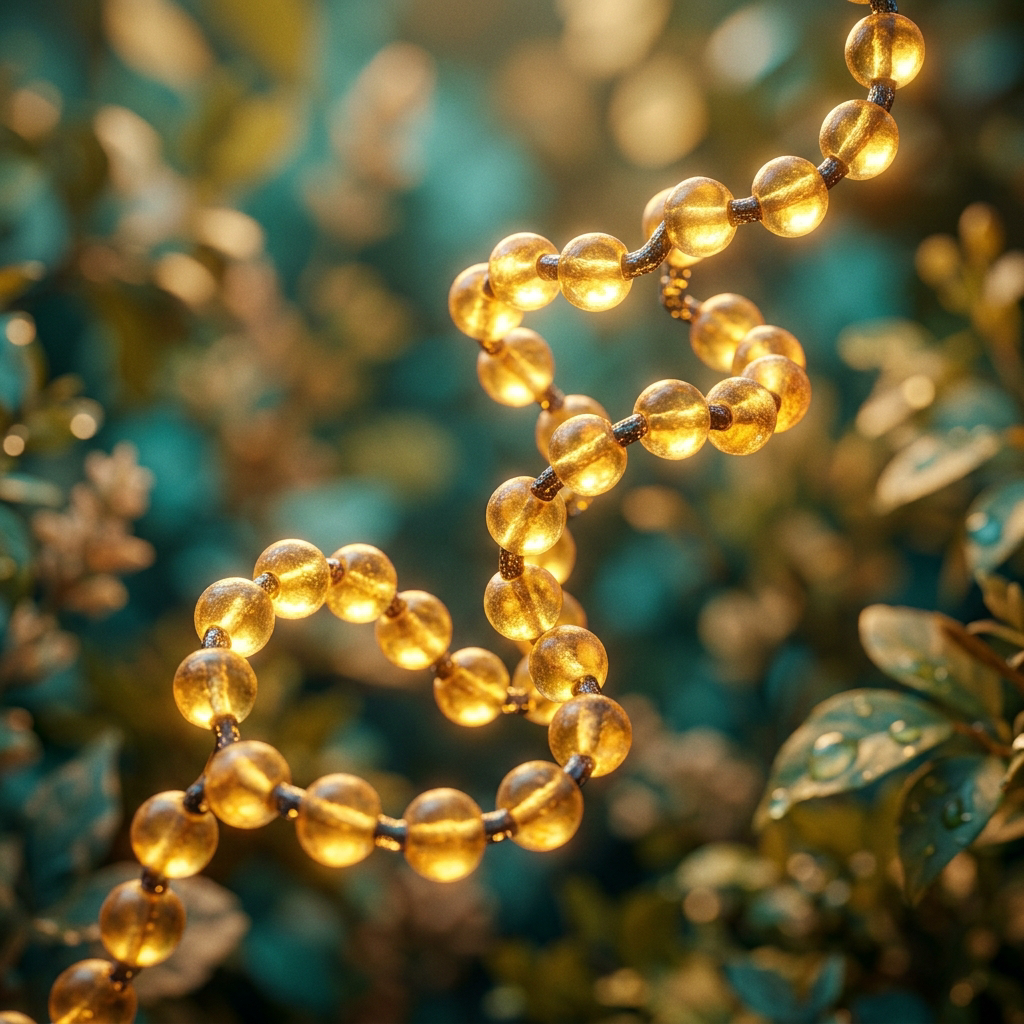
Think of amino acids as the individual beads that, when strung together in the right order, form the necklace of a protein. Different orders create different proteins with completely different jobs. That is why amino acids are called the building blocks of life.1
What Are Amino Acids?
Essential vs. Non-Essential Amino Acids
Amino acids fall into three groups. The word essential does not mean more important - it means the body cannot make enough of them on its own, so they must come from food.1,2
Essential Amino Acids - Must Come From Food
There are nine essential amino acids: Histidine, Isoleucine, Leucine, Lysine, Methionine, Phenylalanine, Threonine, Tryptophan, and Valine.1,2 If the diet consistently falls short of these nine, the body may not have all the building blocks it needs for normal protein-related functions.2
Non-Essential Amino Acids - Made by the Body
Non-essential amino acids can be produced by the body. Examples include Alanine, Asparagine, Aspartic acid, Glutamic acid, and Serine.2 Non-essential does not mean unimportant - it simply means the body can usually produce them when overall nutrition is adequate.2
Conditionally Essential Amino Acids
Some amino acids are normally non-essential, but under certain conditions - such as illness or physiological stress - the body's ability to produce them may be reduced, making dietary sources more important.2 Examples include Arginine, Cysteine, Glutamine, Tyrosine, Glycine, Proline, and Serine.2 Nutritional needs are not fixed - they can vary with age, health, activity, and life stage.5
Where Do You Get Essential Amino Acids?
Animal-based sources - eggs, milk, fish, poultry, and meat - generally provide all nine essential amino acids in useful amounts.4 Plant-based sources include soy foods, lentils, beans, chickpeas, pea protein, rice protein, quinoa, nuts, seeds, and whole grains. Foods such as soy and quinoa are often described as complete protein sources because they contain all nine essential amino acids - a useful benchmark when asking what is a complete protein.4
Some plant proteins are relatively lower in one or two amino acids. Legumes are often lower in methionine; grains may be lower in lysine.4 Eaten across a varied diet, these foods naturally complement one another - which is why combinations such as rice and beans have made nutritional sense across cultures for generations.4
Pea Protein vs Whey - and How All Plant Proteins Compare
Not all protein sources are equal in their amino acid profiles.3,4 Protein quality depends on the presence and amount of each essential amino acid, how digestible the protein is, how much total protein is consumed, and how the overall diet is structured.3,4
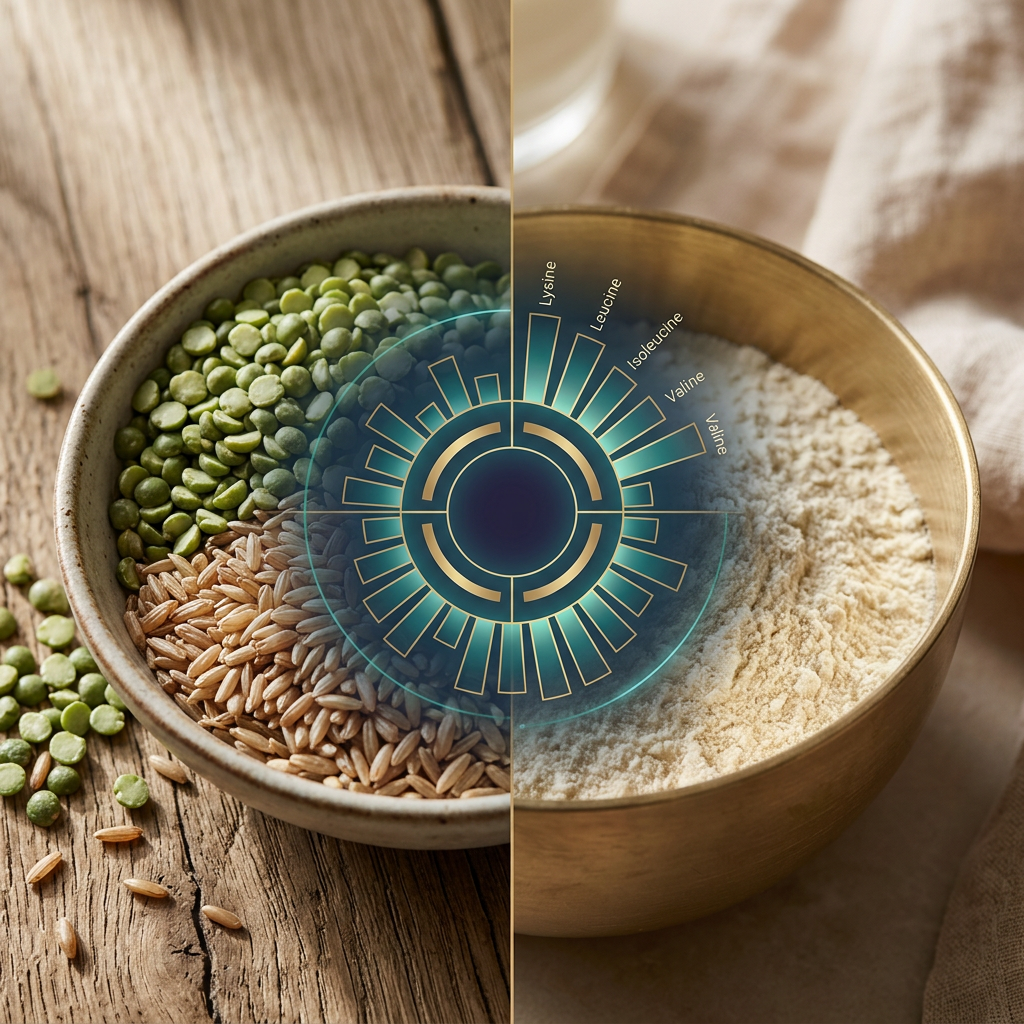
Pea and Rice Protein: A Complete Vegan Protein Powder Comparable to Whey
| Protein Source | Essential AAs | AA Breadth | Key Consideration | Source |
|---|---|---|---|---|
| Pea + Rice Protein (combined) | 9 of 9 | Broad - comparable to whey | Together, all 9 essential AAs at breadth comparable to whey. | [6,7] |
| Whey Protein | 9 of 9 | Broad | Complete dairy-derived protein, rich in essential AAs including leucine. | [4,6] |
| Pea Protein (alone) | 9 of 9 | Broad, lower in methionine | All 9 essential AAs present. Best combined with rice protein. | [6] |
| Rice Protein (alone) | 9 of 9 | Broad, lower in lysine | Strong in sulfur AAs. Complements pea protein well. | [7] |
| Soy, Quinoa, Eggs, Dairy, Fish, Meat | 9 of 9 | Broad | Complete protein sources with all 9 essential amino acids. | [4] |
Hanuvier's plant protein formulation draws on this pea and rice protein combination - a thoughtfully designed choice for anyone seeking the best plant based protein powder for wellness and healthy aging. You can explore it at hanuvier.com/products/hanuvier-plant-protein-collagen-boosters.
Amino Acids for Skin, Hair, Nails, and Healthy Aging
Amino acids are not just a muscle topic. They participate in biological processes that support proteins involved in muscle structure, skin, hair and nails, enzymes, immune function, connective tissue, and overall tissue maintenance.1,2
This is why amino acids for hair growth, protein for hair and nails, and protein for skin health are increasingly discussed within wellness and beauty nutrition. Whether you choose an animal-based source or the best vegan protein powder such as a pea and rice blend, ensuring adequate protein intake may help support the body's normal structures and functions.1,2 For women in particular, the best protein powder for women is often one that delivers a complete amino acid profile without unnecessary additives - which is precisely what a well-formulated pea and rice blend may provide.
The Hanuvier Framework
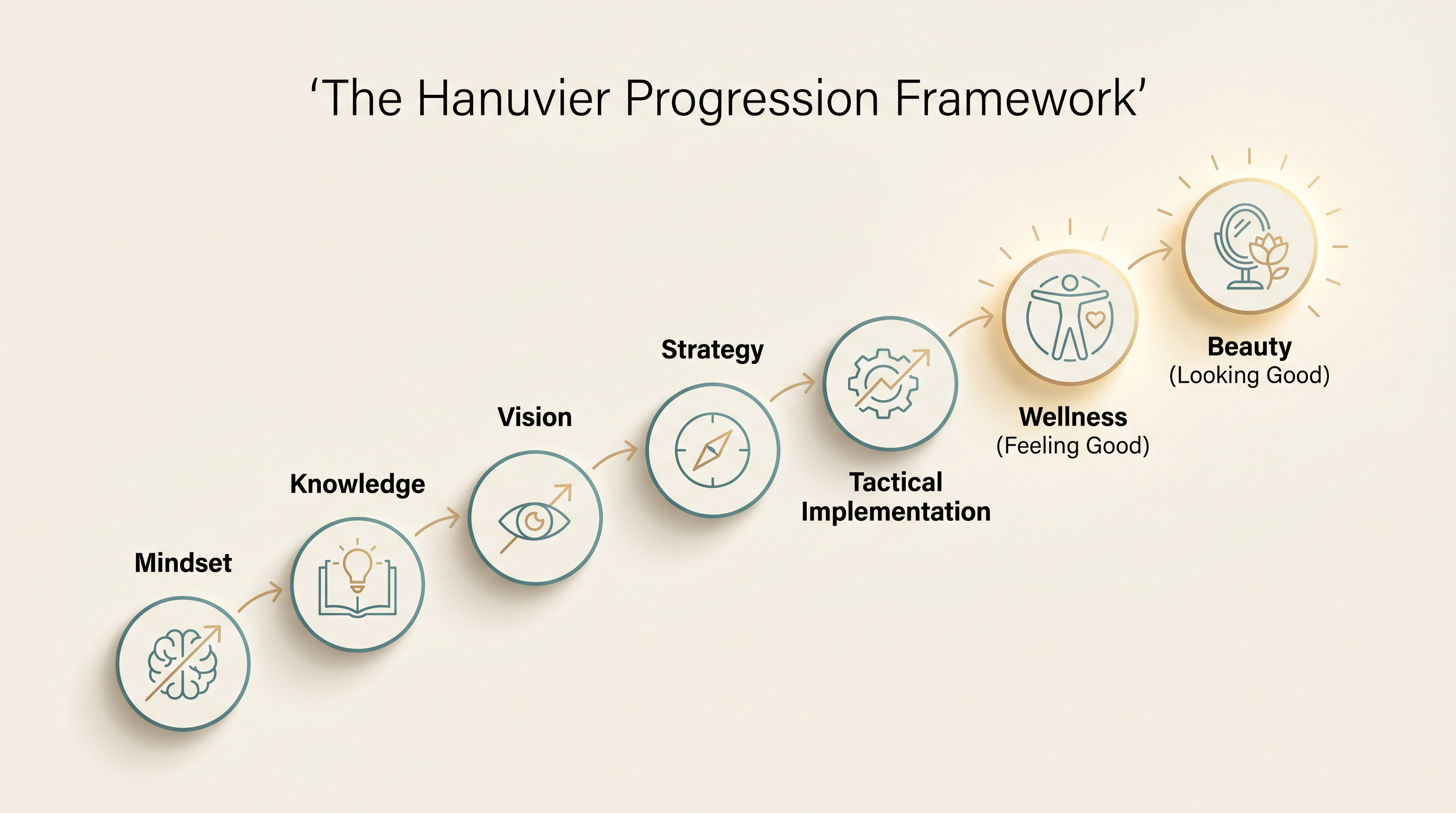
This article sits within the Knowledge stage of the Hanuvier framework. Understanding amino acids moves us beyond label reading toward a more informed view of protein quality, food choices, and nutritional systems.

Bringing It All Together
Amino acids are the reason protein matters. Your body uses them to build every protein it needs - tissues, enzymes, hormones, immune defences.1,2 Some must come from food. Others the body can make. But all of them matter, and the body needs a steady supply.
For those who eat animal products, dairy, eggs, fish, and meat provide all nine essential amino acids.4 For those who follow plant-based diets, variety and thoughtful combination - such as pea and rice protein together - can support a complete amino acid intake that is well-backed by peer-reviewed nutritional science.6,7
Amino acids are not complicated. They are foundational. And knowing that changes everything about how you read a nutrition label.
Frequently Asked Questions
What are amino acids in simple words?
Amino acids are small building blocks that the body links together to make proteins. Think of them as letters in an alphabet - different combinations create different proteins, each with a different job.
Are amino acids the same as protein?
No. Protein is made from amino acids. When you eat protein, your digestive system breaks it down into amino acids. Your body then absorbs and reuses those amino acids to build the proteins it needs.
What are essential amino acids?
Essential amino acids are the nine amino acids your body cannot produce in adequate amounts on its own, so they must come from food. The nine are: Histidine, Isoleucine, Leucine, Lysine, Methionine, Phenylalanine, Threonine, Tryptophan, and Valine.
Pea protein vs whey - how do they compare on amino acids?
Research published in the peer-reviewed journal Amino Acids (Gorissen et al., 2018) directly compared pea protein vs whey protein on amino acid composition. The study found that pea protein contains all nine essential amino acids, with its total essential amino acid content broadly comparable to whey - the primary difference being a relatively lower methionine content. When pea and rice proteins are combined, that gap is filled, making the blend a well-supported complete plant protein alternative to whey.
Is pea protein a complete protein?
Yes. Pea protein contains all nine essential amino acids, making it a complete protein. Its methionine content is relatively lower than whey, which is why combining it with rice protein - which is strong in methionine and cysteine - produces a pea and rice blend with an amino acid profile broadly comparable to the best pea protein powder options on the market.
Why combine pea and rice protein in a vegan protein powder?
Pea protein contains all nine essential amino acids but is relatively lower in methionine. Rice protein is stronger in sulfur-containing amino acids including methionine and cysteine. Together in a vegan protein powder blend, they complement each other to create a more complete amino acid profile - one that research indicates is broadly comparable to whey.
Do amino acids support hair growth and skin health?
Yes. Amino acids participate in biological processes that support proteins involved in skin structure, hair growth, and nail health. Amino acids for hair growth and protein for hair and nails are well-established topics in nutritional science. A diet adequate in protein and essential amino acids may help support the body's normal processes related to skin, hair, and nails.
What is Hanuvier's systems-based approach to wellness and beauty?
The body functions as an interconnected system, with nutrients participating in multiple biological processes and often working alongside one another. Hanuvier uses this systems perspective to develop thoughtfully formulated products that support wellness, beauty, or both through a holistic approach rather than a single-ingredient focus.
Related Articles
- Is Protein Alone Enough? The Case for a Systems-Based Approach to Wellness
- Vegan Collagen Boosters: A Smarter, Plant-Based Way to Support Your Body's Collagen
- Pea Protein vs. Whey: The Science of Plant-Based Protein for Wellness and Healthy Aging
- Wellness and Beauty: Can One Truly Exist Without the Other?
- Hyaluronic Acid, Biotin, Zinc, L-Lysine & Hydroxyproline: The Science Behind Five Key Nutrients
References
- 1. National Center for Biotechnology Information (NCBI) Bookshelf. Biochemistry, Essential Amino Acids. StatPearls Publishing. https://www.ncbi.nlm.nih.gov/books/NBK557845/
- 2. MedlinePlus. Amino Acids. U.S. National Library of Medicine. https://medlineplus.gov/ency/article/002222.htm - MedlinePlus. Protein in Diet. https://medlineplus.gov/ency/article/002467.htm
- 3. Herreman L, Nommensen P, Pennings B, Laus MC. Comprehensive overview of the quality of plant- and animal-sourced proteins based on the digestible indispensable amino acid score. Food Science & Nutrition. 2020;8(10):5379-5391. doi: 10.1002/fsn3.1809
- 4. Food and Agriculture Organization of the United Nations. Dietary protein quality evaluation in human nutrition. FAO Food and Nutrition Paper 92. Rome: FAO; 2013. https://www.fao.org/3/i3124e/i3124e.pdf
- 5. World Health Organization / FAO / United Nations University. Protein and Amino Acid Requirements in Human Nutrition. WHO Technical Report Series 935. Geneva: WHO; 2007. https://www.who.int/publications/i/item/WHO-TRS-935
- 6. Gorissen SHM, Crombag JJR, Senden JMG, et al. Protein content and amino acid composition of commercially available plant-based protein isolates. Amino Acids. 2018;50(12):1685-1695. doi: 10.1007/s00726-018-2640-5
- 7. Hughes GJ, Ryan DJ, Mukherjea R, Schasteen CS. Protein digestibility-corrected amino acid scores (PDCAAS) for soy protein isolates and concentrate. Journal of Agricultural and Food Chemistry. 2011;59(23):12707-12712. doi: 10.1021/jf203220v
Built on the nutrients in this article
Five collagen boosters and 20g of organic plant protein, every dose on the label.*
See what's inside HanuvierFree U.S. shipping · 60-day money-back guarantee · 10% off your first order
