
Misir Wat
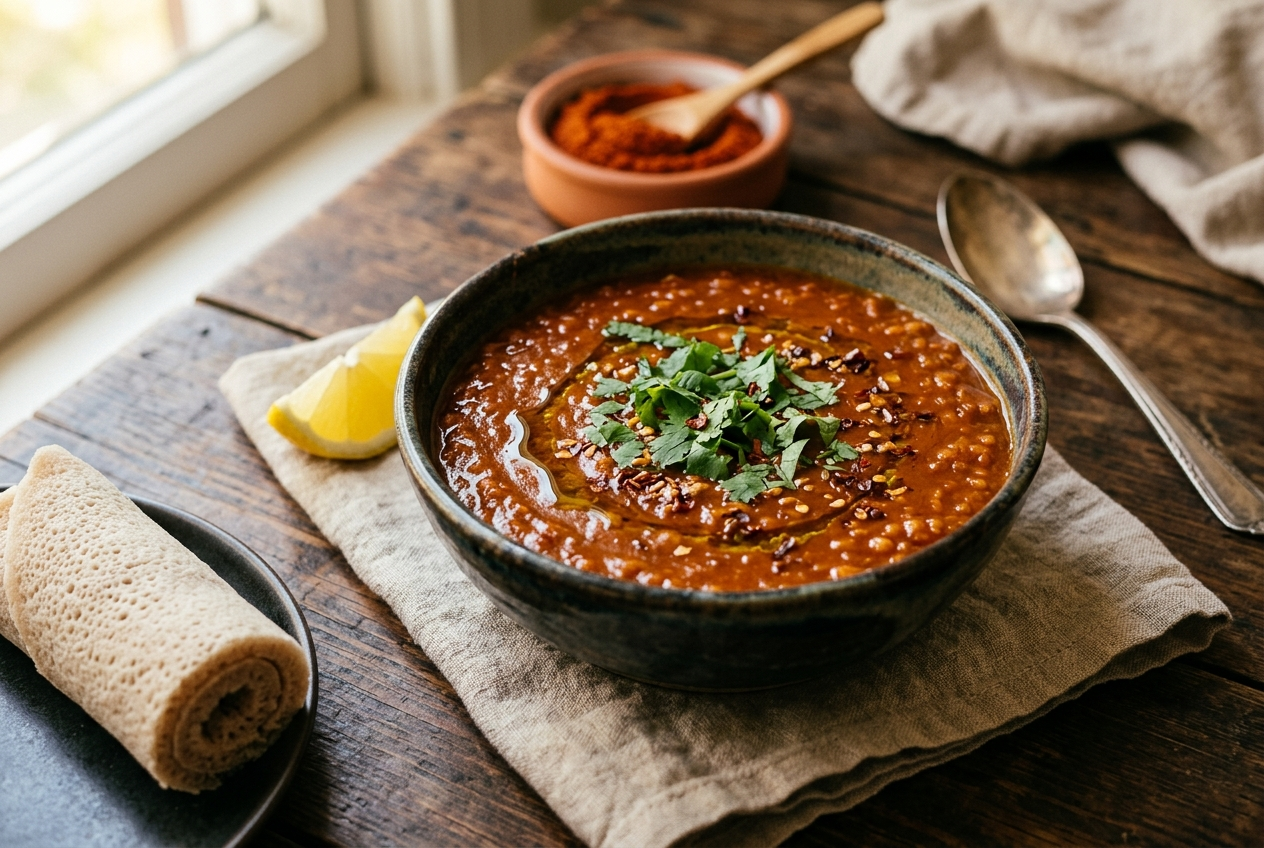
A warmly spiced Ethiopian and Eritrean red lentil stew, simmered slowly with berbere
A systems based approach to wellness and beauty
Vegan recipe - 100% plant-based. No meat, poultry, fish or sea life, no eggs, and no dairy or honey. Nothing that once was a living animal.
Caution - Allergen & Dietary Alerts
Please read before making, especially if cooking for others.
- Free of the major allergen groups as written: The stew itself is built from lentils, oil, onion, garlic, ginger, tomato paste, spices, and broth. Why: it contains no nuts, soy, dairy, egg, fish, shellfish, or sesame.
- Check your berbere blend: Spice blends vary by brand and some include additives or are processed alongside allergens. Why: read the label if you have a specific allergy or need a gluten-free blend.
- Gluten and injera: Traditional injera may be made with wheat or barley in addition to teff. Why: for a gluten-free meal use certified 100% teff injera, or serve with rice or quinoa, and confirm your broth and berbere are gluten-free.
- Vegan as written - it uses avocado or olive oil rather than niter kibbeh (Ethiopian spiced clarified butter), so there is no dairy.
Always check individual product labels, as ingredients and "may contain" warnings vary by brand.
Author, Editorial Note & Disclosure
The author brings over two decades of professional experience across biotechnology and pharmaceutical organizations, together with a long-standing passion for mindful nutrition, holistic wellness, and preventive health.
This recipe is intended for informational and educational purposes only. Nutritional estimates, where provided, are approximate and may vary based on specific ingredients, brands, and preparation methods used.
Jump To
About This Recipe
Misir wat (also spelled misir wot) is a deeply loved red lentil stew from Ethiopian and Eritrean food traditions. Misir means lentils, and wat means a stew - so the simplest description is a warmly spiced red lentil stew. Its soul is berbere, the aromatic chili-and-spice blend that gives the dish its deep red color and layered warmth.
In Ethiopian and Eritrean homes, stews like this are traditionally served with injera, a soft, slightly tangy fermented flatbread. Injera doubles as both bread and utensil: pieces are torn by hand and used to scoop the stew from a shared platter. That communal way of eating is part of what makes the cuisine so memorable.
What we love about misir wat at Hanuvier is how it turns humble pantry staples - lentils, onion, garlic, ginger, tomato paste, and spice - into something rich and comforting through patience rather than excess. Some traditional versions use niter kibbeh, a spiced clarified butter; this version stays fully plant-based with avocado or olive oil. Because it is so generous with plant protein, it pairs naturally with a serving of Hanuvier's Plant Protein & Collagen Booster, which combines plant protein with collagen-supporting nutrients in a single daily serving.
At a Glance
Prep Time: 15 minutes
Cook Time: 45 minutes
Total Time: 1 hour
Servings: 4
Difficulty: Easy
Dietary Tags: Vegan, Dairy-Free, Egg-Free, Nut-Free, Soy-Free, Gluten-Free (see serving note)
Ingredients
For the Stew
- 1 cup dry split red lentils, rinsed until the water runs mostly clear
- 2 tbsp avocado oil or olive oil
- 2 cups finely diced yellow onion (about 1 large onion)
- 2 tsp finely minced fresh garlic
- 1 tbsp finely grated fresh ginger
- 2 tbsp tomato paste
- 2 to 3 tbsp berbere spice blend, depending on preferred heat level
- 1/2 tsp ground cumin
- 1/4 tsp ground turmeric
- 3 cups low-sodium vegetable broth
- 1 cup water, plus 1/4 cup more only if needed during simmering
- 3/4 tsp fine sea salt, divided
- 1 tbsp fresh lemon juice
Optional Garnish
- 2 tbsp chopped fresh cilantro (fresh coriander leaves)
- 1 tbsp finely chopped fresh parsley
- 1 tsp olive oil, for finishing
- Lemon wedges, for serving
For Serving
- Injera (Ethiopian and Eritrean fermented flatbread), if available
- Or cooked brown rice, white rice, quinoa, or warm flatbread
Instructions
- Sort the dry red lentils and remove any small stones or debris. Transfer to a fine-mesh strainer and rinse under cold running water for 45 to 60 seconds, until the water runs mostly clear. Drain well and set aside.
- Finely dice the onion to measure about 2 cups - small enough that it melts into the stew as it cooks. Have the minced garlic and grated ginger ready in a small bowl.
- Place a Dutch oven or heavy saucepan over medium heat and add the oil. Add the diced onion and 1/4 teaspoon sea salt, and cook for 8 to 10 minutes, stirring every 1 to 2 minutes, until soft, lightly golden, and reduced. Do not rush this step - it builds the body and sweetness of the stew.
- Add the garlic and ginger and stir continuously for 45 to 60 seconds, until fragrant. If the mixture begins to stick, add 1 tablespoon water and stir.
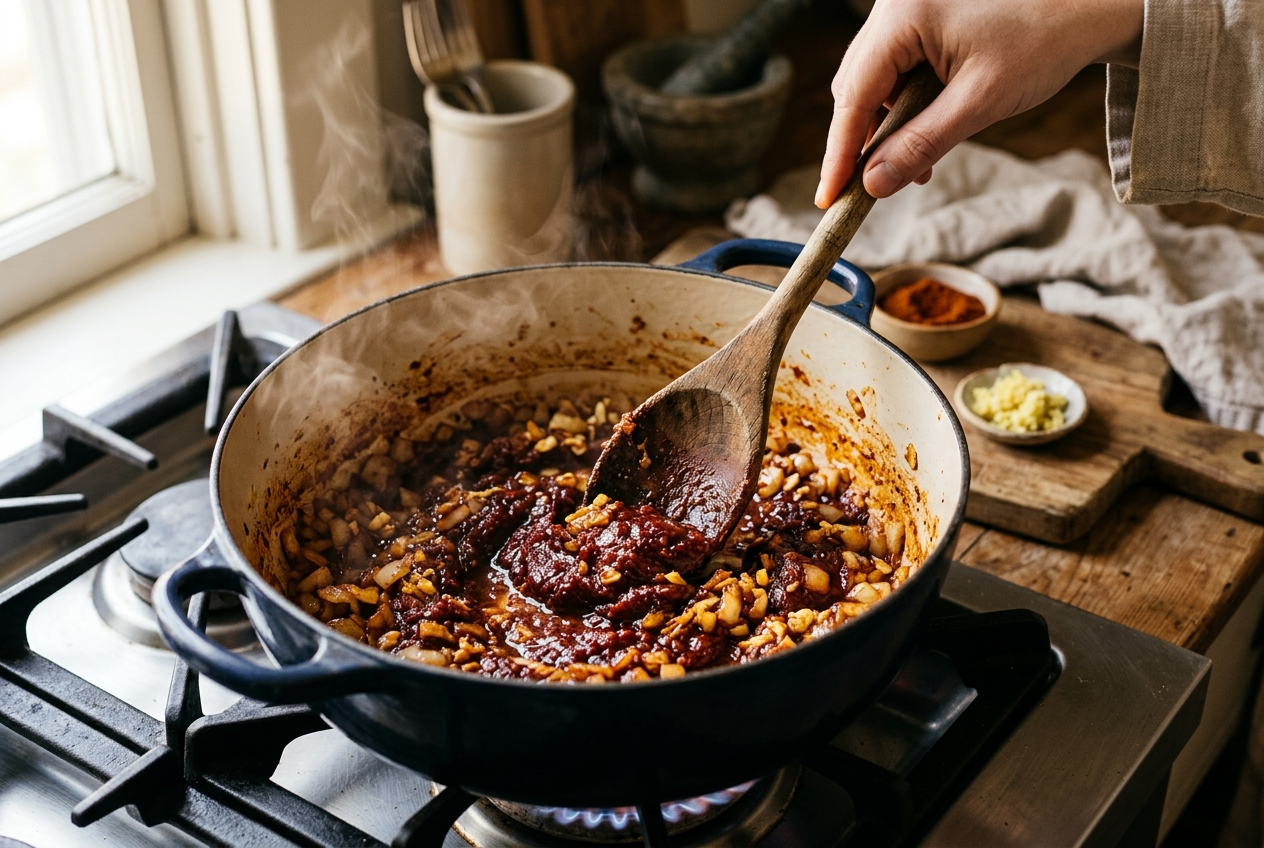
- Add the tomato paste, berbere (2 tablespoons for moderate heat, 3 for bolder), cumin, and turmeric. Stir continuously for 1 to 2 minutes, until the mixture darkens, turns aromatic, and looks slightly paste-like. This blooms the spices before the liquid goes in.
- Add the rinsed lentils and stir for 30 seconds to coat them in the onion-spice mixture.
- Pour in the vegetable broth, 1 cup water, and the remaining 1/2 teaspoon salt. Stir well, scraping the bottom of the pot to loosen any flavorful bits.
- Bring to a gentle boil over medium-high heat, then reduce to low and simmer uncovered for 25 to 30 minutes, stirring every 5 minutes, until the lentils soften and break down into a thick stew. If it thickens too much before the lentils are tender, add 1/4 cup water and continue.
- Taste a spoonful - the lentils should be completely soft with no firm center. Stir in the lemon juice, then taste again and adjust: a pinch more salt if it tastes flat, a little more lemon for brightness, a splash of water if too thick, or a teaspoon more berbere for heat.
- Turn off the heat and let the stew rest for 5 minutes so the lentils settle and the spices integrate.
- Spoon into shallow bowls and garnish with cilantro or parsley and a drizzle of olive oil if you like. Serve hot with injera, or with rice, quinoa, or warm flatbread, and a simple cucumber salad or steamed greens alongside.
Chef's Tips
- Take your time with the onion. A patient 8 to 10 minute saute is what gives misir wat its savory-sweet depth - don't rush it.
- Bloom the spices. Cooking the berbere and tomato paste for a minute or two before adding liquid wakes up their flavor and softens any raw edge.
- Adjust the heat to your blend. Berbere ranges from mild to fiery by brand. Start with 2 tablespoons, taste near the end, and add more for a bolder stew.
- Mind the texture. The stew should be thick and spoonable, not soupy or dry. Loosen with a splash of water or broth as needed - it thickens further as it rests and chills.
- Make ahead and freeze. The flavor deepens overnight. Refrigerate up to 4 days or freeze in portions up to 2 months; reheat gently with a little water or broth.
Nutritional Information
Approximate values per serving, based on 4 servings (stew only, without injera or rice). Estimated only; values vary with the berbere blend, oil, and broth used.
- Calories: approximately 250 kcal
- Protein: approximately 13 g
- Carbohydrates: approximately 32 g
- Fat: approximately 8 g
- Fiber: approximately 9 g
- Key Nutrients Present: Protein, fiber, iron, folate, potassium, manganese, vitamin A, and vitamin C.
Key features: red lentils provide plant-based protein and fiber; onion, garlic, ginger, and spices contribute aroma and culinary depth; and serving with injera, rice, or quinoa makes it a more complete and satisfying meal.
Nutrition values are approximate and may vary depending on ingredient brands, preparation method, and serving size.
Wellness Connection
At Hanuvier, we see wellness and beauty as the result of interconnected daily choices rather than isolated ingredients. Misir wat is a lovely example: fiber-rich lentils for plant protein, aromatics and spices for flavor and variety, good oil for richness, and a slow simmer that turns simple staples into something deeply nourishing.
Its strength is not one hero ingredient but the way lentils, aromatics, spices, liquid, time, and tradition work together. That is exactly the systems-based way we think about everyday nourishment - and it is practical enough to cook again and again.
Frequently Asked Questions
How spicy is misir wat, and can I adjust it?
As written it is moderate, but berbere varies a lot by brand. Start with 2 tablespoons for a gentler stew, taste near the end of cooking, and stir in up to 1 more tablespoon for a bolder, spicier result.
Is this recipe gluten-free?
The stew itself is naturally gluten-free, but two things to check: your berbere and broth should be certified gluten-free, and traditional injera is sometimes made with wheat or barley. Use 100% teff injera, or serve with rice or quinoa, for a fully gluten-free meal.
Can I use a different lentil?
Split red lentils are ideal because they cook quickly and break down into a creamy stew. Brown or green lentils hold their shape and take longer, giving a chunkier texture; if you use them, expect a longer simmer and a little more liquid.
How do I store and reheat it?
Refrigerate in an airtight container for up to 4 days, or freeze in portions for up to 2 months. The stew thickens as it sits; reheat gently on the stovetop with 1 to 3 tablespoons of water or broth, stirring until smooth and hot.
What should I serve with it?
Traditionally, injera. If that is not available, rice, quinoa, or warm flatbread all work beautifully, with a simple cucumber salad or steamed greens on the side for a balanced plate.
What is Hanuvier's systems-based approach to wellness and beauty?
The body functions as an interconnected system, with nutrients participating in multiple biological processes and often working alongside one another. Hanuvier uses this systems perspective to develop thoughtfully formulated products that support wellness, beauty, or both through a holistic approach rather than a single-ingredient focus.
Related Recipes & Articles
More plant-based recipes
- Moroccan Chickpea & Vegetable Tagine
- Greek Fasolada - Traditional White Bean Soup
- Mediterranean Lentil & Herb Salad
From the Wellness Hub
Make it a daily habit
Five collagen boosters and 20g of organic plant protein, every dose on the label.*
See what's inside HanuvierFree U.S. shipping · 60-day money-back guarantee · 10% off your first order
