
Moroccan Chickpea & Vegetable Tagine
A Colorful North African Stew for Modern Wellness
A systems based approach to wellness and beauty
Vegan recipe - 100% plant-based. No meat, poultry, fish or sea life, no eggs, and no dairy or honey. Nothing that once was a living animal.
Caution - Allergen & Dietary Alerts
Please read before making, especially if cooking for others.
- Optional tree nuts (almonds): The optional garnish uses toasted sliced almonds. Why: tree nuts are a major allergen; simply omit them for a nut-free dish.
- Naturally gluten-free and soy-free as written. Why: if you serve it over couscous or with flatbread, those add gluten - choose a gluten-free grain if needed.
- Vegan as written - no meat, poultry, fish, sea life, eggs, dairy, or honey.
Always check individual product labels, as ingredients and "may contain" warnings vary by brand.
Author, Editorial Note & Disclosure
The author brings over two decades of professional experience across biotechnology and pharmaceutical organizations, together with a long-standing passion for mindful nutrition, holistic wellness, and preventive health.
This recipe is intended for informational and educational purposes only. Nutritional estimates, where provided, are approximate and may vary based on specific ingredients, brands, and preparation methods used.
Jump To
About This Recipe
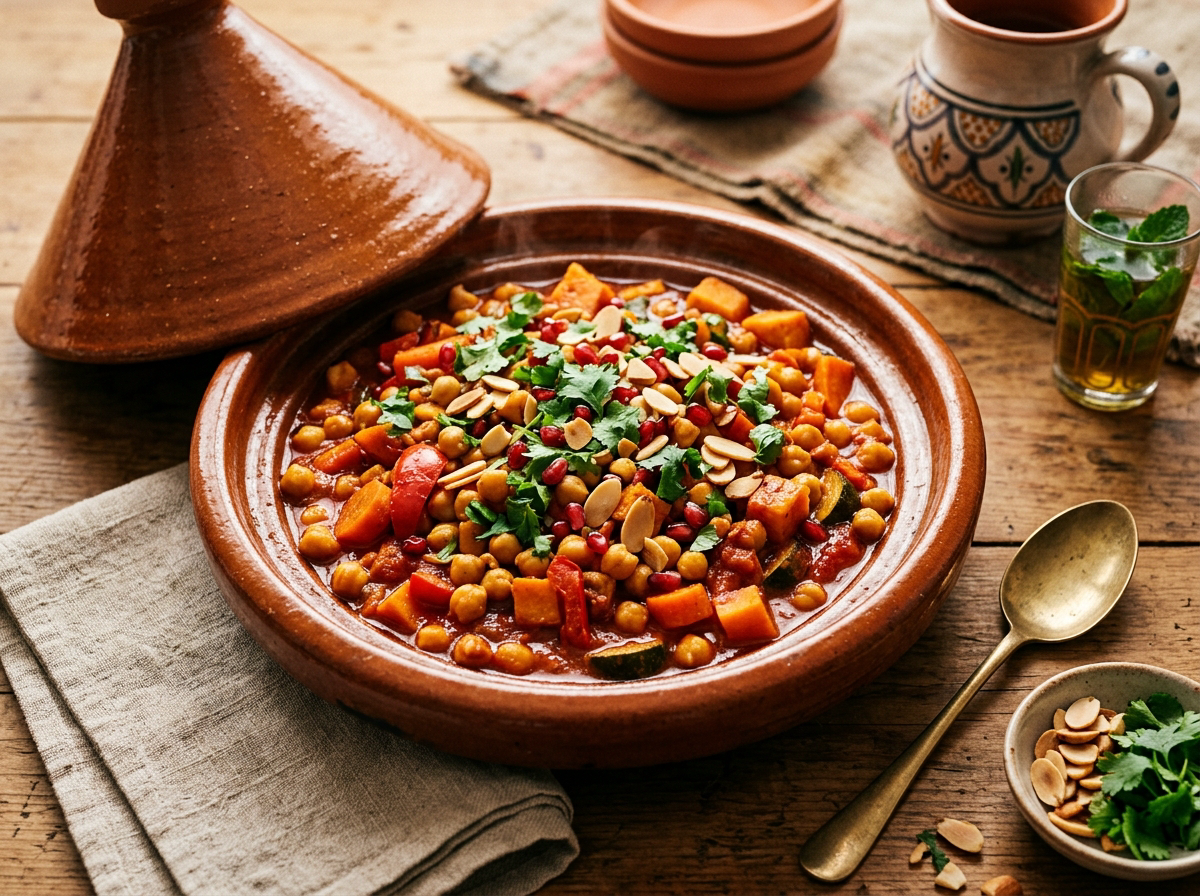
Tagine is both a vessel and a tradition. The word describes the tall-lidded clay pot that has been used across North Africa for centuries, and the slow-simmered stew prepared inside it. That distinctive cone-shaped lid is not just beautiful - it captures steam, returns moisture to the food, and allows everything to cook gently with very little added liquid. It is a design born from practical wisdom about cooking in warm, arid environments.
This plant-based chickpea and vegetable tagine draws on a long Moroccan culinary pattern: slow-cooking legumes, colorful vegetables, and aromatic spices into a dish that is fragrant, communal, and deeply satisfying. Over centuries, Moroccan tagines absorbed Amazigh/Berber, Arab, Andalusian, and Mediterranean influences - which explains the cuisine's remarkable layering of warm spice, savory depth, gentle sweetness from dried fruit, and brightness from fresh lemon and herbs. UNESCO recognizes the Mediterranean diet, including Moroccan communities, as a living cultural heritage that encompasses food knowledge, cooking practices, and the tradition of sharing meals.
This recipe brings all of that into a one-pot weeknight dinner that is as practical as it is nourishing. Warm, aromatic, naturally vegan, and built entirely from whole foods - it is the kind of meal you will come back to again and again.
To layer in additional plant-based protein alongside this chickpea-rich bowl, Hanuvier's Plant Protein & Collagen Booster complements a systems-based approach to daily nutrition - supporting your protein goals and collagen-supporting nutrient intake in a single clean serving.
At a Glance
Prep Time: 20 minutes
Cook Time: 45 minutes
Total Time: About 65 minutes
Servings: 4
Difficulty: Easy-Medium
Dietary Tags: Vegan, Gluten-Free, Nut-Free Option, Soy-Free
Ingredients
Main Ingredients
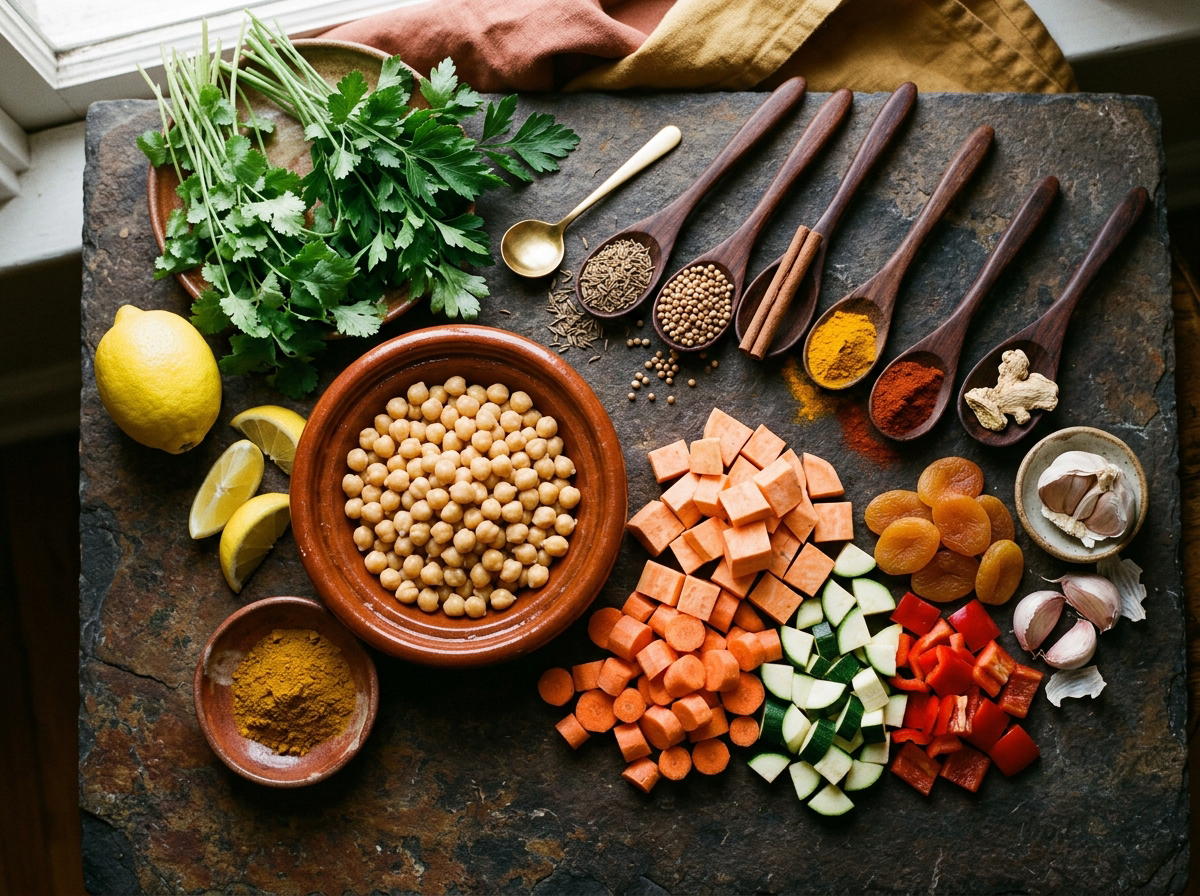
- 2 tbsp extra virgin olive oil
- 1 medium yellow onion (approximately 170 g / 6 oz), finely diced into 1/4-inch pieces
- 1 cup sliced carrots (approximately 2 medium carrots), cut into 1/4-inch rounds
- 1 cup diced sweet potato (approximately 170 g / 6 oz), peeled and cut into 1/2-inch cubes
- 1 cup diced zucchini (approximately 1 medium zucchini), cut into 1/2-inch pieces
- 1 cup diced red bell pepper (approximately 1 medium pepper), cut into 1/2-inch pieces
- 1 1/2 cups cooked chickpeas (garbanzo beans), rinsed and drained if canned
- 1 can (400 g / 14.5 oz) diced tomatoes, including juices
- 1 1/2 cups low-sodium vegetable broth
- 1/4 cup dried apricots, finely chopped into 1/4-inch pieces
- 2 tbsp tomato paste
- 1 tbsp fresh lemon juice (added at the end)
Garlic & Spice Mixture
- 2 tsp finely grated fresh garlic
- 1 tsp ground cumin
- 1 tsp ground coriander
- 1/2 tsp ground ginger
- 1/2 tsp ground turmeric
- 1/2 tsp sweet paprika
- 1/4 tsp ground cinnamon
- 1/8 tsp cayenne pepper (optional, for heat)
- 3/4 tsp sea salt
- 1/4 tsp freshly ground black pepper
Ras El Hanout Shortcut (optional)
If using ras el hanout, replace the individual spices above with: 2 tsp ras el hanout + 1/2 tsp ground cumin + 3/4 tsp sea salt + 1/4 tsp black pepper.
Optional Garnish
- 2 tbsp chopped fresh cilantro (fresh coriander leaves)
- 2 tbsp chopped fresh parsley
- 2 tbsp toasted sliced almonds
- 1 tbsp pomegranate seeds
- 1 tsp extra virgin olive oil, for finishing
- 1 lemon wedge per serving
Instructions
- Prepare the chickpeas. If using canned, drain and rinse 1 1/2 cups chickpeas under cold water for 20-30 seconds. If using home-cooked, measure 1 1/2 cups - they should be tender but still hold their shape. Set aside.
- Prepare the vegetables. Dice the onion into 1/4-inch pieces (about 1 cup). Slice carrots into 1/4-inch rounds (1 cup). Peel and cube sweet potato into 1/2-inch pieces (1 cup). Cut zucchini into 1/2-inch pieces (1 cup). Dice red bell pepper into 1/2-inch pieces (1 cup). Finely chop dried apricots into 1/4-inch pieces (1/4 cup).
- Mix the spices. In a small bowl, combine the cumin, coriander, ginger, turmeric, paprika, cinnamon, cayenne (if using), salt, and pepper. Set the bowl near the stove - pre-mixing prevents the spices from sitting on hot oil too long and burning.
- Build the aromatic base. Place a Dutch oven, deep skillet, or tagine base over medium heat. Add 2 tbsp olive oil and warm for 30-45 seconds. Add the diced onion and cook for 5-6 minutes, stirring occasionally, until soft and lightly translucent. Reduce heat to medium-low if it begins to brown too quickly.
- Bloom garlic and spices. Add 2 tsp grated garlic and stir for 30 seconds. Add the spice mixture and stir continuously for another 30 seconds - the mixture should turn very fragrant. Do not cook longer than 1 minute at this stage to avoid bitterness.
- Add tomato paste and tomatoes. Stir in 2 tbsp tomato paste for 45-60 seconds until it coats the onion and spices. Add the can of diced tomatoes with juices and stir for 1 minute, scraping the base of the pot.
- Add firm vegetables and broth. Add the carrot and sweet potato. Stir to coat with the spiced tomato base. Pour in 1 1/2 cups vegetable broth and bring to a gentle simmer over medium-high heat (3-5 minutes).
- Simmer the base. Reduce heat to low, cover, and simmer for 18 minutes. Stir once halfway through. The carrots and sweet potato should be starting to soften but not fully tender yet.
- Add chickpeas, zucchini, bell pepper, and apricots. Stir in the chickpeas, zucchini, red bell pepper, and dried apricots. Cover and simmer on low for a further 12-15 minutes until the vegetables are tender and the sauce is slightly thickened.
- Check consistency. The tagine should be saucy but not watery. If too thick, add 2 tbsp broth. If too thin, simmer uncovered for 3-5 minutes.
- Finish with lemon. Turn off the heat. Add 1 tbsp fresh lemon juice and stir gently. Taste - it should be savory, warm, lightly sweet, and bright. Adjust: more lemon for brightness, a pinch of salt if flat, or 1 tsp harissa for heat.
- Rest, then serve. Cover and rest off heat for 10 minutes - this helps the spices settle and the sauce thicken slightly. Spoon into shallow bowls over couscous, quinoa, or brown rice. Finish with cilantro, parsley, toasted almonds, pomegranate seeds, and a lemon wedge.
Chef's Tips
- Don't skip the rest. The 10-minute rest off heat after cooking is not optional - it lets the spices bloom fully into the sauce and gives the tagine its characteristic depth. It also thickens the sauce naturally.
- The dried apricots are essential. They dissolve into the sauce during cooking, adding a subtle sweetness that balances the savory spices. Don't leave them out - but chop them finely so they melt in rather than sitting in large pieces.
- Make it ahead. Tagine improves overnight. Make a full batch on Sunday and reheat gently throughout the week, adding 1-2 tbsp water or broth as needed. Add fresh lemon juice and herbs after reheating to restore brightness.
- Ras el hanout shortcut. If you have a quality Moroccan ras el hanout blend, use 2 tsp in place of the individual spices (plus 1/2 tsp cumin, salt, and pepper). Every blend is different - taste before adding more.
- Serving ideas. Traditional Moroccan style: serve with warm flatbread to scoop the sauce. Modern wellness: ladle over quinoa, millet, or cauliflower rice. For an elegant finish, the combination of toasted almonds and pomegranate seeds adds both texture and visual drama.
Nutritional Information
Approximate values per serving (based on 4 servings, without serving grain). Actual values vary with ingredient brands, chickpea type, and garnish choices.
Calories: ~280-320 kcal
Protein: ~10-12 g
Carbohydrates: ~38-44 g
Fibre: ~9-11 g
Fat: ~8-10 g (predominantly monounsaturated from olive oil)
Key Nutrients Present: Protein, fiber, folate, vitamin A, vitamin C, iron, and potassium.
Chickpeas provide plant-based protein, fibre, folate, and minerals. The colorful vegetable lineup - sweet potato, carrot, red bell pepper, zucchini, tomatoes - contributes a broad range of plant compounds. Extra virgin olive oil carries the spice flavors and adds healthy monounsaturated fats. Warm spices (cumin, coriander, turmeric, cinnamon, ginger) contribute aroma, cultural depth, and centuries of culinary tradition.
Nutrition values are approximate and may vary depending on ingredient brands, preparation method, and serving size.
Wellness Connection
At Hanuvier, we approach wellness not as the result of any single ingredient, but as the outcome of consistent, connected daily choices. This tagine is a perfect expression of that philosophy. Its strength does not come from one "hero" food - it comes from the interplay of chickpeas, colorful vegetables, olive oil, warming spices, slow cooking, and whole-food ingredients working together as a system.
It is also a deeply practical meal - affordable, flexible, one-pot, and genuinely meal-prep friendly. That combination of nourishment and real-world repeatability is exactly what a systems-based approach to wellness looks like in daily life. Knowledge -> Mindset -> Wellness -> Beauty.
Frequently Asked Questions
Can I use canned chickpeas?
Yes - and it makes this recipe very fast. Use one 400 g / 15 oz can, drained and rinsed. The tagine will taste just as good as with home-cooked chickpeas; the main difference is texture. Home-cooked chickpeas tend to have a slightly creamier interior, but canned work beautifully here.
What can I serve this with?
Traditional Moroccan style is couscous or warm flatbread (to scoop up the sauce). For a modern wellness bowl, try quinoa, millet, brown rice, or cauliflower rice. The tagine is also excellent served as-is in a shallow bowl, finished with fresh herbs, almonds, and a lemon wedge - no grain needed.
How do I store and reheat leftovers?
Refrigerate in an airtight container for up to 4 days. Reheat gently on the stovetop over low heat for 5-7 minutes, adding 1-2 tbsp water or broth if the sauce has thickened too much. Freeze for up to 2 months; thaw overnight in the fridge before reheating. Always add a squeeze of fresh lemon juice and fresh herbs after reheating - it brings the brightness back.
Can I make this without the dried apricots?
You can, but the sweet-savory balance will shift. The apricots dissolve into the sauce during cooking, providing a subtle background sweetness that rounds out the spices. If you don't have apricots, a tablespoon of raisins or a small drizzle of maple syrup can approximate the effect. Without any sweetener, the dish will be more purely savory - still excellent, just slightly different in character.
Is this recipe spicy?
The base recipe is mild-to-moderate - aromatic and warm rather than hot. The heat comes from optional cayenne (1/8 tsp). Skip it entirely for a completely gentle version. For more heat, stir in 1 tsp harissa at the end of cooking - a North African chili paste that adds heat and complexity without overpowering the spice blend.
What is Hanuvier's systems-based approach to wellness and beauty?
The body functions as an interconnected system, with nutrients participating in multiple biological processes and often working alongside one another. Hanuvier uses this systems perspective to develop thoughtfully formulated products that support wellness, beauty, or both through a holistic approach rather than a single-ingredient focus.
Related Recipes & Articles
- Greek Fasolada - Traditional White Bean Soup - Another wholesome, legume-forward one-pot recipe
- Japanese Miso Vegetable Soup - A gentle umami broth from our global wellness kitchen
- Looking Your Best Is a Strategy, Not an Accident - The Hanuvier approach to daily wellness
- Is Protein Alone Enough? The Case for a Systems-Based Approach to Wellness
Make it a daily habit
Five collagen boosters and 20g of organic plant protein, every dose on the label.*
See what's inside HanuvierFree U.S. shipping · 60-day money-back guarantee · 10% off your first order
