
Thai Red Curry Bowl
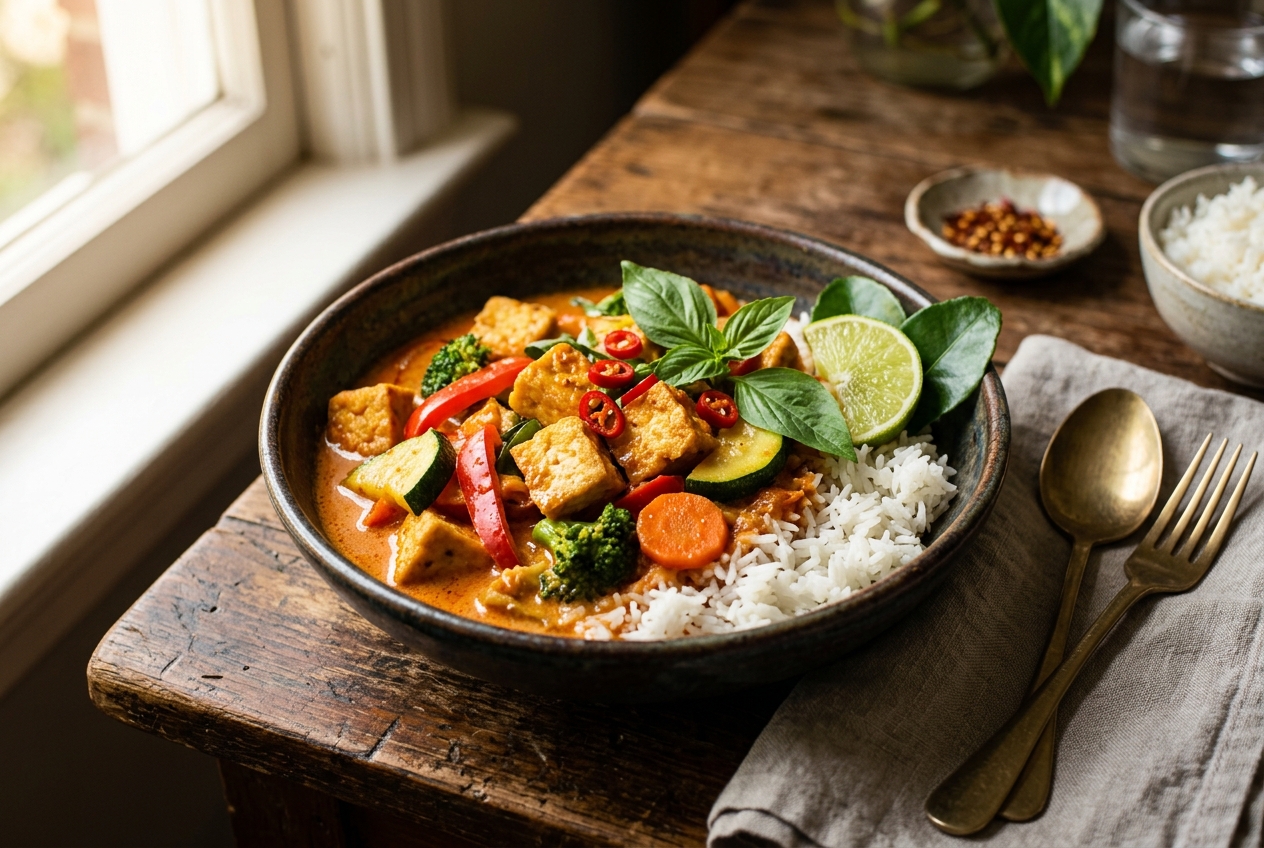
A creamy coconut red curry with tofu, vegetables, and fresh basil over jasmine rice
A systems based approach to wellness and beauty
Vegan recipe - 100% plant-based. No meat, poultry, fish or sea life, no eggs, and no dairy or honey. Nothing that once was a living animal.
Caution - Allergen & Dietary Alerts
Please read before making, especially if cooking for others.
- Contains soy: Tofu and tamari/soy sauce are soy-based. Why: soy is a major allergen and there is no soy-free version of this recipe as written.
- Contains coconut: Coconut milk (and optional coconut oil and coconut sugar) are used throughout. Why: coconut is classed as a tree nut by some authorities and can trigger tree-nut allergies.
- Check the curry paste for shellfish: Many Thai red curry pastes contain shrimp paste. Why: shellfish is a major allergen, so choose a certified vegan paste to keep this dish plant-based and shellfish-free.
- Contains sesame (optional garnish): The optional garnish uses toasted sesame seeds. Why: sesame is a recognised major allergen; omit the seeds if needed.
- Not automatically gluten-free: Standard soy sauce and some curry pastes contain wheat. Why: use certified gluten-free tamari and curry paste to make the dish safe for gluten sensitivity or celiac disease.
- Vegan, dairy-free, and egg-free as written. Why: all ingredients are plant-based, with no dairy or egg.
Allergen swaps: use tempeh or chickpeas in place of tofu and skip the sesame garnish if needed. Always check individual product labels, as ingredients and "may contain" warnings vary by brand.
Author, Editorial Note & Disclosure
The author brings over two decades of professional experience across biotechnology and pharmaceutical organizations, together with a long-standing passion for mindful nutrition, holistic wellness, and preventive health.
This recipe is intended for informational and educational purposes only. Nutritional estimates, where provided, are approximate and may vary based on specific ingredients, brands, and preparation methods used.
Jump To
About This Recipe
Thai red curry - gaeng phet - is one of the most loved dishes to come out of central Thailand, prized for its rich color, fragrant depth, and the easy balance it strikes between savory, spicy, lightly sweet, and fresh. In Thai kitchens, curries belong to a broad family of dishes called gaeng, built around herbs, aromatics, and a liquid base like coconut milk.
Its signature red hue is actually a story of culinary exchange: chili peppers arrived in Asia through post-Columbian trade, and Thai cooks wove them into existing traditions to create the vivid, aromatic curry pastes that define the cuisine today.
This Hanuvier version honors that spirit while making it easy for a modern plant-based kitchen. Tofu, coconut milk, red curry paste, crisp-tender vegetables, lime, and fresh basil come together over fluffy jasmine rice - comforting, colorful, and deeply satisfying.
At a Glance
Prep Time: 20 minutes
Cook Time: 30 minutes
Total Time: 50 minutes
Servings: 4
Difficulty: Easy
Dietary Tags: Vegan, Dairy-Free, Gluten-Free option (use tamari). Contains soy and coconut. See Allergen Alerts above.
Ingredients
Choose a vegan Thai red curry paste - some brands contain shrimp paste, so check the label.
For the Rice
- 1 cup uncooked jasmine rice
- 1 1/2 cups water
- 1/8 tsp fine sea salt
For the Curry
- 1 tbsp avocado oil or coconut oil
- 1 cup yellow onion, thinly sliced
- 1 tbsp fresh ginger, finely grated
- 2 tsp garlic, finely minced
- 3 tbsp Thai red curry paste (vegan)
- 1 can (13.5 oz) full-fat unsweetened coconut milk
- 1 cup low-sodium vegetable broth
- 1 tbsp tamari or soy sauce
- 2 tsp coconut sugar or light brown sugar
- 14 oz extra-firm tofu, pressed and cut into 3/4-inch cubes
- 1 cup red bell pepper, sliced into thin strips
- 1 cup zucchini, cut into 1/4-inch half-moons
- 1 cup broccoli florets, cut into bite-size pieces
- 3/4 cup carrots, peeled and sliced into thin rounds
- 1 tbsp fresh lime juice
- 1/2 cup loosely packed Thai basil or regular basil leaves
Optional Garnish
- 1 lime, cut into wedges
- 1 tbsp fresh cilantro, chopped
- 1 tsp toasted sesame seeds
- Thinly sliced red chili, for extra heat
Instructions
- Rinse the jasmine rice under cold water 2 to 3 times, until the water runs less cloudy, then drain well.
- Add the rice, 1 1/2 cups water, and 1/8 tsp sea salt to a small saucepan. Bring to a gentle boil over medium-high heat.
- Reduce the heat to low, cover, and cook for 12 minutes. Turn off the heat and let rest, covered, for 10 minutes, then fluff with a fork and keep warm.
- Drain the tofu, wrap it in a clean towel, and press gently for 10 to 15 minutes, then cut into 3/4-inch cubes.
- Slice the onion into thin half-moons, grate the ginger, mince the garlic, and cut the bell pepper, zucchini, broccoli, and carrots, keeping everything ready to cook.
- Warm the oil in a large skillet or Dutch oven over medium heat, then add the onion and cook for 4 to 5 minutes, stirring, until softened and translucent.
- Add the grated ginger and minced garlic and stir for 30 to 45 seconds, until fragrant - do not let the garlic brown.
- Add the red curry paste and stir continuously for 1 minute so it warms through and coats the onion, releasing its aroma.
- Pour in the coconut milk and vegetable broth, stirring until the paste fully dissolves, then stir in the tamari and coconut sugar.
- Add the tofu, carrots, broccoli, bell pepper, and zucchini, stirring gently to keep the tofu intact. Bring to a gentle simmer.
- Reduce the heat to medium-low and cook uncovered for 10 to 12 minutes, stirring occasionally, until the vegetables are tender but not falling apart.
- Turn off the heat and stir in the lime juice and basil. Taste and adjust: add a little more tamari for salt, lime for brightness, or curry paste (whisked first with 1 tbsp warm broth) for heat.
- Divide the warm rice among 4 bowls and spoon the curry and vegetables over the top, making sure each bowl gets tofu, vegetables, and plenty of sauce.
- Garnish with basil, a little cilantro if you like, and a lime wedge on the side. Serve hot.
Chef's Tips
- Keep it gluten-free. Use tamari instead of soy sauce and check that your curry paste is gluten-free.
- Dial the heat. Red curry pastes vary a lot in spiciness. Start with less, taste, and stir in more (whisked with a little warm broth) to reach your level.
- Press the tofu well. Removing excess moisture helps the cubes hold their shape and soak up the curry.
- Make it ahead. Store curry and rice separately in airtight containers in the fridge for up to 3 days; loosen the curry with a splash of water or broth when reheating gently.
- Swap the vegetables. Snap peas, baby corn, mushrooms, spinach, or sweet potato all work - just add quicker-cooking greens near the end.
Nutritional Information
Approximate per serving, based on 4 servings (curry plus rice). Values are estimates and will vary with the curry paste brand, coconut milk, and vegetable sizes used.
Calories: about 580 kcal
Protein: about 19 g
Total Fat: about 32 g
Carbohydrates: about 59 g
Fiber: about 5 g
Sodium: about 880 mg
Key Nutrients Present: Protein, fiber, vitamin A, vitamin C, vitamin K, calcium, iron, potassium.
Key nutritional features: Tofu brings plant protein and minerals; a colorful mix of bell pepper, zucchini, broccoli, and carrots adds fiber and micronutrient variety; coconut milk lends richness that carries the fat-soluble aromatics; and ginger, garlic, and basil round out the dish with fragrance and depth.
Nutrition values are approximate and may vary depending on ingredient brands, preparation method, and serving size.
Wellness Connection
This bowl is a small lesson in how whole-food eating works as a system rather than a single fix. Plant protein from tofu, a rainbow of vegetables, the satisfying richness of coconut milk, and bright herbs all work together to make a meal that is nourishing, balanced, and easy to come back to - which is exactly how we think about nourishment at Hanuvier.
On busy weeks, a bowl like this pairs naturally with Hanuvier's Plant Protein & Collagen Booster, which combines plant protein with collagen-supporting nutrients in a single daily serving. Knowledge -> Mindset -> Wellness -> Beauty.
Frequently Asked Questions
How do I make this gluten-free?
Use tamari in place of soy sauce and choose a certified gluten-free Thai red curry paste. Everything else in the recipe is naturally gluten-free.
How spicy is it, and can I adjust the heat?
As written it is mild to moderate. Curry pastes vary widely, so start with less, taste, and stir in more paste (whisked with a little warm broth) for more heat - or add sliced fresh chili at the table.
Can I use a different protein instead of tofu?
Yes. Tempeh, chickpeas, or edamame all work well. Press and cube tempeh as you would tofu, and add canned chickpeas in the last few minutes to warm through.
How do I store and reheat leftovers?
Store the curry and rice separately in airtight containers in the fridge for up to 3 days. Reheat the curry gently over low heat, adding 1 to 2 tablespoons of water or broth if it has thickened, and refresh the rice with a teaspoon of water.
Can I make it ahead or freeze it?
The curry can be made a day ahead and tastes even better as the flavors meld. It also freezes well for up to 2 months - cool completely, freeze without the rice, and thaw overnight before reheating gently.
What is Hanuvier's systems-based approach to wellness and beauty?
The body functions as an interconnected system, with nutrients participating in multiple biological processes and often working alongside one another. Hanuvier uses this systems perspective to develop thoughtfully formulated products that support wellness, beauty, or both through a holistic approach rather than a single-ingredient focus.
Related Recipes & Articles
- Japanese Miso Vegetable Soup - another gentle, umami-rich Asian bowl
- Moroccan Chickpea & Vegetable Tagine - a warmly spiced, one-pot plant-based meal
- Golden Turmeric Almond Milk - a soothing, anti-inflammatory drink to round out the meal
- Is Protein Alone Enough? The Case for a Systems-Based Approach to Wellness - why plant protein matters beyond the gym
References & Editorial Notes
- UNESCO and Thai culinary scholarship - on gaeng (Thai curry) traditions and the role of aromatic curry pastes in central Thai cooking.
- Food history sources - on the post-Columbian arrival of chili peppers in Asia and their integration into Thai cuisine.
- FoodData Central, U.S. Department of Agriculture - ingredient-level nutrition values for tofu, vegetables, coconut milk, and rice.
- Editorial note: This recipe is intended for informational and educational purposes only. It is not medical advice and is not intended to diagnose, treat, cure, or prevent any disease.
Make it a daily habit
Five collagen boosters and 20g of organic plant protein, every dose on the label.*
See what's inside HanuvierFree U.S. shipping · 60-day money-back guarantee · 10% off your first order
