
Vegan Bibimbap
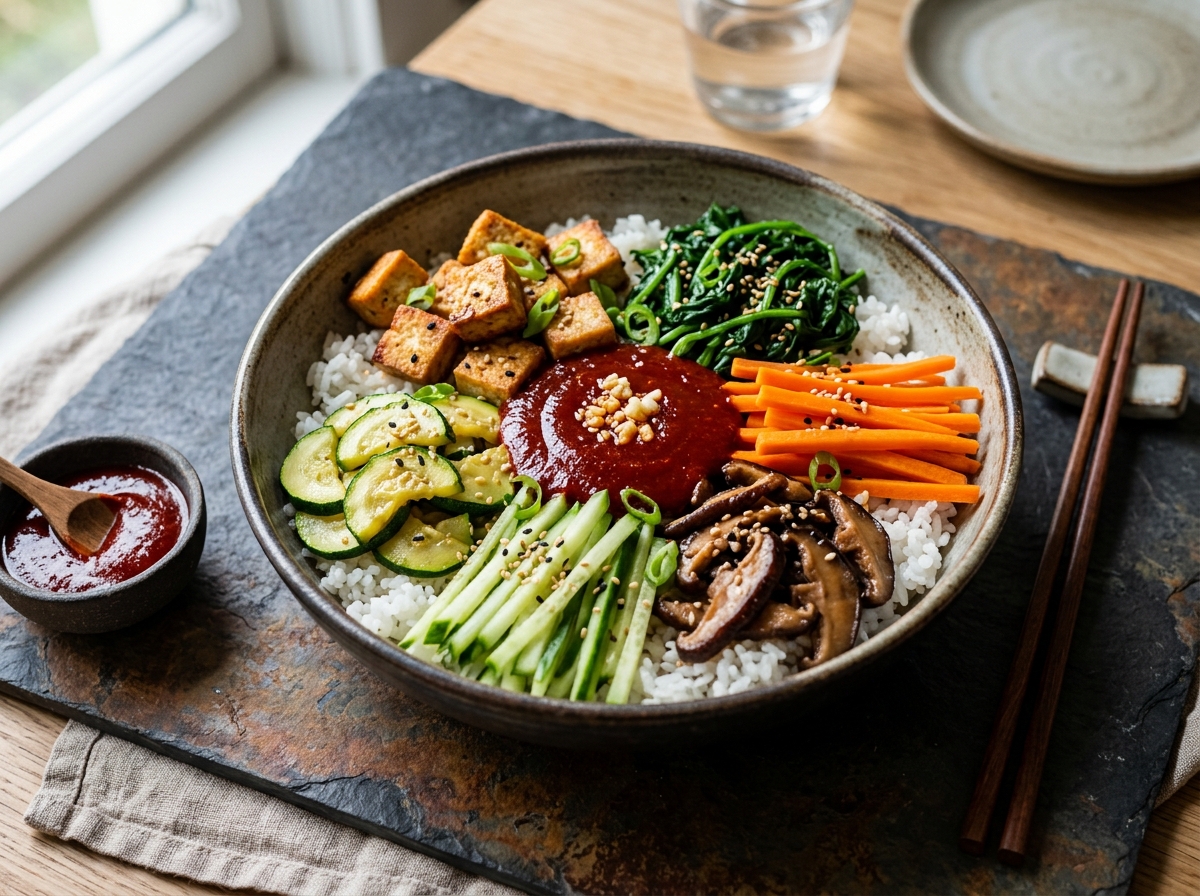
A vibrant Korean-inspired rice bowl of seasoned vegetables, golden tofu, and bold gochujang sauce
A systems based approach to wellness and beauty
Vegan recipe - 100% plant-based. No meat, poultry, fish or sea life, no eggs, and no dairy or honey. Nothing that once was a living animal.
Caution - Allergen & Dietary Alerts
Please read before making, especially if cooking for others.
- Contains soy: soy sauce/tamari and tofu are soy-based. Why: soy is a major allergen; use coconut aminos as a soy-free swap for both.
- Gluten risk from soy sauce: standard soy sauce contains wheat. Why: use certified gluten-free tamari to make this recipe gluten-free.
- Sesame: toasted sesame oil and sesame seeds appear throughout. Why: sesame is a major allergen; omit seeds and substitute avocado oil where sesame oil is called for.
- Gochujang label check required: some brands contain wheat or non-vegan ingredients. Why: always read the label and choose a vegan, gluten-free certified brand if needed.
- Vegan and Dairy-Free and Egg-Free as written with compliant ingredients.
Always check individual product labels, as ingredients and "may contain" warnings vary by brand.
Author, Editorial Note & Disclosure
The author brings over two decades of professional experience across biotechnology and pharmaceutical organizations, together with a long-standing passion for mindful nutrition, holistic wellness, and preventive health.
This recipe is intended for informational and educational purposes only. Nutritional estimates, where provided, are approximate and may vary based on specific ingredients, brands, and preparation methods used.
Jump To
About This Recipe
Bibimbap is one of Korea's most beloved and recognized dishes. The name says it all: bibim means mixing, and bap means cooked rice. You arrange everything beautifully - vegetables, tofu, sauce, all in their own distinct sections over warm rice - and then, just before eating, you mix it all together. That final stir is part of the ritual, part of the pleasure.
The dish has deep roots in Korean home cooking and regional tradition. Some origin stories connect it to ancestral rites, where prepared foods were later combined with rice. Others link it to agricultural life - workers nourishing themselves by mixing rice with whatever side dishes were available. Jeonju, a city in southern Korea, is particularly celebrated for its style of bibimbap, and has long been considered one of the dish's spiritual homes.
Traditional bibimbap includes beef and egg. This Hanuvier version keeps everything that makes the dish extraordinary - the color, the layering, the ritual mix, the bold gochujang sauce - while making it fully vegan. Golden pan-seared tofu takes the place of meat, and every vegetable is prepared individually so each brings its own distinct flavor and texture to the bowl. The result is a dish that is as beautiful to look at as it is deeply satisfying to eat.
As part of a balanced approach to daily nutrition, this recipe pairs naturally with Hanuvier's Plant Protein & Collagen Booster, which combines plant protein with collagen-supporting nutrients in a single daily serving - a fitting complement to a plant-forward bowl like this one.
At a Glance
Prep Time: 35 minutes
Cook Time: 30 minutes
Total Time: 65 minutes
Servings: 4
Difficulty: Moderate
Dietary Tags: Vegan, Dairy-Free, Egg-Free - Caution: contains soy and sesame (see Allergen Alerts above). Use certified gluten-free tamari and gochujang for a gluten-free version.
Ingredients
For the Rice
- 1 1/2 cups uncooked short-grain or medium-grain white rice
- 2 cups water (or per rice package instructions)
- 1/8 tsp fine sea salt
For the Tofu
- 14 oz extra-firm tofu, drained, pressed, and cut into 3/4-inch cubes
- 1 tbsp low-sodium soy sauce or certified gluten-free tamari
- 1 tsp toasted sesame oil
- 1 tsp rice vinegar
- 1 tsp maple syrup
- 1 tsp finely minced fresh garlic
- 1 tbsp avocado oil or neutral cooking oil, for pan-searing
For the Vegetables
- 2 cups fresh spinach, packed
- 1 cup carrots, cut into thin matchsticks
- 1 cup zucchini, cut into thin matchsticks or half-moons
- 1 cup shiitake or cremini mushrooms, thinly sliced
- 1 cup cucumber, cut into thin matchsticks
- 1 cup mung bean sprouts, optional but traditional
- 2 tsp avocado oil or neutral cooking oil, divided
- 1 tsp toasted sesame oil, divided
- 1/2 tsp fine sea salt, divided
For the Bibimbap Sauce
- 3 tbsp gochujang (Korean fermented red chili paste - check label for vegan and gluten-free)
- 1 tbsp rice vinegar
- 1 tbsp water
- 2 tsp toasted sesame oil
- 2 tsp maple syrup
- 1 tsp low-sodium soy sauce or certified gluten-free tamari
Optional Garnish
- 1 tbsp toasted sesame seeds
- 2 tbsp thinly sliced green onion (scallion)
- Extra cucumber matchsticks and extra gochujang sauce on the side
Instructions
- Rinse 1 1/2 cups rice in cold water 3 to 4 times until water runs less cloudy. Drain. Cook with 2 cups water and 1/8 tsp salt - bring to a boil, reduce to low, cover, and cook for 15 minutes. Rest covered 10 minutes. Fluff before serving.
- Drain the tofu and press in a towel for 10 to 15 minutes. Cut into 3/4-inch cubes.
- Whisk together soy sauce, sesame oil, rice vinegar, maple syrup, and garlic. Add tofu cubes and toss gently. Marinate 10 minutes.
- Wash and dry all vegetables. Cut carrots and zucchini into matchsticks. Slice mushrooms. Cut cucumber into matchsticks. Keep each vegetable separate.
- Whisk together gochujang, rice vinegar, water, sesame oil, maple syrup, and soy sauce until smooth. Add 1 extra tsp water if too thick.
- Blanch spinach in boiling water for 30 seconds. Drain, rinse with cold water, squeeze dry. Season with 1/4 tsp sesame oil and a pinch of salt.
- Heat skillet with 1/2 tsp avocado oil. Cook carrot matchsticks with a pinch of salt for 2 to 3 minutes until slightly softened but still bright. Transfer.
- Add 1/2 tsp avocado oil. Cook zucchini with a pinch of salt for 2 to 3 minutes until just tender. Transfer. Do not overcook.
- Add 1 tsp avocado oil. Cook mushrooms with a pinch of salt for 4 to 5 minutes until tender and lightly browned. Transfer.
- Keep cucumber raw. If using sprouts, blanch 1 minute, drain, rinse, season with 1/4 tsp sesame oil and a pinch of salt.
- Wipe skillet clean. Add 1 tbsp avocado oil. Pan-sear marinated tofu for 3 to 4 minutes per side until lightly golden.
- Divide warm rice among 4 bowls. Arrange all components in separate sections over the rice.
- Spoon 1 to 2 tbsp sauce over each bowl or serve on the side. Garnish with sesame seeds and green onion.
- Mix the rice, vegetables, tofu, and sauce together until lightly coated before eating. The mixing step is part of the character of bibimbap.
Chef's Tips
- Press the tofu well. The drier the tofu before it hits the pan, the better the golden sear.
- Cook each vegetable separately. It takes longer but is the defining technique of bibimbap.
- Taste the sauce before serving. Gochujang varies in heat and saltiness between brands.
- Make it ahead. All components can be cooked and stored separately up to 3 days. Keep cucumber raw and add sauce only at serving time.
- Brown rice option. Swap white rice for short-grain brown rice for more fiber. Adjust cooking time per package - typically 40 to 45 minutes.
Nutritional Information
Approximate values per serving, based on 4 servings. Values will vary with rice type, tofu brand, sauce amount, and whether sprouts are included.
- Calories: approximately 430-480 kcal
- Protein: approximately 16-20 g
- Carbohydrates: approximately 60-65 g
- Fat: approximately 12-15 g
- Fiber: approximately 6-8 g
- Key Nutrients Present: Plant protein, fiber, vitamin A, vitamin C, iron, calcium, potassium, magnesium.
Nutrition values are approximate and may vary depending on ingredient brands, preparation method, and serving size.
Wellness Connection
At Hanuvier, wellness is about the accumulation of intelligent daily choices rather than the pursuit of any single ingredient. Vegan bibimbap embodies that thinking beautifully. No single component carries the bowl - its value comes from the whole: rice as a steady base, tofu for plant-based protein, spinach and carrots contributing different vitamins, mushrooms for depth and mineral content, fermented gochujang adding complexity and the benefits associated with traditionally fermented foods.
The act of mixing is also a kind of metaphor. The strength of this dish only appears after all the parts come together. That is the systems-based philosophy at the heart of everything Hanuvier does.
Frequently Asked Questions
Is this recipe gluten-free?
It can be made gluten-free with two substitutions: use certified gluten-free tamari instead of soy sauce, and choose a certified gluten-free gochujang. Rice is naturally gluten-free.
Can I use a different protein instead of tofu?
Yes. Edamame, tempeh, or cooked chickpeas all work well. Tempeh will give the closest texture to the original tofu preparation.
How spicy is gochujang?
Gochujang is mild to moderate in heat - savory and deeply flavourful with warmth rather than sharp heat. Start with 2 tbsp if you prefer mild, then add more after tasting.
How long do leftovers keep?
Store all components separately in airtight containers for up to 3 days. The bibimbap sauce keeps separately for up to 5 days refrigerated.
Can I substitute any of the vegetables?
Yes - bibimbap is traditionally flexible. Good substitutions include thinly sliced bell pepper, blanched broccolini, or shredded purple cabbage. Keep the variety for colour, nutrition, and visual appeal.
What is Hanuvier's systems-based approach to wellness and beauty?
The body functions as an interconnected system, with nutrients participating in multiple biological processes and often working alongside one another. Hanuvier uses this systems perspective to develop thoughtfully formulated products that support wellness, beauty, or both through a holistic approach rather than a single-ingredient focus.
Related Recipes & Articles
More plant-based recipes
- Gazpacho - Chilled Spanish Tomato Soup
- Misir Wat - Ethiopian Red Lentil Stew
- Vietnamese Summer Rolls
From the Wellness Hub
Make it a daily habit
Five collagen boosters and 20g of organic plant protein, every dose on the label.*
See what's inside HanuvierFree U.S. shipping · 60-day money-back guarantee · 10% off your first order
