
Vietnamese Summer Rolls
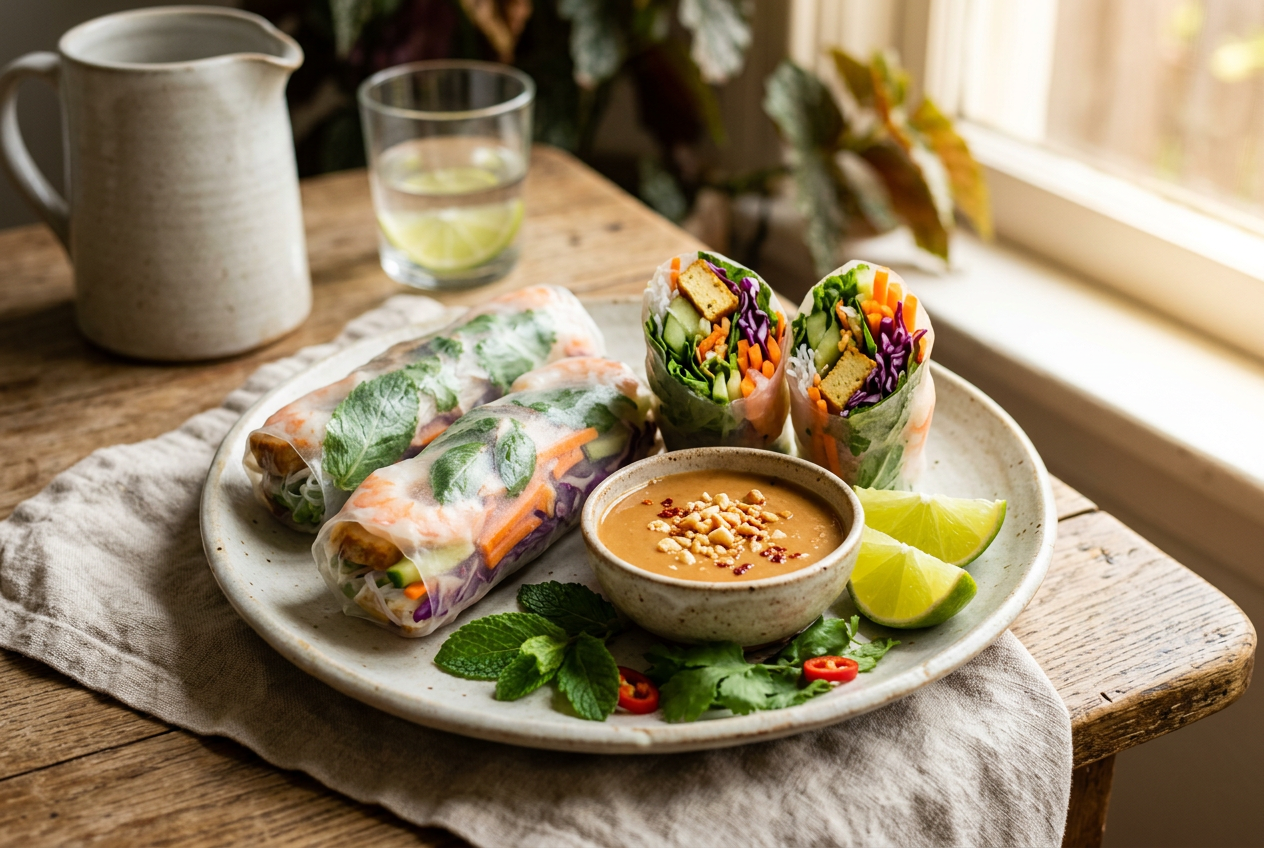
Fresh rice paper rolls filled with herbs, crisp vegetables, rice noodles, and tofu, served with a creamy peanut-lime dipping sauce
A systems based approach to wellness and beauty
Vegan recipe - 100% plant-based. No meat, poultry, fish or sea life, no eggs, and no dairy or honey. Nothing that once was a living animal.
Caution - Allergen & Dietary Alerts
Please read before making, especially if cooking for others.
- Contains peanuts (tree-nut note): The peanut-lime dipping sauce uses peanut butter, and the garnish uses crushed roasted peanuts. Peanuts are a legume but one of the most common and serious food allergens. Why: peanut allergy can be severe, so this dish is not safe as written for peanut-allergic guests. See the nut-free swap below.
- Contains soy: Tofu and tamari/soy sauce are both soy-based. Why: soy is a major allergen and there is no soy-free version of this recipe as written.
- Contains sesame: The tofu is seasoned with toasted sesame oil. Why: sesame is a recognised major allergen; omit the sesame oil if needed.
- Not automatically gluten-free: Rice paper and rice noodles are gluten-free, but standard soy sauce contains wheat. Why: use certified gluten-free tamari (and a gluten-free chili-garlic sauce) to make the dish safe for gluten sensitivity or celiac disease.
- Vegan, dairy-free, and egg-free as written. Why: all ingredients are plant-based, with no dairy or egg.
Nut-free option: replace the peanut butter with sunflower seed butter or tahini and skip the crushed-peanut garnish. Always check individual product labels, as ingredients and "may contain" warnings vary by brand.
Author, Editorial Note & Disclosure
The author brings over two decades of professional experience across biotechnology and pharmaceutical organizations, together with a long-standing passion for mindful nutrition, holistic wellness, and preventive health.
This recipe is intended for informational and educational purposes only. Nutritional estimates, where provided, are approximate and may vary based on specific ingredients, brands, and preparation methods used.
Jump To
About This Recipe
Vietnamese summer rolls are known by many names in English - fresh spring rolls, salad rolls, or rice paper rolls. Their Vietnamese name is Goi cuon, which means fresh salad-style rolls wrapped in banh trang, the thin rice paper that gives them their signature translucent shimmer.
Unlike fried spring rolls, Goi cuon are served fresh, at room temperature or lightly chilled. They reflect one of the most beautiful ideas in Vietnamese cooking: balance. Soft rice paper, tender noodles, crisp vegetables, fragrant herbs, and a flavorful dipping sauce all come together in a single light, hand-held meal. Traditional versions often include shrimp and pork. This Hanuvier version is fully plant-based, using tofu as the protein while keeping the essential spirit of the dish - freshness, herbs, texture, and balance - completely intact.
These rolls are a joy to make and even more of a joy to share. They are endlessly customizable, naturally colorful, and they teach a quiet but important lesson: a nourishing meal does not have to be heavy to be satisfying. If you would like to add a little extra plant protein to your day, these rolls pair beautifully alongside a serving of Hanuvier's Plant Protein & Collagen Booster, which combines plant protein with collagen-supporting nutrients in a single daily serving.
At a Glance
Prep Time: 35 minutes
Cook Time: 5 minutes
Total Time: 40 minutes
Servings: 4 (makes 8 rolls; 2 rolls per serving)
Difficulty: Medium
Dietary Tags: Vegan, Dairy-Free, Egg-Free, Gluten-Free (use tamari), Contains Peanuts
Ingredients
For the Rolls
- 8 round rice paper wrappers (8 to 9 inches wide)
- 4 oz dry rice vermicelli noodles (thin rice noodles)
- 8 oz extra-firm tofu, drained, pressed, and cut into 16 thin strips
- 1 tbsp low-sodium tamari or soy sauce (to season the tofu)
- 1 tsp toasted sesame oil (to season the tofu)
- 1 medium cucumber (about 8 oz), cut into 3-inch matchsticks
- 1 large carrot (about 4 oz), peeled and cut into 3-inch matchsticks
- 8 large butter lettuce or romaine leaves, thick stems removed
- 1/2 cup fresh mint leaves, loosely packed
- 1/2 cup fresh basil leaves, loosely packed (Thai basil preferred if available)
- 1/2 cup fresh cilantro leaves (fresh coriander leaves), loosely packed
- 1/2 cup red cabbage, very thinly sliced (optional, for color and crunch)
- 1 medium avocado, cut into 16 thin slices (optional, for creaminess)
For the Peanut-Lime Dipping Sauce
- 1/4 cup creamy unsweetened peanut butter
- 2 tbsp fresh lime juice
- 1 tbsp low-sodium tamari or soy sauce
- 1 tbsp maple syrup
- 1 tsp finely grated fresh ginger
- 1 tsp finely minced fresh garlic
- 3 to 5 tbsp warm water, added gradually for desired texture
- 1/2 tsp chili-garlic sauce (optional, for gentle heat)
Optional Garnish
- 1 tbsp crushed roasted peanuts
- 1 tbsp chopped fresh cilantro
- Lime wedges, for serving
Instructions
- Drain the tofu, wrap it in a clean towel, and press gently for 10 minutes to remove excess moisture. Cut into 16 thin strips, each about 3 inches long and 1/2 inch wide.
- Place the tofu strips in a shallow bowl. Add 1 tablespoon tamari and 1 teaspoon toasted sesame oil, then turn gently so every piece is lightly coated. Let sit for 5 minutes while you prepare the noodles.
- Bring 4 cups of water to a boil in a medium saucepan. Add the rice vermicelli and cook according to the package directions, usually 3 to 5 minutes, until tender but not mushy.
- Drain the noodles in a fine-mesh strainer and rinse under cold water for 20 to 30 seconds. Shake off the excess, then snip once or twice with kitchen scissors so they are easier to portion.
- Wash and dry all vegetables and herbs. Cut the cucumber and carrot into thin 3-inch matchsticks, thinly slice the red cabbage if using, remove the thick stems from the lettuce, and slice the avocado if using.
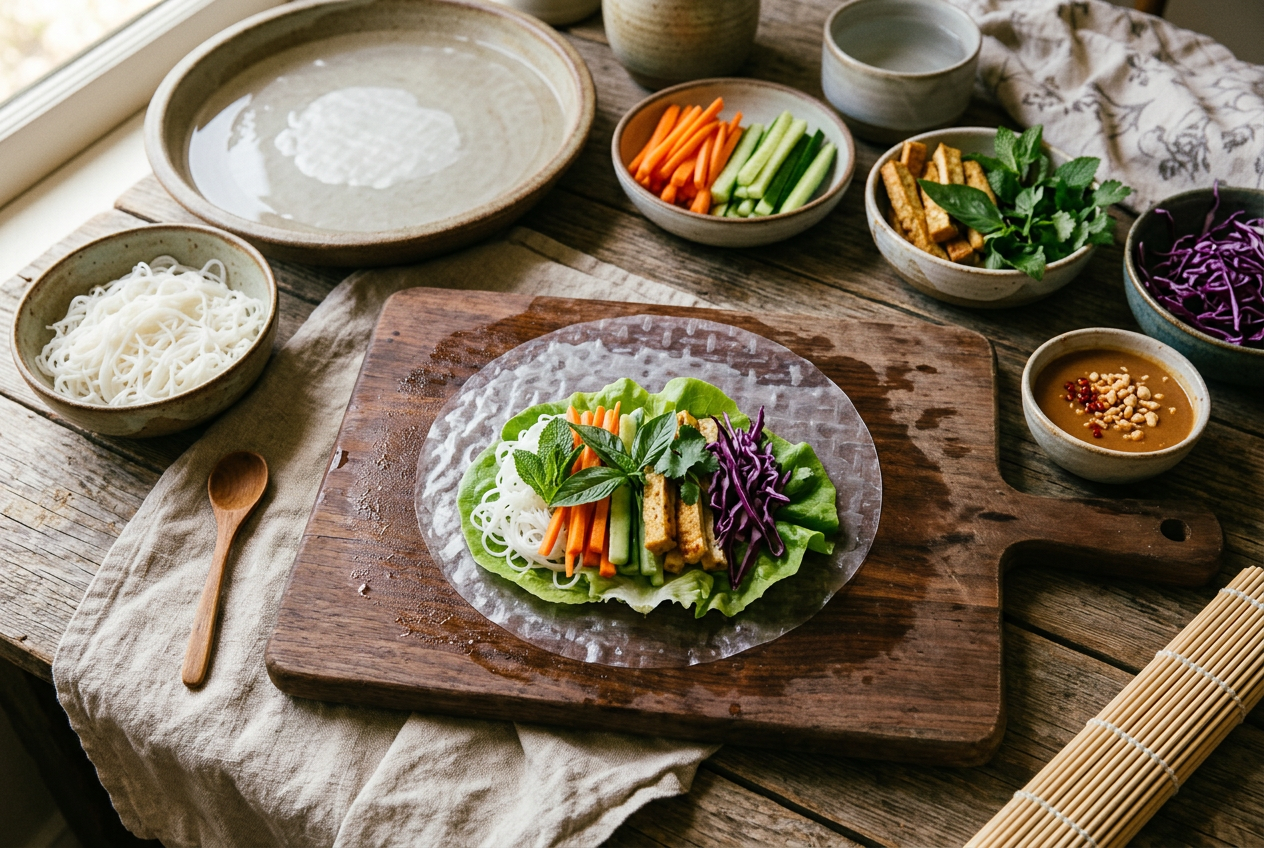
- Arrange the cucumber, carrot, lettuce, herbs, cabbage, avocado, tofu, and noodles on a large plate or board. Having everything ready before you roll makes the process much easier.
- Make the sauce: in a small bowl, whisk together the peanut butter, lime juice, tamari, maple syrup, grated ginger, and minced garlic until thick and smooth.
- Add warm water 1 tablespoon at a time, using 3 to 5 tablespoons total, until the sauce is creamy and pourable. Stir in the chili-garlic sauce only if you want gentle heat. Taste - it should be creamy, lightly tangy, slightly sweet, and savory.
- Set up your rolling station: fill a wide shallow bowl with warm water and place a clean damp towel or damp cutting board in front of you, with all fillings within reach.
- Dip one rice paper wrapper into the warm water for 5 to 7 seconds, rotating once so the whole surface is wet. Remove it while still slightly firm; it will keep softening as you fill it. Lay it flat on the damp surface.
- Place 1 lettuce leaf on the lower third of the wrapper, leaving about 1 inch clear on the left, right, and bottom edges. Add about 2 tablespoons of noodles on top of the lettuce.
- Add 2 tofu strips, 4 to 5 cucumber matchsticks, 4 to 5 carrot matchsticks, a small pinch of red cabbage, 2 mint leaves, 2 basil leaves, a few cilantro leaves, and 2 avocado slices if using. Do not overfill - a slightly smaller roll is easier to close and looks cleaner.
- Fold the bottom edge of the rice paper over the filling and gently pull it back toward you to tighten. Fold in the left and right sides, then continue rolling upward until sealed. Place seam-side down on a plate and cover lightly with a damp towel.
- Repeat with the remaining 7 wrappers. If a wrapper tears, wrap a second softened sheet around it. If rolls feel too loose, use slightly less filling; if too sticky, use cooler water or a shorter soak.
- Serve the rolls whole or cut diagonally in half. Arrange on a platter with the peanut-lime sauce in a small bowl and garnish with crushed peanuts, chopped cilantro, or lime wedges if desired.
Chef's Tips
- Do not over-soak the wrappers. A 5 to 7 second dip is enough; the paper continues to soften on the board. Over-soaked wrappers turn sticky and tear.
- Prep everything first. Summer rolls come together fast once you start rolling, so having all fillings cut and within reach makes the whole process smooth.
- Customize the protein. Swap tofu for tempeh, edamame, or extra avocado. For a nut-free sauce, use sunflower seed butter and tamari in place of peanut butter.
- Make ahead, gently. These are best within 2 hours but will keep up to 24 hours in a single layer in an airtight container, lined and covered with damp paper towels. Do not freeze.
- Serve them refreshed. If the rice paper firms up in the fridge, let the rolls sit at room temperature for 10 minutes before serving.
Nutritional Information
Approximate values per serving (2 rolls with sauce, based on 4 servings). Estimated only; values vary with wrapper size, tofu brand, sauce thickness, and whether optional avocado is included.
- Calories: approximately 390 kcal
- Protein: approximately 12 g
- Carbohydrates: approximately 44 g
- Fat: approximately 14 g
- Fiber: approximately 4 g
- Key Nutrients Present: Protein, fiber, vitamin A, vitamin C, iron, potassium, magnesium.
Key features: tofu contributes plant-based protein; fresh vegetables and herbs add hydration, color, and plant diversity; rice paper and rice noodles create a light carbohydrate base; and the peanut-lime sauce adds healthy fats, flavor, and satiety.
Nutrition values are approximate and may vary depending on ingredient brands, preparation method, and serving size.
Wellness Connection
At Hanuvier, we see wellness and beauty as the outcome of interconnected systems rather than any single ingredient. These summer rolls are a lovely illustration of that idea: plant protein, hydration-supportive vegetables, fresh herbs, light carbohydrates, and healthy fats all working together in one fresh, satisfying format.
Rather than leaning on one hero ingredient, Vietnamese Summer Rolls show how texture, flavor, freshness, and balance can support a broader foundation of everyday wellness - a reminder that eating well is a gentle daily strategy, not a restriction.
Frequently Asked Questions
Can I make these gluten-free?
Yes. Rice paper wrappers and rice vermicelli are naturally gluten-free. Simply use certified gluten-free tamari in place of soy sauce, and check that your chili-garlic sauce is gluten-free.
How do I make the dipping sauce nut-free?
Swap the peanut butter for sunflower seed butter or tahini and skip the crushed peanut garnish. The sauce stays creamy and tangy with the same lime, tamari, and maple base.
How far ahead can I make the rolls?
They are at their best within 2 hours of rolling. To store, keep them in a single layer in an airtight container lined with a damp paper towel, with another damp towel over the top, and refrigerate for up to 24 hours. Do not freeze, as the rice paper becomes hard.
My wrappers keep tearing. What am I doing wrong?
Usually the paper is over-soaked. Dip for only 5 to 7 seconds and remove it while still slightly firm - it softens fully on the board. Avoid overfilling, which also strains the wrapper.
Can I add a different protein?
Absolutely. Tempeh, edamame, or seasoned mushrooms all work well in place of tofu while keeping the rolls fully plant-based.
What is Hanuvier's systems-based approach to wellness and beauty?
The body functions as an interconnected system, with nutrients participating in multiple biological processes and often working alongside one another. Hanuvier uses this systems perspective to develop thoughtfully formulated products that support wellness, beauty, or both through a holistic approach rather than a single-ingredient focus.
Related Recipes & Articles
More plant-based recipes
From the Wellness Hub
Make it a daily habit
Five collagen boosters and 20g of organic plant protein, every dose on the label.*
See what's inside HanuvierFree U.S. shipping · 60-day money-back guarantee · 10% off your first order
