
Holistic Beauty: Why Wellness and Beauty Can't Exist Without Each Other
What science suggests about the connection between feeling well and looking your best, and how a systems-based approach brings the two together.
A systems based approach to wellness and beauty
By Vikas Tiwari, Founder, Hanuvier
About the author. Vikas Tiwari is the founder of Hanuvier and the author behind the Hanuvier Wellness Hub. His education spans science, law, and business: Chemistry, Physics, and Math as an undergraduate, followed by a degree in Law, a master's in Industrial Relations, and an MBA from the University of Maryland at College Park. He spent nearly two decades in executive roles across leading biotech organizations and global institutions, including The World Bank, Amgen, Myovant Sciences, and Sage Therapeutics, and advised major pharma companies such as Novartis, Novo Nordisk, and Boehringer Ingelheim through consulting engagements with Cognizant.
His philosophy. Nothing in the body works alone. The body is a coming together of many systems working in harmony - and wellness itself works the same way. Physical, emotional, and spiritual wellbeing are each systems in their own right, deeply interconnected and feeding off one another. That understanding is at the heart of Hanuvier: A Systems Based Approach to Wellness and Beauty, caring for the whole person, because no dimension of wellness stands alone.
Beyond his work. A vegetarian and vegan for 45 years, Vikas brings a lifelong passion for nutrition science, mindful living, and meditation. He believes knowledge is the first step on every wellness journey.
Editorial note & disclosure. This article is based on an objective review of publicly available scientific literature and educational resources referenced throughout. It is intended for informational and educational purposes only and should not be construed as medical advice.
Jump To
- Introduction
- Wellness and Beauty: Two Sides of the Same Coin
- Why Beauty Often Starts Beneath the Surface
- The Hidden Role of Mindset and Emotional Wellness
- Can Beauty and Wellness Be Separated?
- A Practical Framework for Looking and Feeling Your Best
- The Hanuvier Framework
- Bringing It All Together
- Frequently Asked Questions
- Related Articles
- References
Introduction
Ask someone what "beauty" means, and they will likely describe something visible: healthy skin, shiny hair, a radiant glow. Ask the same person what "wellness" means, and the answer often shifts inward - toward energy, sleep, mood, and balance. It is tempting to treat these as two separate pursuits, one for the mirror and one for the doctor's office. But a closer look at the biology involved tells a more connected story. Skin, hair, and nails are living tissues, and like every other tissue in the body, they depend on the same nutritional, hormonal, and lifestyle systems that influence how we feel. This article explores why wellness and beauty may be harder to separate than they first appear - and introduces a practical framework for approaching both as part of the same long-term journey. Beauty starts within, and the science increasingly supports that position.
Wellness and Beauty: Two Sides of the Same Coin
Beauty and wellness are often treated as separate categories - almost as if they belong to two different departments of a person's life. Beauty gets filed under appearance, while wellness gets filed under health. Yet a growing body of scientific literature suggests that this separation may be more cultural than biological.1,2
Cosmetic products and beauty and wellness products can temporarily enhance how skin, hair, and nails look on the surface. But many of the visible qualities people associate with beauty - things like skin tone, hydration, and resilience - are influenced by what is happening underneath: nutrition and beauty inputs, hydration status, sleep and skin health, circulation, hormonal balance, and overall physiological health.3,4
In other words, beauty and wellness may not be two separate coins. They may be two faces of the same one. Inner beauty vs outer beauty is not really a competition - the science suggests they are expressions of the same underlying systems.
Why Beauty Often Starts Beneath the Surface
Many people think of beauty as something applied from the outside in - a serum, a cream, a treatment. Science suggests a more complete picture: beauty starts within, at the cellular level. This is the foundation of a holistic approach to beauty that goes beyond surface treatments.
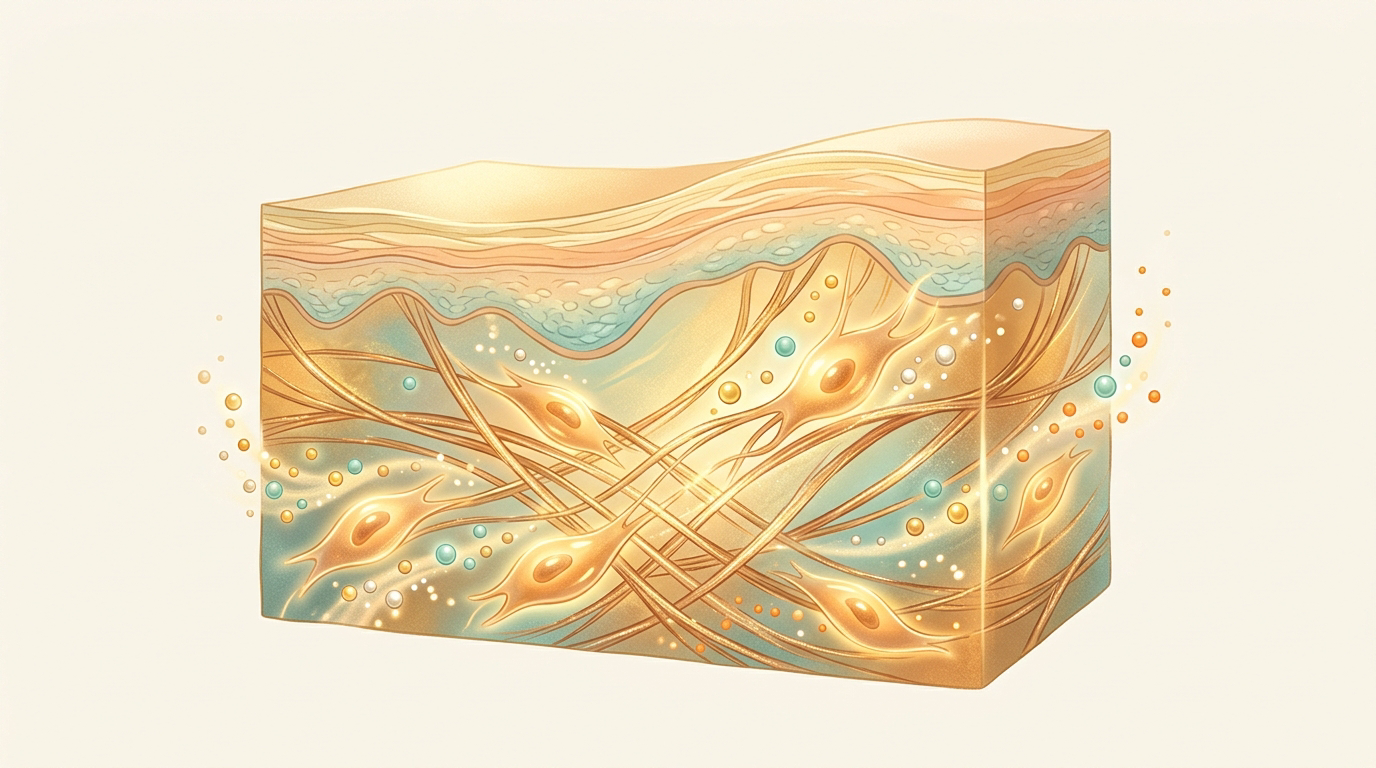
The body is constantly renewing skin cells, synthesizing structural proteins, repairing tissue, and defending itself against everyday environmental stressors. These processes depend heavily on adequate nutrition. Nutrition and beauty are more closely linked than most people realize: protein provides essential building blocks involved in skin, hair, nail, and connective tissue structure, while nutrients such as vitamin C, vitamin E, zinc, and biotin participate in biological processes associated with skin health and wellness, structural protein synthesis, and normal cellular function.5,6,7,8
This is part of why Hanuvier has formulated a plant protein and collagen booster that brings several of these nutritional building blocks together in one daily routine. For those exploring beauty and wellness products that support the body from within, the Hanuvier Plant Protein & Collagen Booster simplifies a routine that would otherwise require tracking several individual nutrients separately.
Hydration and skin health are closely linked - hydration plays a supporting role in skin appearance and tissue function. Sleep and skin health are also connected: adequate sleep has been associated with healthier skin barrier function and overnight tissue recovery.9,10 None of these factors works in isolation. They are part of an interconnected nutritional and physiological system - which is precisely why Hanuvier encourages thinking in terms of systems rather than single ingredients.
The Hidden Role of Mindset and Emotional Wellness
True wellness extends well beyond nutrition. Mindset and emotional health play a role too - often a hidden one in the skin health and wellness conversation.

Research suggests that chronic stress may contribute to increased inflammation and oxidative stress within the body - biological processes that have been associated with various aspects of health, including skin health and wellness and visible signs of stress and skin aging.11,12
Conversely, regular physical activity, restorative sleep, mindfulness practices, supportive social connections, and balanced nutrition and beauty habits have all been associated with improved overall well-being and healthier aging patterns.13,14
In many ways, how we think, feel, and live tends to eventually become visible in how we look. The mind and the mirror may be more connected than most people assume - and managing stress and skin aging together is part of what a holistic approach to beauty actually requires.
Can Beauty and Wellness Be Separated?
To some extent, yes. Cosmetics, beauty and wellness products, and aesthetic treatments can enhance appearance and help people look and feel their best in the short term.
However, scientific literature suggests that achieving beauty outcomes that last may be more difficult when foundational wellness factors are neglected. Healthy-looking skin, resilient hair, physical vitality, and graceful aging often depend on biological processes that originate inside the body - not just on what is applied to its surface.3,5 This is the essential argument behind beauty from within: nutrition for skin health, sleep and skin health, hydration and skin health, and stress management all contribute to outcomes that no topical product can fully replicate.
This is part of why many experts increasingly describe wellness and beauty as complementary outcomes of the same underlying systems, rather than independent goals pursued through entirely different routines. Inner beauty vs outer beauty is ultimately a false division - both are expressions of the same biology.
A Practical Framework for Looking and Feeling Your Best
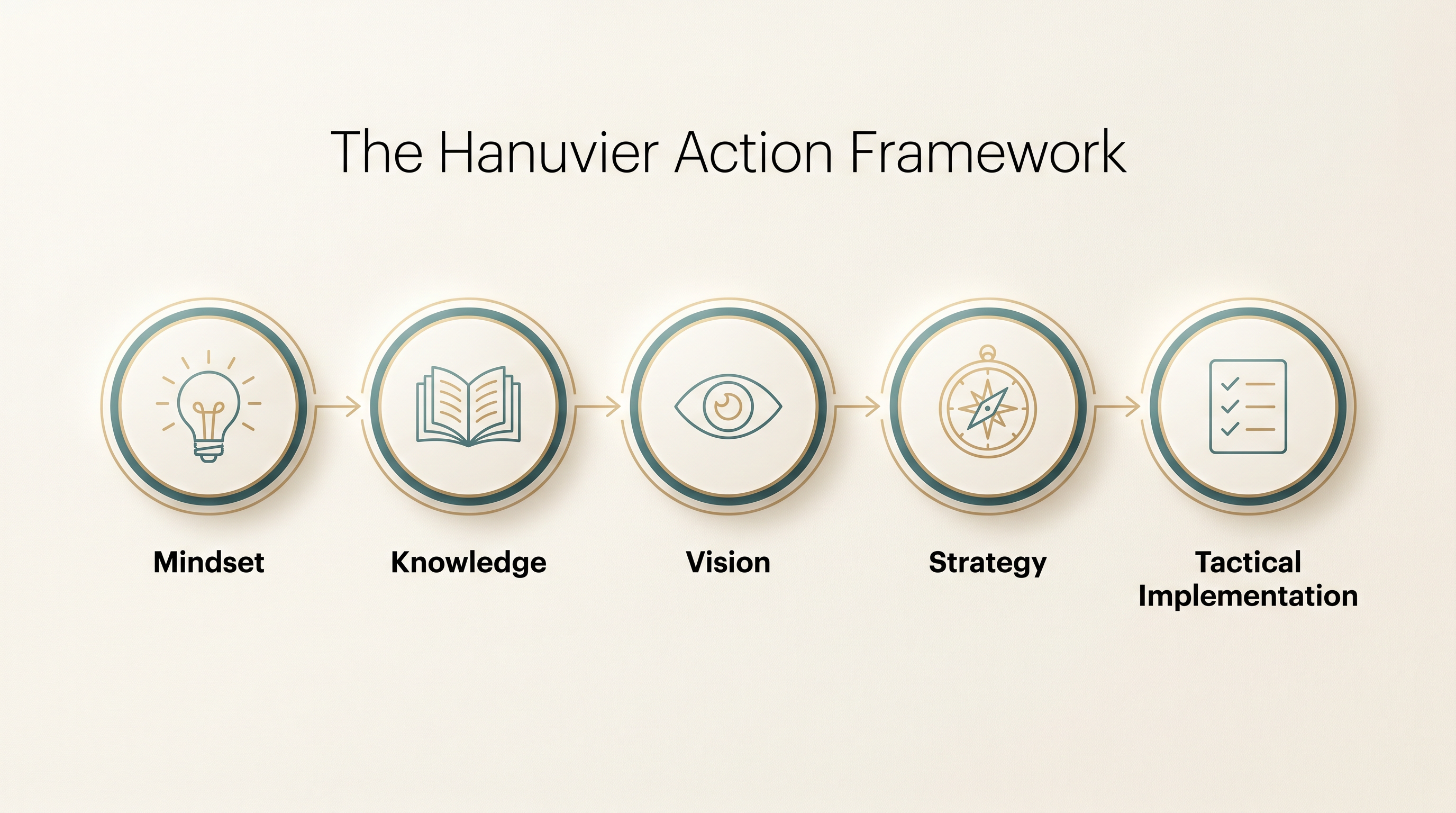
If beauty truly begins within, where should someone start? Hanuvier approaches this question through a simple progression that moves from how we think to how we act, and ultimately, to how we feel and look. Hanuvier calls this the Action Framework - a holistic approach to beauty and wellness grounded in systems-based thinking.
Mindset
Every meaningful change begins with mindset. Adopting a long-term perspective - rather than searching for a quick fix - sets the tone for sustainable choices. Beauty that lasts is rarely the result of a single product or a single week of effort. It tends to reflect a pattern of consistent daily decisions made over months and years. Beauty starts within, and so does the mindset required to support it.
Knowledge
Once mindset is in place, knowledge becomes the next building block. Understanding the basic roles that nutrition for skin health, hydration and skin health, movement, sleep and skin health, and stress management play in the body helps people make informed choices instead of chasing trends. Knowledge transforms vague intentions into a clearer sense of what actually supports the body's systems.
Vision
With knowledge in hand, vision asks a simple but important question: what does "looking and feeling your best" actually mean to you? Vision is personal. It might mean having more energy throughout the day, supporting healthy-looking skin as you age, or simply feeling more at home in your own body. A clear vision gives direction to the steps that follow.
Strategy
Vision without strategy tends to stay a wish. Strategy is where a person translates their goals into a realistic plan: which nutrients to prioritize for nutrition and beauty, which habits to build first, and how to sequence changes in a way that fits real life. Nutrition for skin health, sleep and skin health, and hydration and skin health each deserve a place in this plan.
Tactical Implementation
This is where strategy becomes daily action. Practical steps might include building meals around adequate protein intake, prioritizing hydration throughout the day, establishing a consistent sleep schedule, incorporating regular movement, and exploring stress-management techniques such as mindfulness or breathing exercises. Some people find that integrated beauty and wellness products - such as the Hanuvier Plant Protein & Collagen Booster - make tactical implementation easier by combining several relevant nutrients into a single daily step, rather than requiring several separate products purchased and tracked individually.
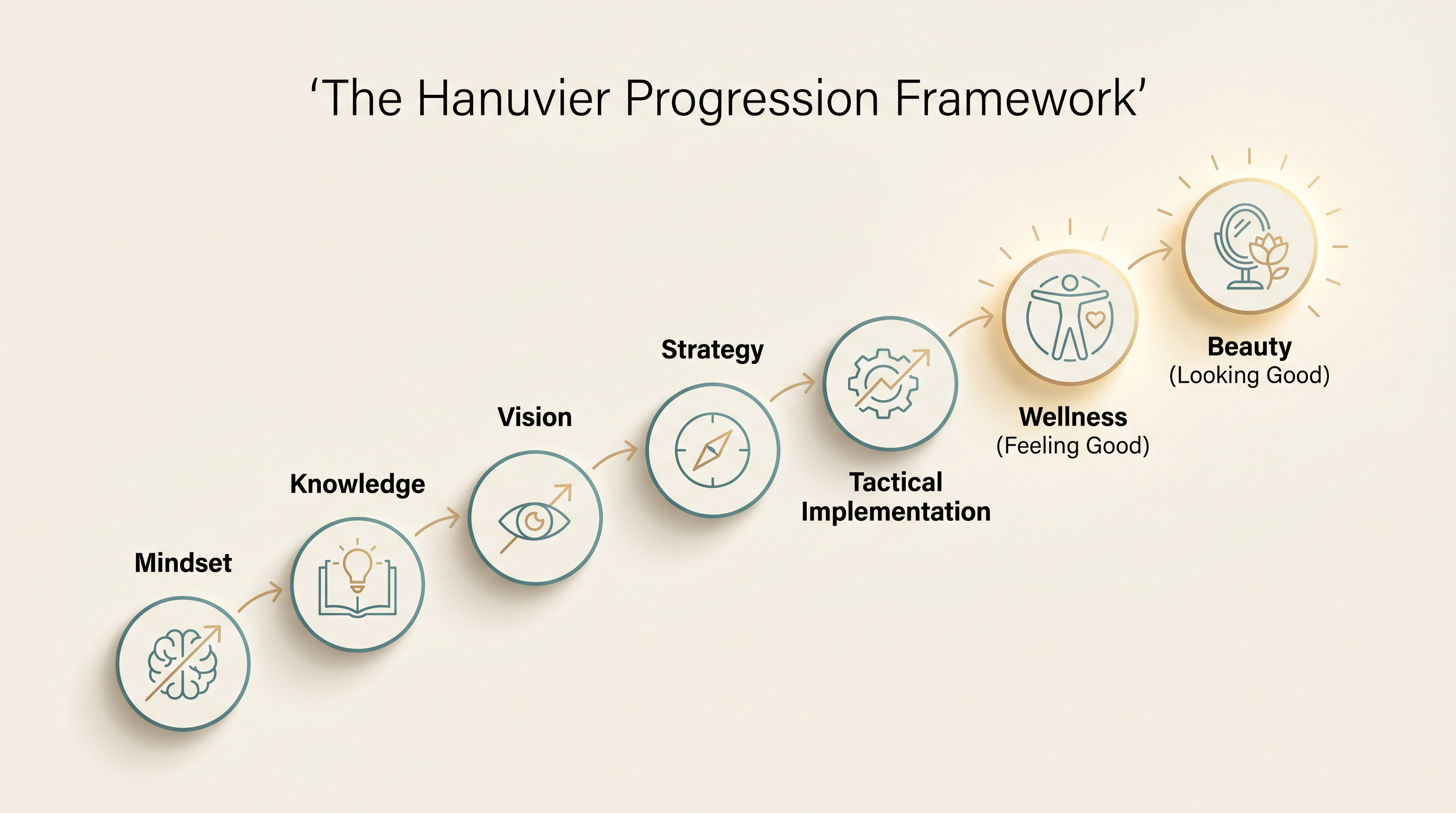
Wellness (Feeling Good)
As these tactics are practiced consistently, wellness becomes the first visible outcome. Energy levels, sleep quality, digestion, mood, and overall vitality often respond to sustained, system-level habits before outward appearance does. This is the feeling-good stage of the journey - and it tends to arrive before the next stage.
Beauty (Looking Good)
As wellness improves and these systems are properly supported, many visible aspects of appearance may, in time, reflect that internal progress. No single food, supplement, or skincare product can guarantee a specific cosmetic outcome. But supporting the body's underlying systems - through nutrition for skin health, sleep and skin health, hydration and skin health, and stress management - creates the conditions in which healthy-looking skin, hair, and overall vitality have the best opportunity to show through. This is what beauty from within looks like in practice.
The Hanuvier Framework
This progression - mindset, knowledge, vision, strategy, and tactical implementation, leading to wellness and then beauty - reflects a core idea behind everything Hanuvier publishes: beauty is rarely the starting point. It is usually the outcome of a wellness journey that began somewhere else entirely, often with a simple decision to learn more about how the body works. Hanuvier calls this full arc the Progression Framework, and it is built on a systems-based holistic approach to beauty: the body's nutritional, hormonal, and lifestyle systems work together, so supporting them as a whole - rather than chasing a single ingredient - is what allows wellness to surface as beauty.
Bringing It All Together
Perhaps the most important takeaway from the science is this: wellness and beauty do not need to compete for attention, and they are not really two separate goals pursued on two separate tracks. The same habits that support long-term health - balanced nutrition and beauty inputs, adequate protein, hydration and skin health, movement, quality sleep and skin health, and stress management for stress and skin aging - also tend to support healthy aging, skin vitality, and physical energy.
Rather than viewing beauty and wellness as separate destinations, it may be more useful to see them as two expressions of a single journey. If there is one idea worth carrying forward, it is this: beauty may not simply be something we apply. It may also be something we cultivate - through mindset, knowledge, consistent daily action, and a willingness to support the body's systems rather than chase a single ingredient or a single fix. Beauty starts within. The science agrees.
Frequently Asked Questions
What is the difference between wellness and beauty?
Wellness refers to a person's overall physical, mental, and emotional well-being. Beauty typically refers to outward appearance, including skin, hair, nails, and general vitality. While the two concepts are distinct, scientific research increasingly suggests they are closely interconnected - since many visible aspects of appearance are influenced by internal health and lifestyle factors. Skin health and wellness are part of the same biological story.
Is inner beauty vs outer beauty a real distinction?
Less than most people assume. Inner beauty vs outer beauty is often framed as a choice between character and appearance, but from a biological perspective the two are deeply connected. Nutrition for skin health, sleep and skin health, hydration and skin health, and stress management all directly influence outer appearance. Beauty starts within is not just a motivational phrase - it reflects how the body actually works.
How does nutrition affect beauty?
Nutrition and beauty are linked through the body's need for protein, vitamins, and minerals to support cellular renewal, structural protein synthesis, and tissue maintenance. Nutrients such as vitamin C, vitamin E, zinc, and biotin all participate in biological processes associated with skin health and wellness. A beauty from within supplement can help fill nutritional gaps, but whole-food nutrition for skin health remains the foundation.
How do sleep and skin health connect?
Sleep and skin health are closely linked. During sleep, the body undergoes tissue repair and cellular renewal. Adequate sleep has been associated with healthier skin barrier function, reduced signs of fatigue in appearance, and overall recovery. Disrupted sleep, over time, can affect skin health and wellness in measurable ways - making sleep one of the most underrated beauty and wellness habits available.
What is the connection between stress and skin aging?
Chronic stress has been associated with increased inflammation and oxidative stress in the body - processes that are linked to stress and skin aging. Managing stress is therefore an important component of a holistic approach to beauty, not just a general wellness recommendation. The relationship between stress and skin aging is one of the clearest examples of why inner beauty vs outer beauty is a false divide.
What does "beauty from within" mean scientifically?
Beauty from within refers to the principle that many visible aspects of appearance are shaped by internal biological factors - nutrition and beauty, sleep and skin health, hydration and skin health, and stress management among them. A beauty from within supplement approach supports these internal systems rather than addressing only the surface. The phrase beauty starts within captures this idea accurately.
What is Hanuvier's systems-based approach to wellness and beauty?
The body functions as an interconnected system, with nutrients participating in multiple biological processes and often working alongside one another. Hanuvier uses this systems perspective - a holistic approach to beauty grounded in biology - to develop thoughtfully formulated products that support wellness, beauty, or both, rather than focusing on a single ingredient.
Related Articles
- Looking Your Best Is a Strategy, Not an Accident!
- Mindset: The Beginning of Every Transformation
- Collagen vs. Collagen Boosters: A Smarter Approach to Supporting Natural Beauty
- Hyaluronic Acid, Biotin, Zinc, L-Lysine & Hydroxyproline: The Science Behind Five Key Nutrients for Wellness & Beauty
- Protein, Wellness, and Healthy Aging: The Science Behind Pea & Rice Protein
References
- 1. Harvard T.H. Chan School of Public Health - The Nutrition Source. nutritionsource.hsph.harvard.edu
- 2. World Health Organization (WHO) - Health Promotion. who.int/health-topics/health-promotion
- 3. Harvard Health Publishing - Skin Care and Repair. health.harvard.edu
- 4. American Academy of Dermatology - Skin Care Basics. aad.org
- 5. NIH Office of Dietary Supplements - Vitamin C Fact Sheet. ods.od.nih.gov
- 6. NIH Office of Dietary Supplements - Vitamin E Fact Sheet. ods.od.nih.gov
- 7. NIH Office of Dietary Supplements - Zinc Fact Sheet. ods.od.nih.gov
- 8. NIH Office of Dietary Supplements - Biotin Fact Sheet. ods.od.nih.gov
- 9. National Sleep Foundation - Sleep Health Topics. thensf.org
- 10. Harvard Health Publishing - How to Sleep Better. health.harvard.edu
- 11. NIH National Center for Complementary and Integrative Health - Stress and Health. nccih.nih.gov
- 12. American Psychological Association - Stress Effects on the Body. apa.org
- 13. Centers for Disease Control and Prevention - Physical Activity Guidelines. cdc.gov
- 14. Centers for Disease Control and Prevention - Physical Activity Guidelines. cdc.gov
Built on the nutrients in this article
Five collagen boosters and 20g of organic plant protein, every dose on the label.*
See what's inside HanuvierFree U.S. shipping · 60-day money-back guarantee · 10% off your first order
