
Vitamin K2 (MK-7), C and E for Wellness and Beauty: What the Science Says
Understanding How Three Essential Vitamins Support Different Biological Systems
A systems based approach to wellness and beauty
By Vikas Tiwari, Founder, Hanuvier
About the author. Vikas Tiwari is the founder of Hanuvier and the author behind the Hanuvier Wellness Hub. His education spans science, law, and business: Chemistry, Physics, and Math as an undergraduate, followed by a degree in Law, a master's in Industrial Relations, and an MBA from the University of Maryland at College Park. He spent nearly two decades in executive roles across leading biotech organizations and global institutions, including The World Bank, Amgen, Myovant Sciences, and Sage Therapeutics, and advised major pharma companies such as Novartis, Novo Nordisk, and Boehringer Ingelheim through consulting engagements with Cognizant.
His philosophy. Nothing in the body works alone. The body is a coming together of many systems working in harmony - and wellness itself works the same way. Physical, emotional, and spiritual wellbeing are each systems in their own right, deeply interconnected and feeding off one another. That understanding is at the heart of Hanuvier: A Systems Based Approach to Wellness and Beauty, caring for the whole person, because no dimension of wellness stands alone.
Beyond his work. A vegetarian and vegan for 45 years, Vikas brings a lifelong passion for nutrition science, mindful living, and meditation. He believes knowledge is the first step on every wellness journey.
Editorial note & disclosure. This article is based on an objective review of publicly available scientific literature and educational resources referenced throughout. It is intended for informational and educational purposes only and should not be construed as medical advice.
What's in This Article
- Why Are Certain Vitamins Associated With Wellness and Beauty?
- A Systems-Based Perspective on Wellness
- Vitamin C: The Bridge Nutrient for Collagen and Antioxidant Defense
- Vitamin E: Supporting Antioxidant Defense Systems
- Vitamin K2: Supporting Structural Wellness and Bone Health
- How These Vitamins Complement Protein and Collagen-Supporting Nutrients
- From Isolated Nutrients to Interconnected Systems
- Complementary Roles vs. Exaggerated Synergy
- The Hanuvier Framework
- Bringing It All Together
- Frequently Asked Questions
- Related Articles
- References
Why Are Certain Vitamins Frequently Associated With Wellness and Beauty?
When people think about wellness and beauty, they often focus on visible outcomes - healthy-looking skin, strong hair, healthy nails, a vibrant appearance. Yet those visible outcomes are supported by biological processes occurring beneath the surface.
Cells are continuously repairing themselves. Proteins are being synthesized. Connective tissues are being maintained. Antioxidant systems are helping protect cells from oxidative stress. Nutrients are being absorbed, transported, and utilized throughout the body.
Modern nutrition science recognizes that nutrients do not function in isolation. Rather, proteins, amino acids, vitamins, minerals, and other dietary components participate in interconnected physiological processes.1 This systems-based perspective provides a useful framework for understanding Vitamins C, E, and K2 - three of the best vitamins for skin health and overall structural wellness.
Each performs different biological functions. Each supports different physiological systems. And together they help illustrate an important principle: the body works through systems rather than isolated ingredients.1
A Systems-Based Perspective on Wellness
One of the recurring themes throughout the Hanuvier Wellness Hub is that wellness rarely depends upon a single nutrient, ingredient, or action. Instead, wellness often emerges from multiple biological processes working together over time.
This perspective is consistent with established nutrition science. The National Academies' Dietary Reference Intake framework recognizes that nutrients interact with one another and participate in interconnected physiological processes.1 Similarly, the World Health Organization emphasizes dietary adequacy, balance, moderation, and diversity rather than reliance on individual nutrients alone.2
This does not make any single nutrient less important. Rather, it helps place individual nutrients within the broader context of the systems they support. Vitamins C, E, and K2 provide useful examples - and understanding their distinct roles is exactly what separates informed wellness decisions from marketing-driven ones.
Vitamin C: The Bridge Nutrient for Collagen and Antioxidant Defense
Among the best vitamins for skin health, Vitamin C occupies a particularly interesting position within human physiology because it participates in several biological systems simultaneously.
Most people associate Vitamin C with immune health. While that role is important, Vitamin C's involvement extends much further. According to the NIH Office of Dietary Supplements, Vitamin C is required for normal collagen biosynthesis and connective tissue function.3 This is why it appears so frequently in discussions about vitamins for connective tissue - collagen is the most abundant structural protein in the human body, found throughout skin, bones, tendons, ligaments, cartilage, blood vessels, and connective tissues.3
A vitamin C collagen supplement approach is grounded in this biology. Vitamin C functions as a cofactor for enzymes involved in the formation and stabilization of collagen structures.3 When Vitamin C intake is inadequate, normal collagen formation may be impaired.
Vitamin C also functions as an antioxidant, helping protect cells from oxidative stress.3 This is where vitamin E and vitamin C together become especially interesting - research suggests that Vitamin C may help regenerate Vitamin E after Vitamin E has been oxidized while performing its own antioxidant functions. That interaction is a compelling illustration of how nutrients participate in interconnected physiological systems rather than operating independently.3
Vitamin C also plays a role in enhancing vitamin C iron absorption from plant foods.3 This is particularly relevant for individuals following plant-based dietary patterns, where non-heme iron from plant sources benefits most from this absorption support. It is one reason Vitamin C is especially valued as a vitamin C supplement for women following vegan or vegetarian diets.
Viewed through a systems-based lens, Vitamin C participates in multiple biological functions involving connective tissue maintenance, antioxidant protection, and nutrient utilization. For this reason, it may be better understood not simply as a vitamin, but as a bridge nutrient that connects several important physiological processes - and one of the most versatile vitamins for healthy aging.
Vitamin E: Supporting Antioxidant Defense Systems
Vitamin E serves a different role. While Vitamin C is water-soluble, Vitamin E is a fat-soluble nutrient recognized primarily for its vitamin E antioxidant function.4 Understanding the difference between natural vs synthetic vitamin C and fat-soluble vs water-soluble vitamins is useful context here - fat-soluble vitamins like E and K2 are stored differently in the body than water-soluble ones like Vitamin C.
According to the NIH Office of Dietary Supplements, Vitamin E helps protect cell membranes from oxidative damage caused by free radicals - making it central to vitamin E cell membrane protection.4 Every tissue in the body depends upon healthy cellular function. As a result, antioxidant defense systems play an important role in maintaining normal physiological processes throughout the body.
Skin, in particular, is continuously exposed to environmental stressors - ultraviolet radiation, pollution, and other external factors - making antioxidant vitamins for skin an area of ongoing scientific interest. Vitamin E contributes to one of the body's broader protective systems designed to support cellular integrity. When considering vitamin C vs vitamin E, it is worth noting they do not compete - they work within the same antioxidant network, each addressing different aspects of cellular protection.
A vitamin E antioxidant supplement should not be viewed as a stand-alone beauty nutrient. Instead, it plays a role within the broader antioxidant defense network - one that works best when paired with Vitamin C and supported by an overall nutrient-rich diet. Vitamin E and vitamin C together represent a more complete antioxidant picture than either alone.
Vitamin K2: Supporting Structural Wellness and Bone Health
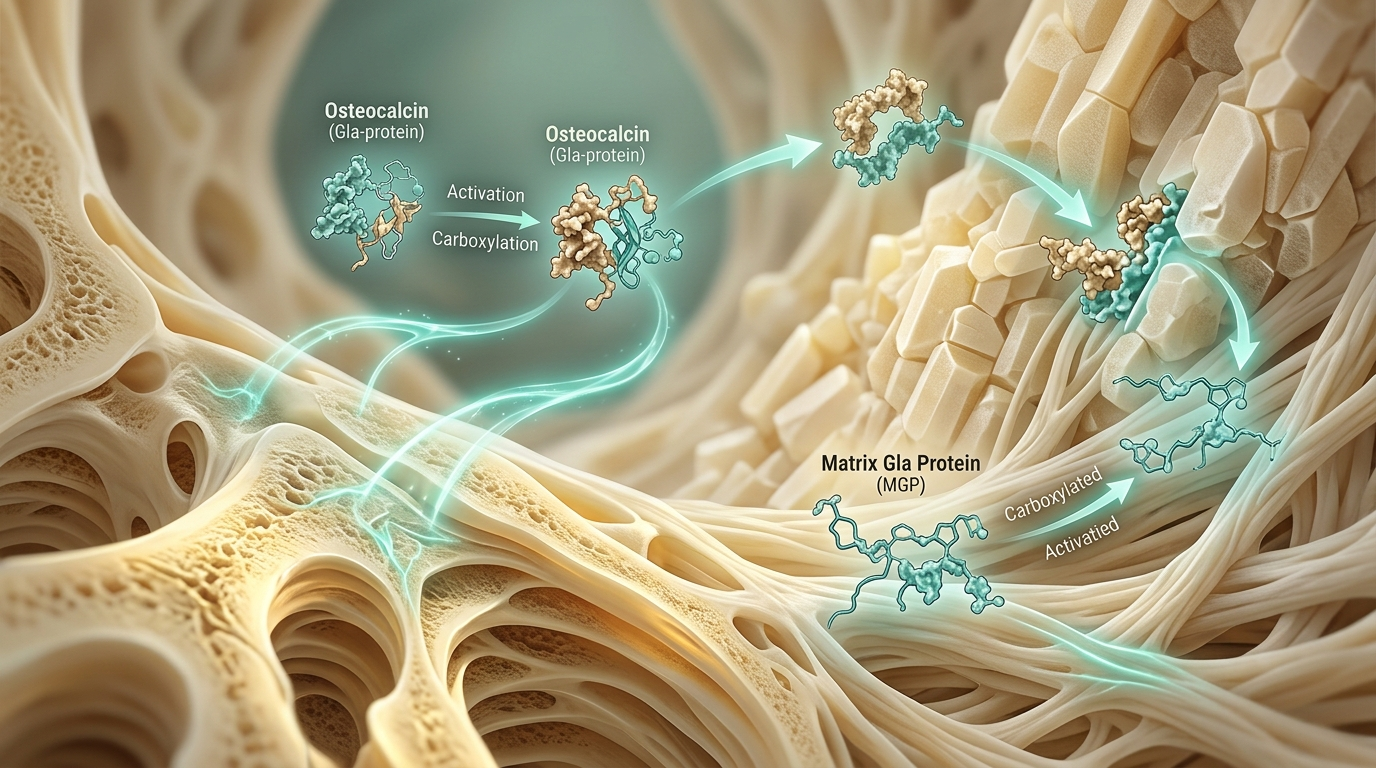
Vitamin K is traditionally associated with normal blood clotting. However, its biological functions extend beyond coagulation.5 This is why vitamin K2 bone health has become an area of growing scientific interest - distinct from the better-known Vitamin K1 role in coagulation.
When comparing vitamin K1 vs vitamin K2, the distinction matters. Vitamin K2-dependent proteins participate in several physiological processes, including aspects of bone-related biology. Two frequently discussed examples are Osteocalcin and Matrix Gla Protein (MGP) - the vitamin K2 osteocalcin connection in particular has attracted considerable research attention. These proteins require Vitamin K-dependent activation to perform their normal functions.5 This is the science behind vitamin K2 for bone health and structural wellness discussions.
Although Vitamin K2 is not commonly described as a beauty nutrient, structural wellness is an important component of overall vitality. Not every wellness-supporting nutrient produces visible outcomes - some support foundational systems that operate largely behind the scenes, contributing to the broader picture of how the body functions and maintains itself over time. Vitamin K2 bone health support is a good example of this quiet but important role.
How These Vitamins Complement Protein and Collagen-Supporting Nutrients
The roles of Vitamins C, E, and K2 become even more interesting when viewed alongside protein and collagen-supporting nutrients. For those exploring the best vitamins for skin health in a broader context, consider how these elements participate in related physiological processes:
Protein provides amino acids that serve as building blocks for tissues throughout the body.6 Lysine and Hydroxyproline are amino acids incorporated into and found within collagen structures and connective tissues - making them key vitamins for connective tissue support.7 Zinc participates in protein synthesis, cellular metabolism, and tissue maintenance.8 Biotin serves as a cofactor for enzymes involved in the metabolism of amino acids, fats, and carbohydrates - which is why it appears alongside vitamins for skin hair nails discussions.9 Hyaluronic acid has been studied for its role in hydration-related functions and skin physiology.10
When considered as a group, Vitamins C, E, and K2 contribute to this broader nutritional picture: Vitamin C supports collagen biosynthesis, antioxidant activity, and iron absorption; Vitamin E supports antioxidant defense systems; and Vitamin K2 supports Vitamin K-dependent proteins involved in structural wellness and vitamin K2 bone health.
For those interested in a formulation that integrates several of these collagen-supporting and wellness-oriented nutritional elements - including vitamins for healthy aging - the Hanuvier Plant Protein & Collagen Booster is designed with a systems-based approach in mind, bringing together plant protein and collagen-supporting nutrients in one thoughtfully formulated product.
These nutrients do not perform identical functions, and current scientific literature does not suggest that combining them automatically produces extraordinary outcomes. What the evidence does suggest is that many physiological processes depend upon multiple nutrients performing complementary biological roles.1 That distinction reflects physiology rather than marketing.
From Isolated Nutrients to Interconnected Systems
One reason wellness conversations often become confusing is that they frequently focus on individual ingredients. Protein. Collagen. Vitamin C. Vitamin E. Biotin. Zinc. Hyaluronic Acid. Consumers naturally ask: which one actually matters?
The answer is that they matter for different reasons. Each participates in different biological processes. Each contributes to different physiological functions. And many of those functions ultimately contribute to the same broader wellness goals - whether that is antioxidant vitamins for skin, vitamins for connective tissue, or vitamins for healthy aging.
This is why systems thinking can be so useful. Rather than asking "which ingredient is most important?", a systems-based perspective asks: how do different nutrients contribute to the larger physiological systems that support wellness? That shift in thinking often provides a more realistic - and more empowering - understanding of how the body works.
Complementary Roles vs. Exaggerated Synergy
The word "synergy" is frequently used in wellness marketing - sometimes appropriately, sometimes not. Scientific evidence should support any specific synergy claim.
A more accurate way to describe Vitamins C, E, K2, protein, amino acids, minerals, and hydration-supporting nutrients is to recognize that they participate in different biological pathways that may contribute to related wellness goals. Vitamin E and vitamin C together is a good example - their interaction in the antioxidant network is documented, but it is a complementary relationship, not a miraculous one. The body does not operate through isolated nutrients. Rather, physiological systems depend upon numerous interacting nutrients and biological processes.1
Understanding those systems may provide a more useful framework for thinking about wellness than focusing exclusively on individual ingredients. And that understanding is precisely what Hanuvier aims to share through the Wellness Hub.
The Hanuvier Framework
The roles of Vitamins C, E, and K2 fit naturally within the Hanuvier way of thinking about wellness and beauty. Knowledge - genuinely understanding what nutrients do and how they interact within biological systems - is a meaningful step in the direction of better wellness decisions. That knowledge then shapes vision, informs strategy, and ultimately guides the daily actions that support long-term wellbeing and healthy aging.
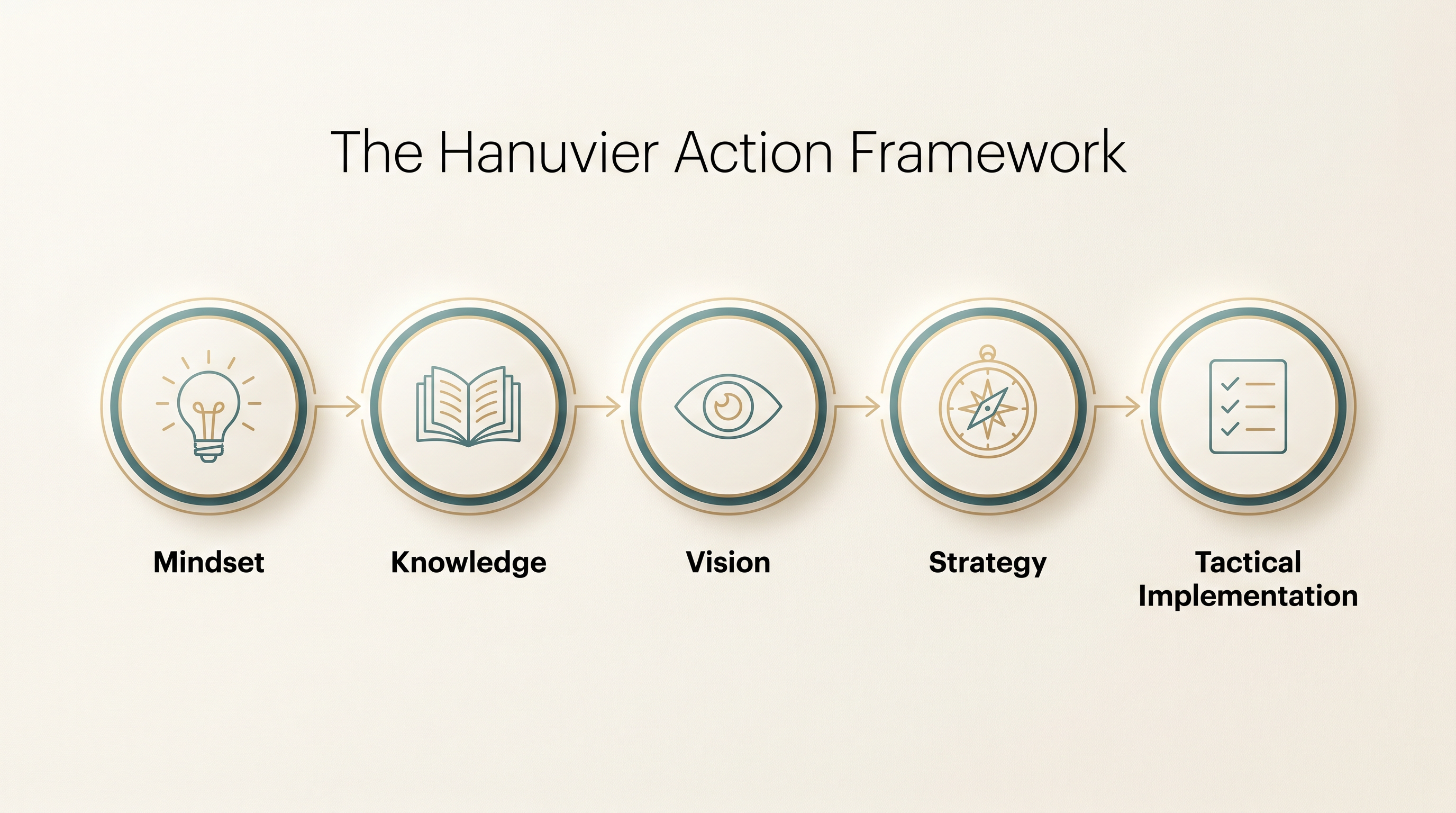
Within the Hanuvier Progression Framework, wellness is understood as something that comes before beauty. Feeling good - supported by adequate nutrition, consistent habits, and an informed approach to health - creates the conditions from which looking good may naturally follow. Vitamins C, E, and K2 each contribute, in their own distinct ways, to the broader wellness picture that makes that progression possible.

Bringing It All Together
Vitamin C, Vitamin E, and Vitamin K2 each perform different jobs within the body. Vitamin C participates in collagen biosynthesis, antioxidant activity, and nutrient utilization - making it one of the best vitamins for skin health and a key vitamin C collagen supplement ingredient. Vitamin E contributes to vitamin E antioxidant function and cellular protection, working particularly well alongside Vitamin C. Vitamin K2 supports Vitamin K-dependent proteins involved in structural wellness and vitamin K2 bone health.
Viewed individually, each nutrient has a distinct role. Viewed together, they illustrate a broader principle: the body functions through interconnected systems.1 Protein, amino acids, vitamins, minerals, hydration, movement, recovery, and lifestyle habits all contribute to the larger picture - especially for vitamins for healthy aging, where no single nutrient tells the whole story.
This does not make any single nutrient less important. It places each nutrient within the context of the system it helps support.
Perhaps the goal is not to find one nutrient that does everything. Perhaps the goal is to understand how different nutrients - vitamins for skin hair nails, antioxidant vitamins for skin, vitamins for connective tissue - contribute to the wellness systems that allow the body to function at its best. Because wellness is rarely the result of one ingredient. It is often the result of many factors working together over time. And that understanding, in itself, is a meaningful form of self-care.
Frequently Asked Questions
What are the best vitamins for skin health?
Among the most researched are Vitamin C, which participates in collagen biosynthesis and antioxidant protection; Vitamin E, which supports antioxidant defense of cell membranes; and Biotin, which is involved in amino acid metabolism. Vitamins for skin hair nails typically include these alongside zinc and other collagen-supporting nutrients. No single vitamin works alone - the body's skin health depends on multiple systems working together.3,4
What does Vitamin C do for wellness and beauty support?
Vitamin C is required for normal collagen biosynthesis and connective tissue function, and also plays a role as an antioxidant that helps protect cells from oxidative stress.3 It also participates in vitamin C iron absorption and may help regenerate Vitamin E after oxidation. Because of its involvement in multiple biological systems, it may be thought of as a bridge nutrient - connecting collagen synthesis, antioxidant defense, and nutrient utilization in one package.
What is the difference between vitamin C vs vitamin E?
Vitamin C is water-soluble and participates in collagen synthesis, iron absorption, and antioxidant defense. Vitamin E is fat-soluble and focuses primarily on vitamin E antioxidant function - protecting cell membranes from oxidative damage. They are not interchangeable but work together: Vitamin C can help regenerate Vitamin E after it has been oxidized. Vitamin E and vitamin C together provide broader antioxidant coverage than either alone.
What is vitamin K2 osteocalcin and why does it matter?
Osteocalcin is a Vitamin K2-dependent protein involved in bone-related biology. The vitamin K2 osteocalcin connection is central to understanding why Vitamin K2 is distinct from Vitamin K1 - Vitamin K2 activates proteins like Osteocalcin and Matrix Gla Protein (MGP) that participate in structural wellness. This is the scientific basis for vitamin K2 bone health discussions.5
Are these vitamins useful for healthy aging?
Research suggests vitamins for healthy aging involve multiple nutrients working together. Vitamin C supports collagen and antioxidant systems that may decline with age. Vitamin E supports cellular membrane protection. Vitamin K2 for bone health addresses structural wellness that becomes increasingly relevant over time. No single vitamin addresses aging comprehensively - a systems-based approach is more aligned with the science.
Do Vitamins C, E, and K2 participate in the same biological processes?
No - they perform different biological functions and operate in different physiological systems. They may be viewed as complementary components of broader wellness systems rather than interchangeable or identical nutrients. Each contributes something distinct - vitamin E antioxidant function, vitamin C collagen synthesis, and vitamin K2 bone health support - to the overall nutritional picture.
What is Hanuvier's systems-based approach to wellness and beauty?
The body functions as an interconnected system, with nutrients participating in multiple biological processes and often working alongside one another. Hanuvier uses this systems perspective to develop thoughtfully formulated products that support wellness, beauty, or both through a holistic approach rather than a single-ingredient focus.
References
- 1. Otten JJ, Hellwig JP, Meyers LD, eds. Dietary Reference Intakes: The Essential Guide to Nutrient Requirements. National Academies Press; 2006. https://www.ncbi.nlm.nih.gov/books/NBK56068/
- 2. World Health Organization. Healthy Diet. WHO Fact Sheet. https://www.who.int/news-room/fact-sheets/detail/healthy-diet
- 3. National Institutes of Health, Office of Dietary Supplements. Vitamin C - Health Professional Fact Sheet. https://ods.od.nih.gov/factsheets/VitaminC-HealthProfessional/
- 4. National Institutes of Health, Office of Dietary Supplements. Vitamin E - Health Professional Fact Sheet. https://ods.od.nih.gov/factsheets/VitaminE-HealthProfessional/
- 5. National Institutes of Health, Office of Dietary Supplements. Vitamin K - Health Professional Fact Sheet. https://ods.od.nih.gov/factsheets/VitaminK-HealthProfessional/
- 6. MedlinePlus. Protein in Diet. U.S. National Library of Medicine. https://medlineplus.gov/ency/article/002467.htm
- 7. Myllyharju J, Kivirikko KI. Collagens, modifying enzymes and their mutations in humans, flies and worms. Trends in Genetics. 2004;20(1):33-43. https://www.ncbi.nlm.nih.gov/books/NBK507709/
- 8. National Institutes of Health, Office of Dietary Supplements. Zinc - Health Professional Fact Sheet. https://ods.od.nih.gov/factsheets/Zinc-HealthProfessional/
- 9. National Institutes of Health, Office of Dietary Supplements. Biotin - Health Professional Fact Sheet. https://ods.od.nih.gov/factsheets/Biotin-HealthProfessional/
- 10. Papakonstantinou E, Roth M, Karakiulakis G. Hyaluronic acid: A key molecule in skin aging. Dermato-Endocrinology. 2012;4(3):253-258. https://www.ncbi.nlm.nih.gov/pmc/articles/PMC3583886/
Built on the nutrients in this article
Five collagen boosters and 20g of organic plant protein, every dose on the label.*
See what's inside HanuvierFree U.S. shipping · 60-day money-back guarantee · 10% off your first order
